

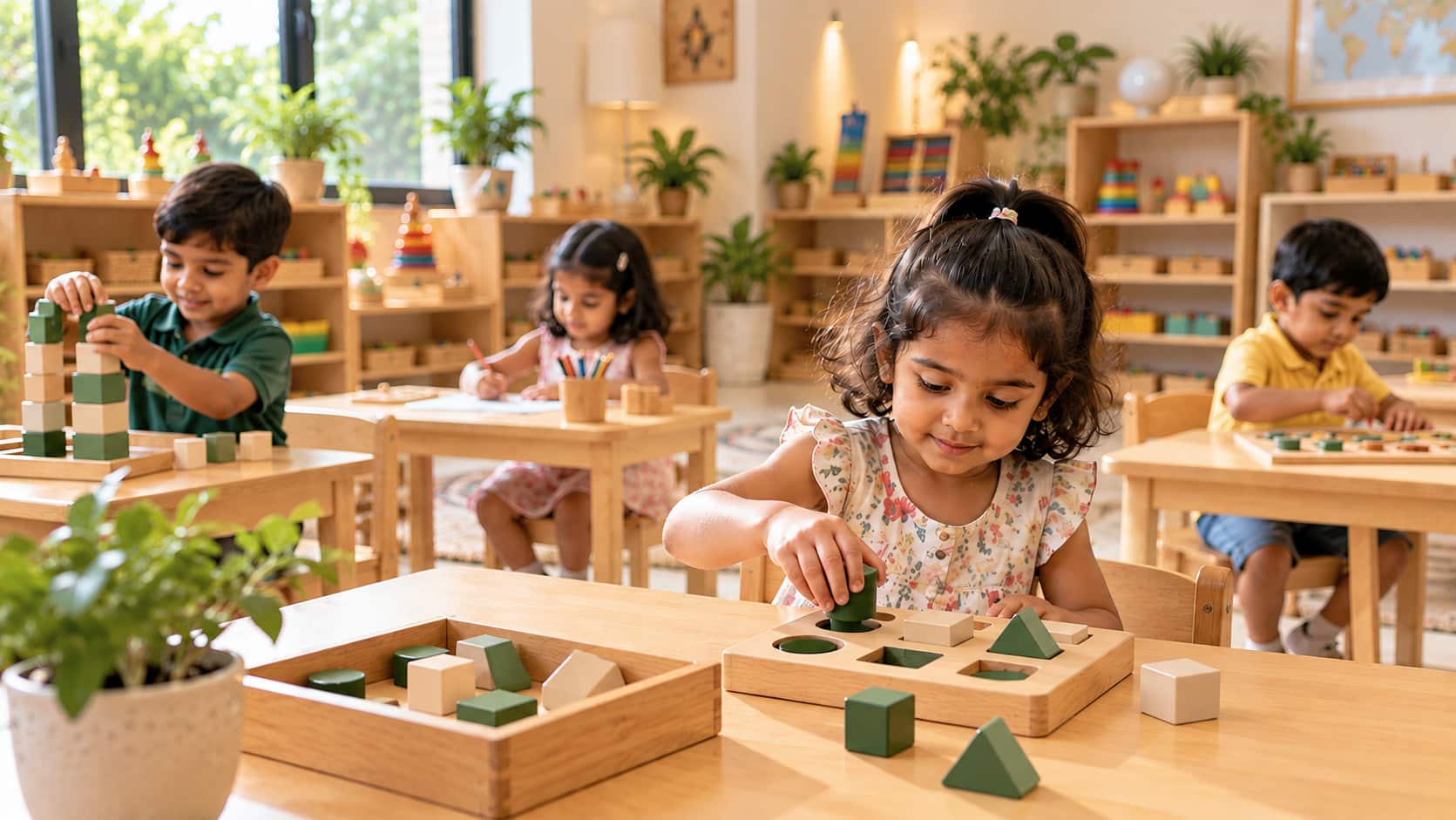
Hand-eye coordination helps children use what they see to guide their hand movements. Preschoolers use this skill when they catch a ball, build with blocks, draw, eat with a spoon, complete puzzles, or place objects accurately. It develops gradually through everyday play and practice.
For children aged 2–5, the best activities are simple, enjoyable, and appropriate for their developmental stage. Parents do not need expensive equipment or complicated exercises. Everyday games at home can provide plenty of opportunities to practise coordination.
What Is Hand-Eye Coordination?
Hand-eye coordination is the ability to use visual information to guide hand movements. When a child watches a moving ball and reaches out to catch it, for example, the eyes provide information that helps the hands respond accurately.
This skill involves more than simply moving the hands. Children need to look, understand where an object is, plan a movement, and adjust their hands as the activity changes.
Why Is Hand-Eye Coordination Important for Preschoolers?
Hand-eye coordination supports many activities children encounter at home and in preschool. Developing better control can make everyday tasks such as drawing, eating, dressing, building, and playing easier and more enjoyable.
Supports Drawing and Pre-Writing Skills
Drawing and colouring require children to look at what they are doing while controlling their hand movements. Activities that involve lines, shapes, colouring, and simple patterns give preschoolers opportunities to practise visual control and prepare for future writing tasks.
Helps With Everyday Activities
Children use hand-eye coordination during everyday tasks such as using a spoon, pouring water, putting on shoes, placing toys away, or handling simple classroom materials. These everyday tasks are also closely connected with Montessori practical life activities, which encourage children to practise useful skills independently. Regular practice can gradually make these activities easier and more controlled.
Builds Confidence and Independence
When children successfully complete physical tasks, they can become more confident in their abilities. Repeated opportunities to practise can also support confidence and independence in children as they learn to manage age-appropriate tasks. Giving preschoolers opportunities to practise manageable activities allows them to participate more independently rather than relying on adults for every small task.
15 Hand-Eye Coordination Activities for Preschoolers
1. Roll and Catch a Ball
Start by sitting close to your child and rolling a soft ball toward them. Encourage them to stop or return it using both hands. As their control improves, gradually increase the distance and introduce gentle catching.
2. Balloon Tap Game
A balloon moves slowly enough for many young children to track visually. Encourage your child to tap it upward and keep it from touching the floor. This combines visual tracking, reaching, timing, and controlled hand movements.
3. Beanbag Toss
Give your child a soft beanbag and place a large basket nearby. Encourage them to throw the beanbag toward the target. Move the basket farther away as their accuracy improves, keeping the activity fun rather than competitive.
4. Stacking Blocks
Building towers with blocks requires children to position one object carefully on top of another. Encourage your child to build, knock down, and rebuild towers. Different block sizes can gradually introduce new levels of control and precision.
5. Threading and Lacing
Threading large beads onto a thick cord can help children practise coordinating what they see with small hand movements. Choose materials designed for young children and supervise closely, particularly when activities involve small objects.
6. Simple Puzzles
Puzzles encourage children to look carefully at shapes and pictures before positioning pieces. Start with large, easy-to-handle pieces and gradually introduce more complex puzzles as your child’s visual attention, problem-solving, and hand control develop.
7. Drawing and Colouring
Give your child crayons, pencils, or washable markers and encourage free drawing. Drawing circles, lines, simple shapes, and pictures allows children to practise controlling their hands while watching the marks they create on the page.
8. Playdough Activities
Playdough offers opportunities to squeeze, roll, flatten, pinch, and shape materials. Ask your child to make simple objects such as balls, snakes, or pretend food. These playful movements combine hand control with visual attention and creativity.
9. Colour Sorting
Place several large, safe objects in different colours and ask your child to sort them into matching groups. Picking up each object and placing it in the correct location requires children to coordinate visual information with controlled hand movements.
10. Sticker Placement
Give your child large stickers and ask them to place them inside simple shapes or along a drawn line. Peeling and positioning stickers requires visual attention and controlled finger movements, making this an easy activity for home or preschool.
11. Pouring and Transferring
Under supervision, let your child transfer water or another suitable material between containers using cups or small jugs. This activity encourages children to watch the container and adjust their hand movements to control where the material goes.
12. Bowling Game
Set up lightweight bottles or child-safe bowling pins and let your child roll a soft ball toward them. Bowling encourages visual targeting, controlled arm movement, direction, and timing while giving children an enjoyable opportunity for active play.
13. Shape Matching
Provide simple shape pieces and matching spaces. Encourage your child to identify where each piece belongs and turn it until it fits. This combines visual discrimination, problem-solving, and controlled hand movements in one activity.
14. Cutting and Paper Activities
With child-safe scissors and close adult supervision, children can practise cutting along simple straight or curved lines. Paper tearing, folding, and gluing can also provide opportunities to coordinate visual attention with controlled hand movements.
15. Simple Obstacle Course
Create a safe indoor or outdoor course using age-appropriate obstacles. Children can walk around objects, carry a ball, step over low obstacles, or place objects in targets. These activities combine visual planning with whole-body coordination and can be part of the physical activities that support fitness in preschool.
Hand-Eye Coordination Activities by Age
Two-year-olds generally benefit from large, easy-to-handle objects and simple movements. Rolling a ball, stacking large blocks, placing large objects into containers, and scribbling with crayons can provide appropriate opportunities to practise coordination.
Activities for 3-Year-Olds
Three-year-olds can gradually explore activities involving more accuracy and control. Simple puzzles, colouring, sorting, throwing toward large targets, and supervised threading activities can make coordination practice engaging and age-appropriate.
Activities for 4-Year-Olds
Four-year-olds can often manage activities that require greater precision. Drawing shapes, completing more challenging puzzles, building structures, catching larger balls, cutting simple lines, and copying patterns can provide progressively harder coordination experiences.
Activities for 5-Year-Olds
Five-year-olds can gradually work with activities requiring more controlled and coordinated movements. Target games, detailed drawing, construction activities, simple crafts, cutting shapes, and multi-step activities can encourage increasing precision and visual planning.
How Can Parents Improve Hand-Eye Coordination at Home?
Parents do not need to set aside a special training session every day. Instead, include coordination activities naturally throughout play and everyday routines. Building, drawing, throwing, sorting, puzzles, crafts, and practical tasks can all provide useful practice.
Make Activities Progressively More Challenging
Once your child becomes comfortable with an activity, make one small change rather than making everything harder. Increase the throwing distance, use a slightly smaller target, add another puzzle piece, or introduce a more detailed pattern.
Let Children Practise at Their Own Pace
Children develop physical skills at different rates, so giving them opportunities for Montessori learning at their own pace can help them practise new skills without unnecessary pressure. Give your child enough time to practise without comparing their performance with another child’s. Encouragement and repeated opportunities are more helpful than pressure to complete an activity perfectly.
Choose Safe, Age-Appropriate Materials
Always consider your child’s age and ability when choosing materials. Avoid giving young children small objects that may present a choking risk, and closely supervise activities involving scissors, water, beads, or other potentially unsafe materials.
How Preschool Supports Hand-Eye Coordination
A quality preschool can provide children with regular opportunities to develop coordination through both structured activities and free play. Art, puzzles, construction, sensory activities, music, outdoor games, and classroom routines can encourage children to practise different types of movement.
A play-based learning environment also allows children to repeat activities and gradually take on more challenging tasks. This approach can support cognitive development in preschoolers alongside physical coordination. This can support not only hand-eye coordination but also concentration, creativity, problem-solving, confidence, and independence.
When Should Parents Be Concerned About Coordination?
Every child develops at a different pace, and occasional difficulty with an activity does not necessarily indicate a problem. However, if parents have ongoing concerns about their child’s movement, hand control, or ability to perform everyday tasks, discussing those concerns with a qualified healthcare or child-development professional can provide appropriate guidance.
Conclusion
Hand-eye coordination develops through repeated opportunities to look, move, adjust, and try again. For preschoolers, simple activities such as catching, drawing, building, sorting, puzzles, and target games can make this practice enjoyable through fun-based learning for young children.
The goal is not to make children perform perfectly. Give them safe, age-appropriate activities, allow them time to practise, and gradually introduce new challenges. With supportive experiences at home and in preschool, children can build coordination alongside confidence, independence, and other important early learning skills.
Frequently Asked Questions
What are the best activities for hand-eye coordination in children?
Ball games, puzzles, drawing, stacking blocks, sorting, threading, target games, and simple crafts can provide opportunities to practise hand-eye coordination. Choose activities based on the child’s age, ability, and interests.
How can I improve my child's hand-eye coordination at home?
Include coordination activities naturally during play. Encourage your child to draw, build with blocks, complete puzzles, roll or catch a ball, sort objects, and participate in simple age-appropriate craft activities.
Does drawing improve hand-eye coordination?
Drawing requires children to watch their marks while controlling their hand movements. Regular drawing and colouring can therefore provide useful opportunities to practise visual attention and controlled hand movements.
What activities improve hand-eye coordination in a 3-year-old?
Three-year-olds can try simple puzzles, block building, colouring, sorting, balloon games, rolling and catching balls, and supervised threading with appropriately sized materials.
Does playing with blocks improve coordination?
Yes. Building with blocks requires children to visually judge where pieces should go and control their hands to position them. Block play can also encourage problem-solving, creativity, and spatial awareness.