

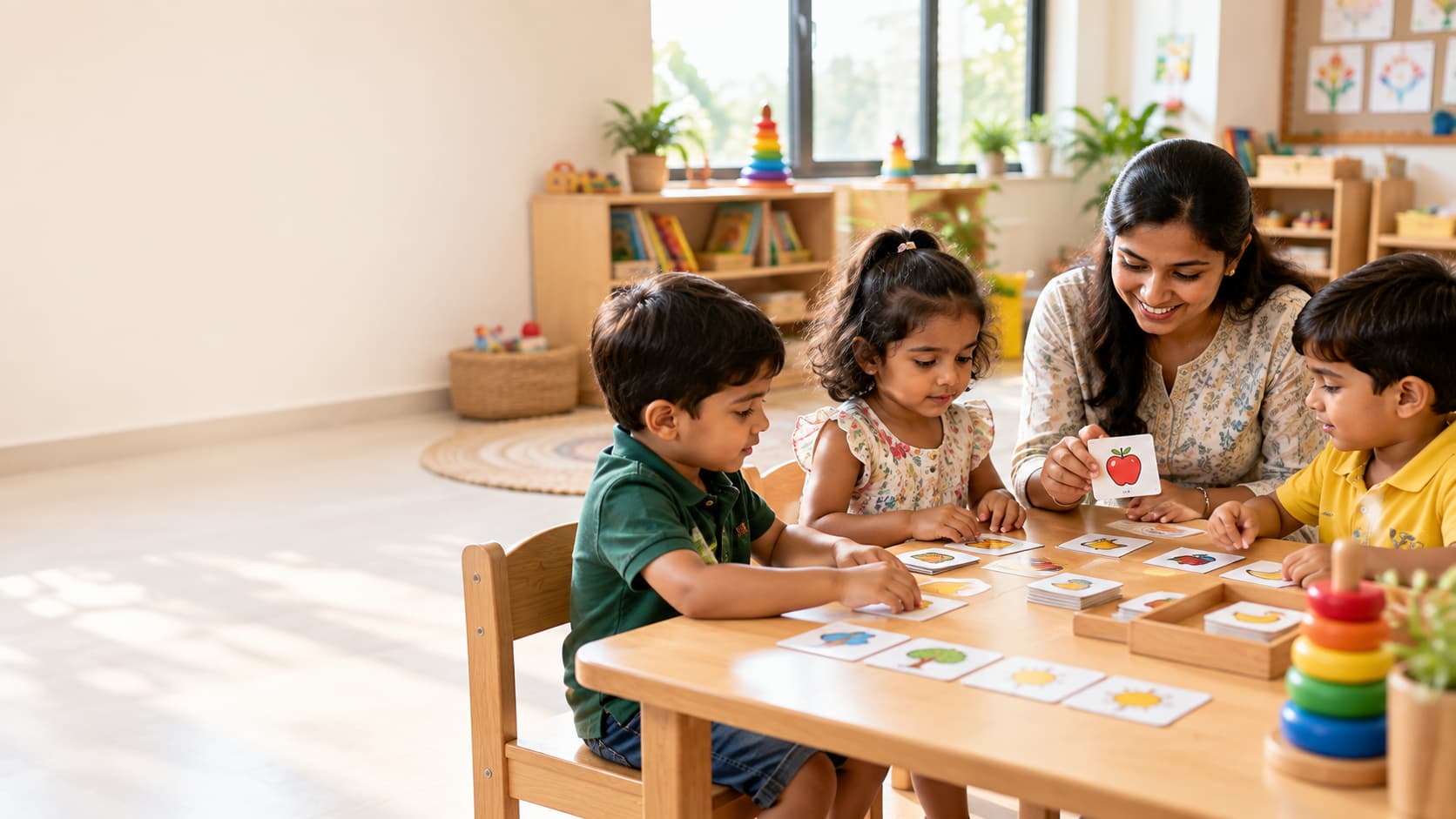
Memory plays an important role in early childhood learning. Preschoolers use memory when they remember instructions, recognise familiar objects, recall stories, learn songs, and follow daily routines. Fun activities can help children practise these skills naturally through play.
For children aged 2–5, memory activities should be simple, enjoyable, and appropriate for their developmental stage. Parents and preschool teachers can use everyday games, storytelling, music, movement, and hands-on activities to encourage memory development without making learning feel like a test.
Why Are Memory Skills Important for Preschoolers?
Memory helps preschoolers remember information and connect new experiences with things they already know, while play also provides opportunities for cognitive development in preschoolers. It supports language development, attention, problem-solving, following instructions, classroom participation, and growing independence during everyday activities.
15 Fun Memory Activities for Preschoolers
1. Matching Memory Cards
Matching cards are a simple way to encourage visual memory. Place several pairs of picture cards face down and let your child find matching pairs. Start with a few cards and gradually increase the challenge.
2. What's Missing?
Place a few familiar objects on a table and let your child observe them carefully. Remove one object while they close their eyes, then ask what is missing. This encourages observation, recall, and visual memory.
3. Memory Tray Game
Place several familiar objects on a tray and allow your child to study them briefly. Cover the tray and ask the child to remember the objects. Start with three items and gradually introduce more.
4. Story Recall
Read a short story and ask your child simple questions about what happened. Encourage them to remember characters, places, and events. Story recall supports listening, comprehension, language development, and the ability to retrieve information.
5. Story Sequencing
Give your child three or four pictures showing different parts of a simple story. Mix them up and ask the child to arrange them correctly. This helps preschoolers remember events and understand sequences.
6. Repeat the Sound
Create a simple sound pattern by clapping, tapping, or using child-friendly musical instruments. Ask your child to listen carefully and repeat the same sequence. Gradually increase the number of sounds as their confidence develops.
7. Follow Two-Step Instructions
Give your child two simple instructions, such as picking up a toy and placing it inside a box. When they become comfortable, introduce three-step instructions to gradually strengthen working memory and listening skills.
8. Action Memory Game
Combine memory with physical movement by creating a short sequence of actions such as clapping, jumping, and turning around. Ask your child to copy the movements in the same order, making learning active and enjoyable.
9. Remember the Pattern
Create a simple pattern using blocks, toys, or other colourful objects. Ask your child to observe it and recreate the same sequence. Pattern activities encourage visual memory, concentration, recognition, and early logical thinking.
10. Picture Recall
Show your child a picture for a few seconds before putting it away. Ask questions about what they saw, such as colours, objects, or people. This encourages children to observe details and practise visual recall.
11. What Changed?
Arrange several objects and allow your child to observe them carefully. Ask them to close their eyes while you move one object. When they look again, encourage them to identify what has changed.
12. Sing and Remember
Songs and action rhymes provide an enjoyable way for preschoolers to practise memory. Repeating familiar songs encourages children to remember words, sounds, movements, and sequences while also supporting language and communication development.
13. Memory Treasure Hunt
Hide a familiar object somewhere safe and provide simple clues to help your child find it. As they become more confident, offer several clues in sequence. This activity combines memory, listening, movement, and problem-solving.
14. “I Went to the Market” Game
Start with a simple sentence such as, “I went to the market and bought an apple.” Each person adds another item while repeating the previous ones. This gradually challenges verbal memory and sequencing.
15. Remember the Daily Routine
Everyday routines can become natural memory activities, much like Montessori practical life activities that encourage children to practise familiar tasks and gradually build independence. Ask your child what happens after brushing their teeth, what comes after breakfast, or what they take to school. Familiar sequences encourage recall and independence.
Memory Activities for Different Ages
Memory Activities for 2-Year-Olds
Two-year-olds benefit from very simple memory activities involving familiar objects, songs, pictures, and one-step instructions. Keep activities short and playful, focusing on participation and repetition rather than expecting perfect recall.
Memory Activities for 3-Year-Olds
Three-year-olds can begin exploring matching games, short story recall, picture activities, and simple two-step instructions. Encourage them gently and give enough time to think before providing an answer or moving to another activity.
Memory Activities for 4-Year-Olds
Four-year-olds can usually participate in more challenging memory activities involving patterns, sequences, stories, and multiple objects. Gradually increasing the difficulty can encourage concentration while keeping the experience enjoyable and age-appropriate.
Memory Activities for 5-Year-Olds
Five-year-olds can explore longer sequences, more detailed stories, verbal memory games, and multi-step instructions. Activities can become slightly more challenging while still allowing children to learn through movement, conversation, creativity, and play.
How Parents Can Support Memory Development
Read and Talk About Stories
After reading a story, ask your child what happened and which part they enjoyed most. Talking about characters and events encourages children to recall information while supporting vocabulary, communication, comprehension, and storytelling skills.
Use Songs and Rhymes
Songs and rhymes naturally involve repetition, rhythm, words, and movements. Singing familiar songs together gives preschoolers regular opportunities to remember sequences while making learning enjoyable and encouraging language development.
Encourage Repetition
Young children often need repeated experiences before information becomes familiar. Repeating stories, songs, routines, and favourite games gives children opportunities to practise memory without creating pressure or making learning feel difficult.
Give Simple Instructions
Start with one simple instruction and gradually introduce another when your child is ready. Asking children to remember and complete short sequences helps develop working memory while also encouraging listening and independence.
Connect New Learning With Familiar Experiences
Children often remember new information more easily when it connects with something they already know. Relating new words, experiences, stories, or concepts to familiar objects and everyday situations can make learning more meaningful.
How Preschool Activities Support Memory Skills
Learning Through Hands-On Activities
Hands-on preschool activities give children opportunities to see, touch, move, compare, and remember. Games involving objects, puzzles, patterns, and creative materials can make memory practice more engaging while supporting several areas of early development.
Group Games and Classroom Routines
Group games and predictable classroom routines encourage children to remember instructions, activity sequences, classroom expectations, and familiar patterns. Repeated experiences help preschoolers gradually become more confident and independent in their daily activities.
Storytelling, Music and Movement
Storytelling, music, and movement provide different ways for children to practise remembering words, sounds, actions, characters, and sequences. Combining these experiences can make memory development engaging while supporting communication and physical development.
Building Independence Through Repetition
Preschoolers become more independent when they repeatedly practise familiar routines and tasks, and these experiences can also support the development of confidence and independence.
Remembering where belongings belong, following classroom steps, and completing simple activities can gradually strengthen recall while building confidence in everyday situations.
Tips for Making Memory Activities Fun
Start With Easy Challenges
Begin with activities your child can complete successfully and gradually increase the difficulty. Starting small helps children feel confident and interested while giving them opportunities to practise memory without feeling frustrated or pressured.
Keep Activities Short
Preschoolers have developing attention spans, so memory games do not need to last for a long time. A short, enjoyable activity can be more effective than a lengthy session that leaves the child bored.
Increase Difficulty Gradually
Once your child becomes comfortable with an activity, introduce one small challenge at a time and allow them to progress through Montessori learning at their own pace. Add another card, object, instruction, or sequence rather than making the game suddenly much harder.
Praise Effort
Focus on your child’s effort and participation instead of whether every answer is correct. Encouraging language helps children feel comfortable making mistakes and motivates them to continue exploring and practising new skills.
Let Learning Feel Like Play
Memory development should feel enjoyable rather than like a formal test, which is why fun-based learning for young children can make practice feel natural and engaging. Allow children to move, explore, laugh, repeat favourite games, and choose activities that interest them while they practise important cognitive skills.
How Preschool Supports Memory Development
A supportive preschool environment provides regular opportunities for children to practise memory through stories, songs, puzzles, patterns, movement, classroom routines, and hands-on learning. These experiences can also support communication, concentration, social skills, creativity, and independence.
At a quality preschool, memory activities are usually integrated naturally into the learning experience rather than treated as isolated exercises. Children can learn by exploring, repeating, remembering, and applying new skills during everyday classroom experiences.
Conclusion
Preschool activities to improve memory skills do not need to be complicated or expensive. Simple games involving cards, objects, stories, songs, patterns, movement, and everyday routines can give children enjoyable opportunities to practise remembering and recalling information.
For children aged 2–5, the focus should be on creating positive learning experiences rather than testing how much they can remember. With regular opportunities at home and supportive preschool experiences, children can gradually develop memory, concentration, communication, and independence through play.
Frequently Asked Questions
What are the best memory activities for preschoolers?
Matching games, memory trays, story recall, sequencing, patterns, songs, and “What’s Missing?” are simple activities that can encourage memory skills. Choose activities according to your child’s age, interests, and developmental abilities.
How can I improve my preschooler's memory?
Parents can support memory by reading stories, singing songs, playing recall games, giving simple instructions, discussing daily experiences, and encouraging children to remember familiar routines. Regular playful practice can make learning enjoyable.
What are good memory games for a 3-year-old?
Three-year-olds can enjoy simple matching games, picture recall, “What’s Missing?”, songs, object games, and short two-step instructions. Keep activities brief and provide encouragement rather than expecting perfect results.
Are memory games good for preschoolers?
Age-appropriate memory games can provide enjoyable opportunities for children to practise recall, observation, listening, sequencing, and concentration. The activities should remain playful and should not place unnecessary pressure on young children.
How does play help memory development?
Play gives children opportunities to repeat experiences, remember sequences, follow simple rules, solve problems, and connect new information with familiar experiences. These repeated experiences can naturally encourage memory development.