

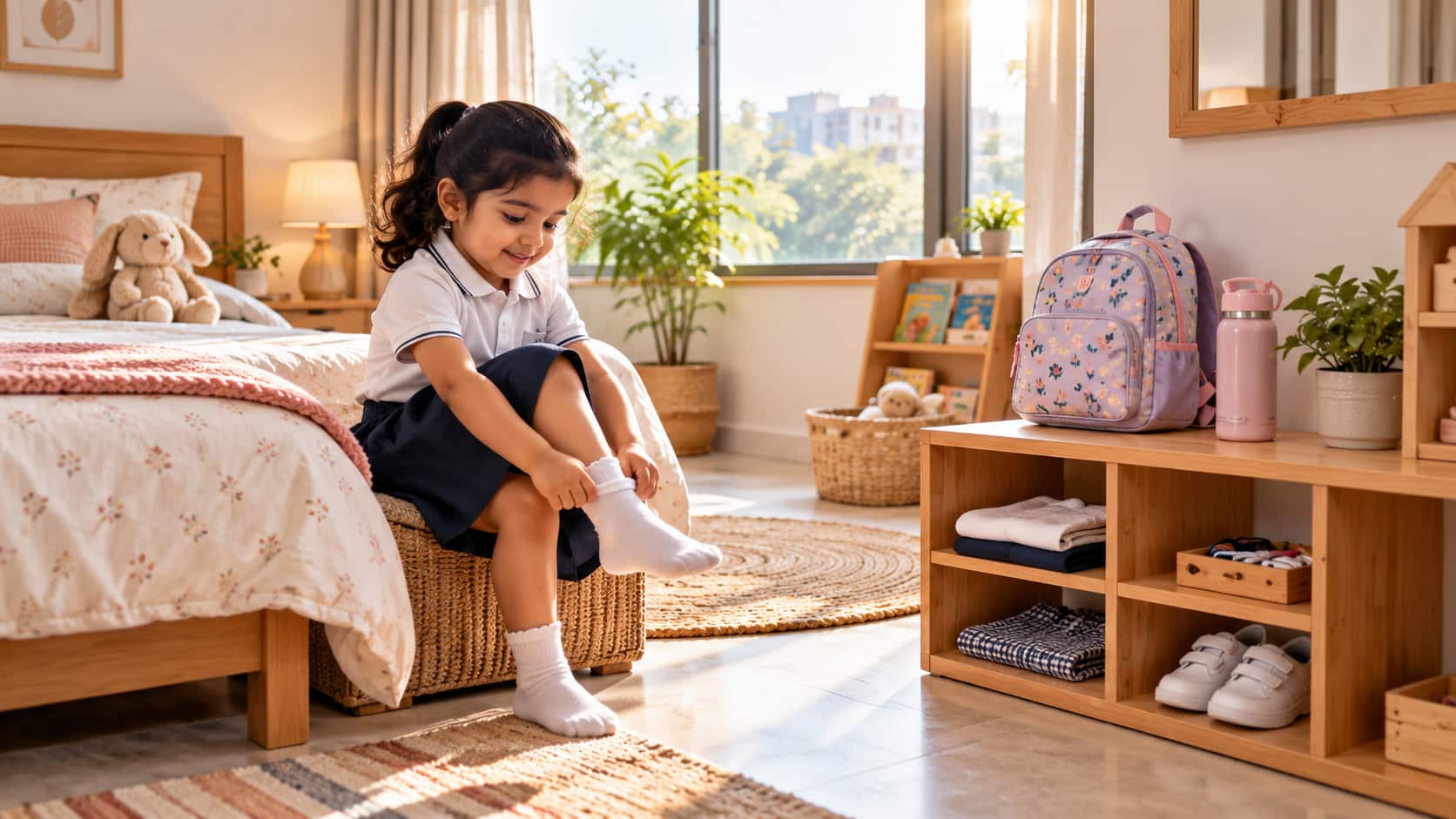
Mornings with preschoolers can sometimes feel rushed. Getting your child out of bed, brushing their teeth, getting dressed, eating breakfast, finding the school bag and leaving on time can quickly become stressful. A simple morning routine for preschoolers can make these everyday moments calmer and more predictable. When children know what comes next, they can gradually take part in their own routines instead of depending on adults for every step. A Montessori-inspired approach can make this even more meaningful by giving children small responsibilities and encouraging independence while keeping the morning manageable for the whole family.
Why Is a Morning Routine Important for Preschoolers?
A predictable morning routine gives preschoolers a clear idea of what happens after they wake up. At this age, children are still developing their sense of time and may not understand why everyone needs to hurry.
A consistent sequence helps them move from one activity to another with fewer surprises. Instead of repeatedly telling your child what to do, you can follow the same basic order each day.
How routines help children feel secure
Young children often feel more comfortable when familiar activities happen in a familiar order. Knowing that brushing comes after using the bathroom, followed by getting dressed and having breakfast, gives the child a sense of what to expect.
This does not mean every morning has to happen at exactly the same minute. The important part is having a predictable sequence that your child can gradually recognise.
How routines encourage independence
A morning routine can also become an opportunity for children to practise everyday skills and develop essential life skills for preschoolers, such as self-care, responsibility and independence. Simple tasks such as putting on slippers, choosing between two outfits, brushing their teeth or placing their lunch box in their bag allow children to participate actively.
The goal is not to make a preschooler do everything alone. It is to give them opportunities to try age-appropriate tasks while an adult provides support when needed.
What Makes a Good Morning Routine for Preschoolers?
The best routine is one that works for your child and your family’s schedule. A routine does not need to be complicated or filled with activities. In fact, preschoolers usually benefit from a simple sequence that they can understand and repeat.
Keep the routine simple and predictable
Choose a few essential steps and keep them in roughly the same order each school day. For example:
Wake up → bathroom → brush teeth → get dressed → breakfast → school bag → shoes → leave
Once the sequence becomes familiar, your child may begin remembering what comes next without being reminded every time.
Give children small choices
Preschoolers like having some control over their surroundings. Instead of asking an open-ended question such as “What do you want to wear today?”, offer two suitable choices.
You might say, “Would you like the blue T-shirt or the yellow one?” Small choices can help children feel involved while keeping the routine moving.
Leave enough time for transitions
Children do not always move between activities as quickly as adults expect. They may become distracted while getting dressed or want to finish playing before breakfast.
Building some extra time into the morning can reduce the need for constant rushing. A calm transition is often easier when children receive a simple reminder before it is time to move to the next activity.
Easy Morning Routine for Preschoolers: Step-by-Step
A useful morning routine for preschoolers should focus on the essentials while giving children opportunities to participate.
1. Wake up gently
Start the morning calmly. Open the curtains, greet your child and give them a little time to wake up fully.
Avoid beginning the day with several instructions at once. A gentle start can make it easier for children to move into the next part of the routine.
2. Use the bathroom and brush teeth
After waking up, guide your child to use the bathroom and brush their teeth. Depending on their age and ability, they may be able to complete parts of this routine independently.
You can keep their toothbrush, toothpaste and other everyday items where they can safely reach them. An adult can supervise and help when necessary.
3. Get dressed independently
Allow your preschooler to participate in getting dressed. Younger children may need considerable help, while older preschoolers may be able to put on simple clothing themselves.
Choose comfortable, easy-to-manage clothes for school days. If mornings are often rushed, keeping the next day’s clothes ready the night before can make this step easier.
4. Eat a simple breakfast
Breakfast does not need to become a complicated part of the morning. Offer a simple, familiar meal that fits your family’s routine.
Where appropriate, children can participate in small tasks such as carrying their cup to the table, choosing between two breakfast options or putting their used dishes in a designated place.
5. Pack the school bag
Give your child a small role in preparing their school bag. Depending on their age, they may be able to place a water bottle, lunch box or other required items inside with your supervision.
Preparing the bag the night before can make school mornings much less rushed.
6. Put on shoes and get ready to leave
The final steps should be clear and consistent. Put on shoes, collect the school bag and head out.
If your child tends to forget these steps, a simple visual routine chart near the bedroom or entrance can serve as a reminder without requiring you to repeat the same instructions several times.
Montessori-Inspired Morning Routine at Home
Montessori education places importance on independence, practical-life experiences and allowing children to participate meaningfully in everyday activities. These ideas can also be applied to a home morning routine.
The objective is not to make a child completely independent overnight. Instead, parents can gradually create opportunities for children to practise everyday skills.
Encourage practical-life skills
Everyday activities can become learning opportunities, much like Montessori practical life activities, where children practise useful everyday tasks through hands-on experiences. A preschooler might practise putting clothes into a laundry basket, carrying their own small bag, placing shoes in their usual location or helping prepare a simple breakfast item.
These tasks may seem ordinary, but they allow children to practise coordination, concentration and responsibility.
Let your child complete simple tasks independently
Give your child enough time to attempt a task before stepping in. If they are struggling to put on their shoes, for example, you can guide them rather than immediately doing it for them.
This approach helps children learn through practice while still giving them the support they need.
Use a visual routine instead of repeated instructions
A visual routine chart can show each morning step using simple words, pictures or both, and preschool activities at home can provide additional opportunities for children to practise following simple routines independently.
For example:
Wake up → Bathroom → Brush teeth → Get dressed → Breakfast → Bag → Shoes → School
A preschooler may not read every word yet, but simple pictures can help them understand the sequence.
Sample Morning Routine for a Preschooler
There is no single perfect schedule for every child. The amount of time needed depends on the child’s age, sleep schedule, school timing and how much help they need.
A simple 60–90 minute school-day routine
| Time | Activity |
|---|---|
| 6:45 AM | Wake up |
| 6:50 AM | Bathroom and brush teeth |
| 7:05 AM | Get dressed |
| 7:20 AM | Breakfast |
| 7:45 AM | Pack/check school bag |
| 7:55 AM | Shoes and final preparation |
| 8:05 AM | Leave for school |
Note: This is only an example. Parents should adjust the timing according to their child’s school schedule and family’s needs.
How to adjust the routine for different ages
A younger preschooler may need more hands-on help with dressing, brushing and eating. An older preschooler may be able to complete several of these tasks with only occasional reminders.
Rather than expecting the same level of independence from every child, focus on gradual progress.
How Parents Can Reduce Morning Tantrums and Delays
Morning struggles are not always about the child refusing to cooperate. Sometimes the routine simply contains too many rushed transitions, choices or last-minute decisions.
Prepare clothes and bags the night before
Preparing school clothes, bags, shoes and other essentials before bedtime removes several decisions from the morning.
This gives children more time to focus on the routine instead of searching for missing items when everyone is trying to leave.
Avoid too many choices
Too many options can make a simple decision difficult for a preschooler. Offering two suitable choices is often enough.
For example, instead of asking your child to choose any outfit, offer two options that are already appropriate for school.
Build extra time into the morning
If leaving home at 8:00 AM requires everyone to move quickly from 7:45 AM onward, even a small delay can create stress.
A little extra time gives children an opportunity to finish a task, find their shoes or handle a small distraction without turning the entire morning into a race.
How Preschool Supports Independence and Daily Routines
A child’s routine does not stop at home. Preschool provides another environment where children can practise everyday skills, follow sequences and become comfortable with predictable activities.
Connecting home routines with preschool routines
When children experience opportunities for independence both at home and at school, everyday tasks can become more familiar while play supports cognitive development in preschoolers through opportunities to practise, remember and complete activities.
Parents can share age-appropriate expectations with teachers and learn which practical-life skills their child is currently practising at preschool.
Helping children become confident with everyday tasks
Independence develops gradually, and repeated opportunities to complete age-appropriate tasks can support how Montessori builds confidence and independence in young children. A child who initially needs help with dressing, carrying belongings or cleaning up may become more confident through repeated opportunities and patient guidance.
A Montessori environment can support this development by allowing children to participate in purposeful everyday activities at a level appropriate for their age.
Conclusion
A good morning routine for preschoolers does not need to be complicated. A predictable sequence of waking up, getting ready, eating breakfast, preparing belongings and leaving for school can help children understand what to expect each day. Small responsibilities can also turn ordinary morning tasks into opportunities for independence and confidence. A Montessori-inspired approach focuses on giving children appropriate choices and allowing them to participate in practical everyday activities. Most importantly, remember that routines take time to develop. Start with a few simple steps, repeat them consistently and gradually give your child more responsibility as their skills grow.
Frequently Asked Questions
What time should a preschooler wake up?
There is no universal wake-up time for every preschooler. The right time depends on the child’s sleep needs, bedtime, school schedule and family routine. The goal is to allow enough time for the child to wake up, complete essential tasks and leave without unnecessary rushing.
How long should a preschool morning routine take?
A morning routine for preschoolers may take around 60–90 minutes for some families, while others may need less or more time. Instead of focusing on an exact duration, create a routine that gives your child enough time to complete important tasks calmly.
How can I get my child ready for preschool without stress?
Keep the routine predictable, prepare important items the night before, limit choices and give your child small responsibilities. Parents who are preparing a young child for preschool can also consider factors discussed in our guide to the best age to start preschool. A visual routine chart can also help children remember what comes next without relying on repeated verbal instructions.
How can Montessori principles help with morning routines?
Montessori principles can be applied by encouraging children to participate in everyday tasks, practise practical-life skills and complete age-appropriate activities independently. Parents can offer guidance without taking over every task, allowing children to learn through repetition and practice.