

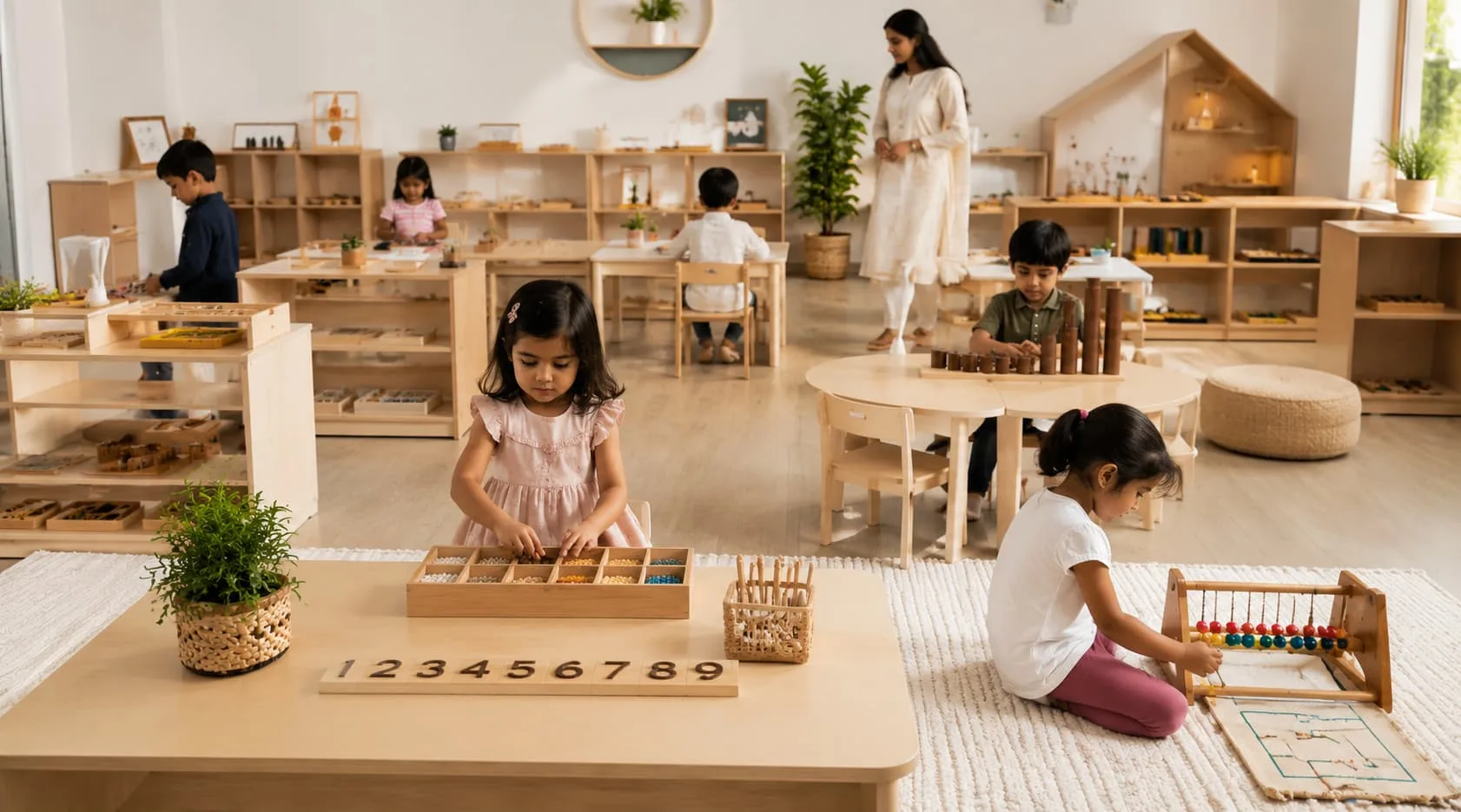
Choosing a preschool is one of the most important decisions parents make during their child’s early years. A good preschool should not only support learning but also provide a place where children feel protected, respected, and confident. Parents comparing options often explore Montessori vs regular preschool to understand which environment better supports their child’s development. A Safe Montessori Preschool goes beyond locked gates and CCTV cameras. It combines physical safety, emotional security, hygiene, trained educators, and thoughtfully designed learning spaces. In this guide, we explore what makes a Montessori preschool truly safe and child-friendly, the key features parents should look for, and how to identify the right Montessori preschool in Bangalore.
Quick Answer:
A Montessori preschool is truly safe and child-friendly when it provides a secure physical environment, caring and qualified teachers, hygienic facilities, age-appropriate learning materials, supervised play areas, and emotional support. The best schools create a Safe Montessori Learning Environment where children can explore independently while feeling protected, respected, and encouraged to learn.
What Does Safety Mean in a Montessori Preschool?
Safety in a Montessori preschool includes much more than preventing accidents. It means creating an environment where children can explore freely while receiving the guidance and protection they need. Montessori education is based on independence, and a safe classroom allows children to develop confidence without unnecessary risks.
A child-friendly Montessori environment balances freedom with responsibility. Children are encouraged to choose activities, move around the classroom, interact with materials, and solve problems independently. However, this independence is supported by careful planning, trained teachers, and strong safety practices.
For parents searching for What makes a Montessori preschool safe, the answer lies in three important areas: physical safety, emotional well-being, and overall care standards.
Physical Safety: Creating a Secure Montessori Learning Environment
Physical safety is the foundation of Montessori Classroom Safety. Young children are naturally curious and learn through movement, touching, and exploration. Therefore, classrooms must be designed to support active learning while reducing possible hazards.
A well-designed Montessori classroom usually includes:
- Child-sized furniture that allows safe movement
- Rounded corners on tables and shelves
- Anti-slip flooring
- Secure storage areas
- Safe electrical arrangements
- Age-appropriate classroom layouts
Child-sized furniture is especially important because Montessori education encourages children to complete tasks independently. When shelves, chairs, and tables are designed according to a child’s height, children can participate confidently without unnecessary assistance.
A safe classroom also avoids overcrowding. Children need enough space to move comfortably, work individually, and participate in group activities without feeling restricted.
Emotional Safety: The Heart of a Child-Friendly Montessori Preschool
A truly Child-Friendly Montessori Preschool understands that emotional safety is just as important as physical protection. Children learn better when they feel accepted, respected, and supported by their teachers.
Montessori classrooms focus on positive relationships rather than fear-based discipline. Teachers guide children patiently, encourage problem-solving, and help them develop confidence.
Emotional safety includes:
- Respectful communication
- Positive guidance methods
- Encouragement of independence
- Support for individual learning styles
- A welcoming classroom atmosphere
When children feel emotionally secure, they become more comfortable asking questions, trying new activities, and building relationships with classmates. A Montessori environment also helps children build child confidence by encouraging independence, decision-making, and self-learning from an early age. This creates a stronger foundation for social and intellectual development.
7 Essential Features of a Safe Montessori Preschool
Parents evaluating a Montessori preschool should look beyond advertisements and focus on the actual features that create a safe learning environment.
1. Qualified Montessori Teachers
Teachers are the most important part of any preschool safety system. Even the best classroom design cannot replace the care, attention, and judgment of trained educators.
Qualified Montessori Teachers understand early childhood development and know how to guide children while maintaining a safe environment. They observe children closely, identify potential risks, and provide support according to each child’s needs.
Important teacher qualifications include:
- Montessori certification
- First-aid knowledge
- CPR training
- Experience with preschool children
- Continuous classroom supervision
A trained Montessori teacher does more than teach lessons. They create a respectful environment where children feel comfortable exploring and learning.
2. Child-Friendly Classroom Design
A Montessori classroom is carefully arranged to encourage independence and safe exploration. The environment itself acts as a learning tool.
Important classroom features include:
- Open learning spaces
- Child-height shelves
- Organized activity areas
- Natural lighting
- Comfortable learning corners
A well-organized classroom helps children understand routines and develop responsibility. For example, when children can easily access and return materials, they learn independence while maintaining classroom order.
A thoughtfully designed classroom is one of the most important Montessori Preschool Features parents should evaluate.
3. Safe Montessori Learning Materials
Montessori materials are designed to encourage hands-on learning, but safety standards are essential.
High-quality Montessori schools provide:
- Non-toxic materials
- Smooth wooden learning tools
- Age-appropriate activities
- Regular inspection of classroom resources
Safe materials allow children to develop concentration, coordination, creativity, and problem-solving skills without unnecessary risks.
Parents should observe whether materials are clean, well-maintained, and suitable for their child’s age group.
4. Montessori Preschool Hygiene and Safety Standards
Cleanliness plays a major role in protecting young children’s health. Since preschool children interact closely with classmates and learning materials, hygiene practices must be consistent.
A safe Montessori preschool should maintain:
- Clean classrooms
- Sanitized toys and materials
- Hygienic washrooms
- Safe drinking water
- Healthy food practices
Strong Montessori Preschool Hygiene and Safety standards reduce health risks and create a comfortable learning environment.
Parents should ask about cleaning schedules, food preparation practices, and how the school manages illness prevention.
5. Secure Entry and Exit Systems
A preschool must have reliable systems to ensure children remain protected throughout the school day.
Important security measures include:
- Visitor verification
- Authorized pickup procedures
- Secure entrances
- CCTV monitoring
- Staff supervision during arrival and departure
Security systems should be balanced with a welcoming atmosphere. A safe preschool should feel protected without making children feel restricted.
6. Safe Indoor and Outdoor Play Areas
Play is essential for early childhood development. Children develop coordination, confidence, creativity, and social skills through physical activities. Parents can also support learning outside school through simple learning activities for preschoolers at home.
Safe Play Areas in Montessori Preschool should include:
- Soft flooring
- Age-appropriate equipment
- Regular maintenance checks
- Teacher supervision
Outdoor play should encourage exploration while ensuring children are protected from unsafe equipment or poorly maintained areas. Regular movement and activities also support physical fitness for preschoolers, improving coordination, strength, and overall development.
7. Emergency Preparedness
A responsible Montessori preschool prepares for unexpected situations before they happen.
Emergency readiness includes:
- Fire safety drills
- First-aid availability
- Emergency contact systems
- Medical response procedures
- Staff training
Preparedness helps teachers respond quickly and keeps children protected during emergencies.
Montessori Preschool Safety Checklist for Parents
Before admission, parents can use this Montessori Preschool Safety Checklist. Knowing what safety features to check can help parents choose the right preschool with confidence.
| Safety Area | What Parents Should Check |
|---|---|
| Classroom Safety | Child-friendly furniture, clean spaces, and safe learning materials. |
| Teachers | Montessori training, teaching experience, and proper child supervision. |
| Hygiene | Clean washrooms, sanitized toys and materials, and safe drinking water. |
| Security | Visitor management, secure entry, and safe child pickup procedures. |
| Play Areas | Well-maintained equipment, safety checks, and adult supervision. |
| Emergency Plans | First-aid facilities, emergency contacts, evacuation plans, and regular safety drills. |
How a Safe Montessori Preschool in Bangalore Creates a Better Learning Environment
A Safe Montessori Preschool in Bangalore creates a learning environment where children feel protected, confident, and encouraged to explore. Safety is not only about security systems or physical infrastructure; it is about creating a complete environment that supports children’s physical, emotional, and social development.
Modern Montessori preschools in Bangalore focus on designing classrooms that match children’s needs. With child-friendly furniture, organized learning spaces, safe materials, and trained educators, children can develop independence while staying comfortable and supervised.
A quality Montessori environment should provide:
- Calm and organized classrooms where children can focus and explore
- Qualified Montessori teachers who guide children with patience and care
- Safe learning materials suitable for different age groups
- Clean and hygienic facilities that protect children’s health
- Secure entry systems and proper child supervision
- Safe indoor and outdoor play areas for active learning
Choosing the best Montessori preschool Bangalore means finding a school that combines safety, qualified teachers, child-friendly classrooms, and a nurturing learning environment. A quality Montessori preschool does not treat safety as a separate activity. Instead, safety becomes part of everyday learning, helping children build confidence, responsibility, and independence in a nurturing environment.
Signs of a Truly Safe and Child-Friendly Montessori Preschool
A truly Child-Friendly Montessori Preschool can be recognized through the way children experience the environment every day. A safe preschool does not only prevent risks; it creates a space where children feel respected, valued, and comfortable while learning.
Important signs of a safe and child-friendly Montessori environment include:
Children Feel Comfortable and Confident
Children should feel happy entering the classroom and comfortable interacting with teachers and classmates. This emotional security plays an important role in child confidence development, helping children express themselves and participate actively in classroom activities. A positive environment helps children participate in activities, express their feelings, and develop social confidence.
Teachers Use Respectful Guidance
In a safe Montessori classroom, teachers encourage children through patience and positive communication. Instead of fear or punishment, children receive guidance that helps them understand choices, solve problems, and develop self-discipline.
Classrooms Encourage Safe Independence
A well-designed Montessori classroom allows children to choose activities, access learning materials, and complete tasks independently. Child-sized furniture, organized shelves, and safe learning spaces help children explore without unnecessary risks.
Hygiene and Safety Practices Are Consistent
Clean classrooms, sanitized materials, safe drinking water, and hygienic washrooms are important parts of Montessori Preschool Hygiene and Safety. Good hygiene practices help create a healthier environment for children and staff.
Safety Is Built Into Daily Activities
A safe Montessori preschool follows regular safety routines, including classroom supervision, emergency preparation, safe play practices, and secure child pickup procedures. These daily practices ensure children are protected while enjoying freedom and exploration.
When these qualities are present, parents can identify a preschool that truly provides a Safe Montessori Learning Environment where children can grow physically, emotionally, and intellectually.
Conclusion
A truly Safe Montessori Preschool does more than provide physical security. It creates an environment where children feel protected, respected, and encouraged to explore. From qualified teachers and child-friendly classrooms to hygiene practices and safe play areas, every element contributes to a child’s overall growth. Parents choosing a Montessori preschool in Bangalore should look beyond appearances and evaluate how the school supports safety, independence, and emotional well-being. A thoughtful choice today can help children build confidence, curiosity, and a lifelong love for learning.
Frequently Asked Questions
What makes a Montessori preschool safe?
A safe Montessori preschool combines secure classrooms, trained teachers, hygiene practices, emergency preparation, safe materials, and emotional support. Safety includes both protecting children physically and creating an environment where they feel confident exploring.
How do I choose a Montessori preschool in Bangalore?
Parents should visit schools personally, observe classrooms, meet teachers, review safety procedures, and understand hygiene standards before making a decision. Asking the right questions before preschool admission can help families understand the school’s teaching approach and safety practices.
What qualifications should Montessori teachers have?
Montessori teachers should ideally have Montessori certification, classroom experience, knowledge of child development, and basic emergency training such as first aid and CPR.
Are Montessori schools safe for toddlers?
Yes. A well-designed Montessori preschool can be safe for toddlers when it provides age-appropriate materials, close supervision, child-friendly spaces, and caring educators.
Why is hygiene important in Montessori preschool?
Good hygiene protects children from illnesses and creates a healthier learning environment. Clean classrooms, safe food practices, and sanitized materials are essential parts of preschool safety.
What are the features of a safe Montessori preschool?
Important features include qualified teachers, secure classrooms, child-friendly furniture, safe learning materials, hygiene standards, emergency preparedness, and supervised play areas.
How can parents check if a Montessori preschool is safe?
Parents should visit the preschool, observe the classrooms and play areas, ask about teacher qualifications, hygiene practices, security measures, and emergency procedures. Seeing the environment in person helps parents make a confident decision.
What safety measures should a Montessori preschool have?
A safe Montessori preschool should have secure entry and exit systems, visitor verification, CCTV surveillance, first-aid facilities, fire safety equipment, emergency response plans, and trained staff to handle unexpected situations.
How do Montessori teachers ensure children's safety?
Montessori teachers supervise children throughout the day, encourage safe independence, identify potential risks, and provide guidance based on each child’s developmental needs. Their training helps create a secure and supportive learning environment.
Why is emotional safety important in a Montessori preschool?
Emotional safety helps children feel respected, valued, and confident. When children feel emotionally secure, they are more willing to participate in activities, build friendships, solve problems, and develop independence.