

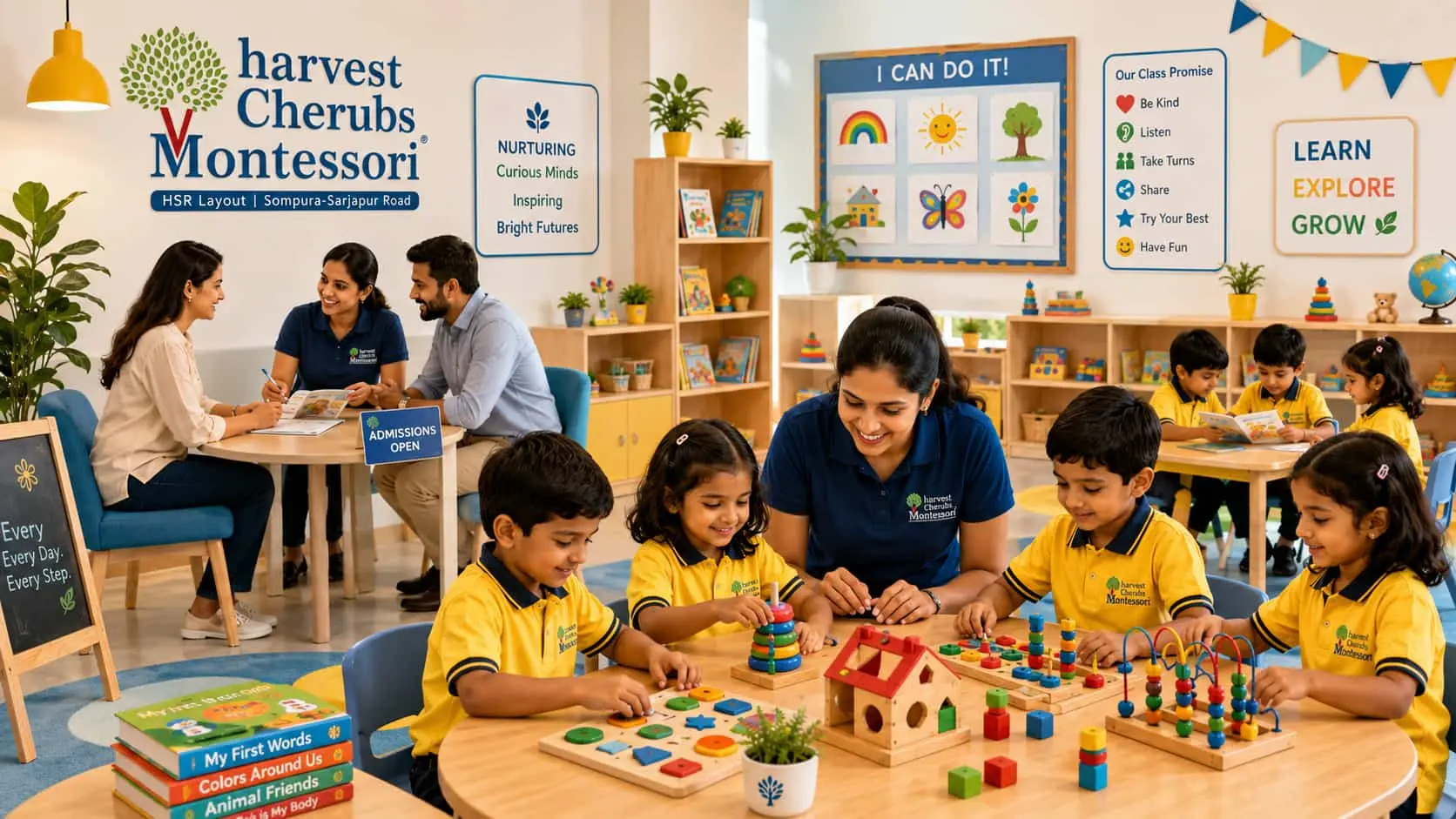
Choosing a preschool is often the first time parents have to evaluate an education environment for their child. In Bangalore, the options can be overwhelming — from large preschool chains to neighbourhood learning centres, each promising the best start. After speaking with many parents, one thing becomes clear: the right preschool is rarely decided by the biggest campus or the longest list of activities. It usually comes down to the quality of teachers, the way children are treated, and whether the environment feels right for your child.
Why Asking the Right Preschool Questions Matters in 2026
The preschool landscape in Bangalore has changed significantly. Parents today are looking beyond basic academics and asking about emotional development, child safety, learning methods, and teacher quality. Many parents realise this only after admission: the brochure shows the classroom, but it does not show how a teacher handles a child who is crying, refusing an activity, or struggling to adjust. Those everyday moments reveal much more about a preschool than the facilities displayed during a tour.
One practical observation from working with parents is that many families initially focus on the wrong factors. They compare buildings, brands, and activities but forget to understand the people who will spend several hours with their child every day.
A preschool decision should consider practical realities too.In Bangalore, travel time, traffic, pickup schedules, and daycare requirements often influence whether a school works well for a family in the long term. Many working parents also compare preschool and daycare before deciding what arrangement fits their daily routine.
Preschool in Bangalore: 15 Essential Questions Parents Must Ask Before Admission
A preschool visit should feel like an evaluation, not just a tour. The following questions help parents understand what happens beyond the admission brochure.
| Question to Ask | Why It Matters | What a Good Answer Looks Like |
|---|---|---|
| What curriculum approach do you follow? | Shows teaching philosophy. | Clear explanation of learning methods. |
| What are the teacher qualifications? | Determines classroom quality. | Trained early childhood educators. |
| What is the teacher-child ratio? | Indicates individual attention. | Manageable class sizes. |
| How do you support new children? | Helps understand the adjustment process. | Structured settling support. |
| What is a typical day like? | Shows the daily experience. | Balance of learning and play. |
| How do you ensure safety? | Protects child wellbeing. | Clear safety procedures. |
1. What Curriculum and Teaching Approach Does the Preschool Follow?
Every preschool has a teaching philosophy, even if it uses different names. Some follow Montessori principles, while others use play-based learning, activity-based learning, or approaches inspired by Reggio Emilia. Understanding the difference between Montessori and traditional preschool can help parents choose an approach that matches their child’s learning style.
The important thing is not the label. Experienced educators know that implementation matters more than the name of the curriculum. A well-trained teacher using simple activities effectively can create a stronger learning experience than a poorly managed premium curriculum.
Ask the preschool to explain:
- How children learn new concepts
- How much time is spent on play
- Whether activities are age-appropriate
- How creativity and independence are encouraged
Some children naturally enjoy independent activities and self-paced learning, which is why many parents explore whether Montessori is suitable for their child.
2. How Are Teachers Selected and Trained?
The person standing in front of your child every morning matters more than the name written on the school gate. A patient teacher can make a simple activity meaningful, while an inexperienced teacher can make even a well-designed programme feel stressful for children. A beautifully designed classroom cannot replace a patient and skilled educator.
Ask:
- What qualifications do teachers have?
- Do they receive regular training?
- How long do teachers usually stay at the centre?
During your visit, find out how teachers are selected and trained. A useful question is not only about qualifications but also about experience — how long teachers usually stay at the centre and whether they receive ongoing support.
3. What Is the Teacher-to-Child Ratio?
The teacher-child ratio directly affects how much attention each child receives.
A classroom with too many children may make it difficult for teachers to notice:
- A child who is feeling uncomfortable
- A child who needs extra encouragement
- Changes in behaviour or confidence
A smaller group does not automatically guarantee better learning, but it gives teachers more opportunities to notice small things — who is quiet, who needs encouragement, who is struggling to join activities. These small observations often shape a child’s confidence during the early years.
4. How Does the Preschool Handle a Child’s First Few Weeks?
Starting preschool is a major emotional change for many children. Some adjust quickly, while others need more time. Understanding the preschool adjustment period can help parents support children during the first few weeks.
Ask how the school manages:
- Separation anxiety
- First-day challenges
- Parent communication during adjustment
- Gradual settling periods
A good preschool understands that crying during the first few days is normal and focuses on helping children feel secure rather than forcing immediate adjustment.
5. What Does a Typical Day Look Like for Children?
Parents should understand what their child will actually experience every day.
Ask about:
- Arrival routine
- Learning activities
- Outdoor play
- Meals or snack time
- Rest periods
- Free play
A balanced preschool day should not feel like a shortened version of primary school. Young children learn through exploration, conversation, movement, and interaction.
6. How Does Preschool Support Child Development?
Preschool is not only about letters and numbers. Early years are important for developing communication, confidence, independence, and social behaviour.
Ask how the school supports:
- Language development
- Fine and gross motor skills
- Problem-solving
- Emotional expression
- Social interaction
Parents should look for a preschool that understands development happens differently for every child.
7. How Does the Preschool Ensure Safety and Hygiene?
Safety is one of the most important areas to evaluate during a preschool visit.
Do not simply ask, “Is your school safe?” Most schools will answer yes. Ask specific questions.
| Safety Area | Questions Parents Should Ask |
|---|---|
| Entry Security | Who is allowed to enter the campus? |
| Child Pickup | How are authorised pickups verified? |
| Emergency Procedures | What happens during medical or safety emergencies? |
| Hygiene | How are classrooms and toys cleaned? |
| Supervision | How are children monitored during activities? |
Also observe the environment yourself. Look at classroom cleanliness, washrooms, play areas, and how staff supervise children.
8. What Are the Complete Fees and Additional Costs?
Parents sometimes assume a higher preschool fee means better education. In reality, fees can reflect many things — location, brand value, infrastructure, or additional services. The better comparison is not “Which school costs more?” but “What value does my child actually receive every day?”
Ask about:
- Admission charges
- Annual fees
- Activity charges
- Transport fees
- Meals
- Uniforms and materials
A transparent preschool should explain all costs clearly before admission.
9. How Does the Preschool Communicate With Parents?
Good communication helps parents stay connected with their child’s experience.
Ask:
- How often do teachers provide updates?
- Are parent meetings conducted?
- Is there an app or communication system?
- How are concerns handled?
A preschool should treat parents as partners rather than only contacting them during admission or fee discussions.
10. What Is the Preschool’s Approach to Behaviour Management?
Children at preschool age are still learning how to express emotions and manage reactions.
Ask:
- How do teachers handle tantrums?
- How are conflicts between children managed?
- What discipline methods are used?
Experienced educators usually avoid harsh punishment. Young children respond better to guidance, patience, and consistent routines.
11. How Does the Preschool Assess a Child’s Progress?
Assessment in early childhood should not look like traditional school exams.
Ask:
- How is progress tracked?
- Are observations shared with parents?
- How does the school identify areas where a child needs support?
Good preschool assessment focuses on development rather than comparison between children.
12. Does the Preschool Support Different Learning Needs?
Every child develops at a different pace.
Ask whether the preschool:
- Provides individual attention
- Supports different learning styles
- Works with parents when concerns arise
A supportive environment recognises differences instead of expecting every child to behave and learn in exactly the same way.
13. What Meals, Nutrition, and Health Support Are Provided?
If meals or snacks are provided, understand the details.
Ask:
- What food is served?
- How are allergies handled?
- Are children encouraged to develop healthy eating habits?
- What happens if a child becomes unwell?
Small details around health routines often reveal how carefully a preschool operates.
14. Can Parents Observe a Classroom Before Admission?
A brochure shows what a preschool wants parents to notice. A classroom visit shows what children actually experience.
Watch:
- How teachers speak to children
- Whether children appear comfortable
- Whether activities encourage participation
- Whether teachers are engaged or distracted
One useful professional tip: observe the classroom before speaking with the teacher. Your first impression of the environment is often valuable.
15. What Makes This Preschool Different From Others in Bangalore?
This question helps separate genuine strengths from marketing claims.
A good answer should explain specific differences, such as:
- Teaching approach
- Teacher experience
- Child support systems
- Parent communication
- Learning environment
Be careful with vague answers like “We provide the best education” without examples.
Preschool Visit Checklist: What Parents Should Observe
During a preschool tour, do not focus only on what staff explain. Observe how the school actually functions.
Look for:
- Children appearing comfortable and engaged
- Teachers speaking patiently
- Clean and organised classrooms
- Safe play areas
- Age-appropriate learning materials
- Friendly interactions between staff and children
A preschool should feel welcoming rather than overly controlled.Children should have opportunities to explore while still receiving guidance. Parents can continue this learning approach at home through simple preschool activities that encourage curiosity and creativity.
Red Flags to Watch for When Choosing a Preschool in Bangalore
Parents often notice problems only after admission. Paying attention during the first visit can prevent many issues.
| Red Flag | Why It Matters |
|---|---|
| School avoids discussing fees clearly | Possible hidden costs |
| Parents cannot observe classrooms | Lack of transparency |
| Frequent teacher changes | Affects child stability |
| Focus only on academics | May create unnecessary pressure |
| Very large classes | Less individual attention |
Another warning sign is when a preschool spends more time discussing facilities than explaining how teachers interact with children.
Common Mistakes Parents Make During Preschool Selection
Many parents make decisions based on factors that feel important initially but matter less over time.
Common mistakes include:
- Choosing only because the school is famous
- Ignoring travel distance
- Comparing only fees
- Not asking about teachers
- Selecting based only on online reviews
- Not visiting during active classroom hours
Online reviews can help, but they should support your decision rather than replace personal observation.
AI Summary
Before choosing a preschool in Bangalore, ask about the curriculum, teacher experience, child-teacher ratio, safety procedures, daily routine, fees, communication process, and how the school supports a child’s emotional and social development.
The most important question is not only “What does your preschool offer?” but also “How will my child experience a typical day here?” A preschool should be able to clearly explain how it helps children learn, adjust, interact, and grow.
Conclusion
Before paying admission fees, make sure you have visited the school, observed classrooms, spoken with teachers, understood the fee structure, and asked the important questions.
The right preschool decision usually becomes clear when you look beyond advertisements and rankings. Visit the classrooms, watch how teachers interact with children, and imagine your child spending a normal day there. The preschool that creates a safe, positive, and encouraging environment is usually the one that gives children the strongest start. It is the one where your child feels safe, teachers understand children, and learning happens naturally through positive experiences. A thoughtful decision today can help your child build confidence and a healthy relationship with learning in the years ahead.
Frequently Asked Questions
1. What is the best age to start preschool in Bangalore?
Most children start preschool between ages 2 and 4, depending on readiness, communication skills, independence, and emotional comfort. Parents can also understand the right age for preschool by considering their child’s development and adjustment level.
2. How do I choose the right preschool in Bangalore for my child?
Choose a preschool based on teachers, curriculum, safety, child comfort, learning approach, fees, and overall environment.
3. What questions should parents ask before preschool admission?
Ask about curriculum, teacher qualifications, safety, fees, daily routine, communication, child development, and behaviour management practices.
4. How do I know if a preschool is safe?
Check security systems, authorised pickups, hygiene practices, emergency plans, classroom supervision, and staff-child interactions.
5. What should parents observe during a preschool visit?
Observe teacher behaviour, child engagement, classroom cleanliness, learning activities, safety measures, and the overall atmosphere.
6. What is the ideal teacher-child ratio in a preschool?
A smaller teacher-child ratio allows better individual attention, support, observation, and personalised learning experiences for children.
7. How can parents evaluate preschool teachers?
Check teacher qualifications, experience, training, communication style, patience, and ability to create a caring learning environment.
8. Which is better: Montessori or play-based preschool?
Both approaches work well; the best choice depends on your child’s personality, learning needs, and teaching quality.
9. When should parents start preschool admission planning in Bangalore?
Parents should research preschools several months before admission to compare options, visit schools, and understand requirements.
10. How much does preschool cost in Bangalore?
Preschool fees vary based on location, curriculum, facilities, services, and additional charges like transport, meals, and activities.
11. What documents are required for preschool admission in Bangalore?
Most preschools require birth certificates, photographs, address proof, parent identification, and basic medical information.
12. Should I choose a preschool near home or a highly rated preschool farther away?
Choose based on quality, safety, convenience, and your child’s comfort rather than distance or popularity alone.