

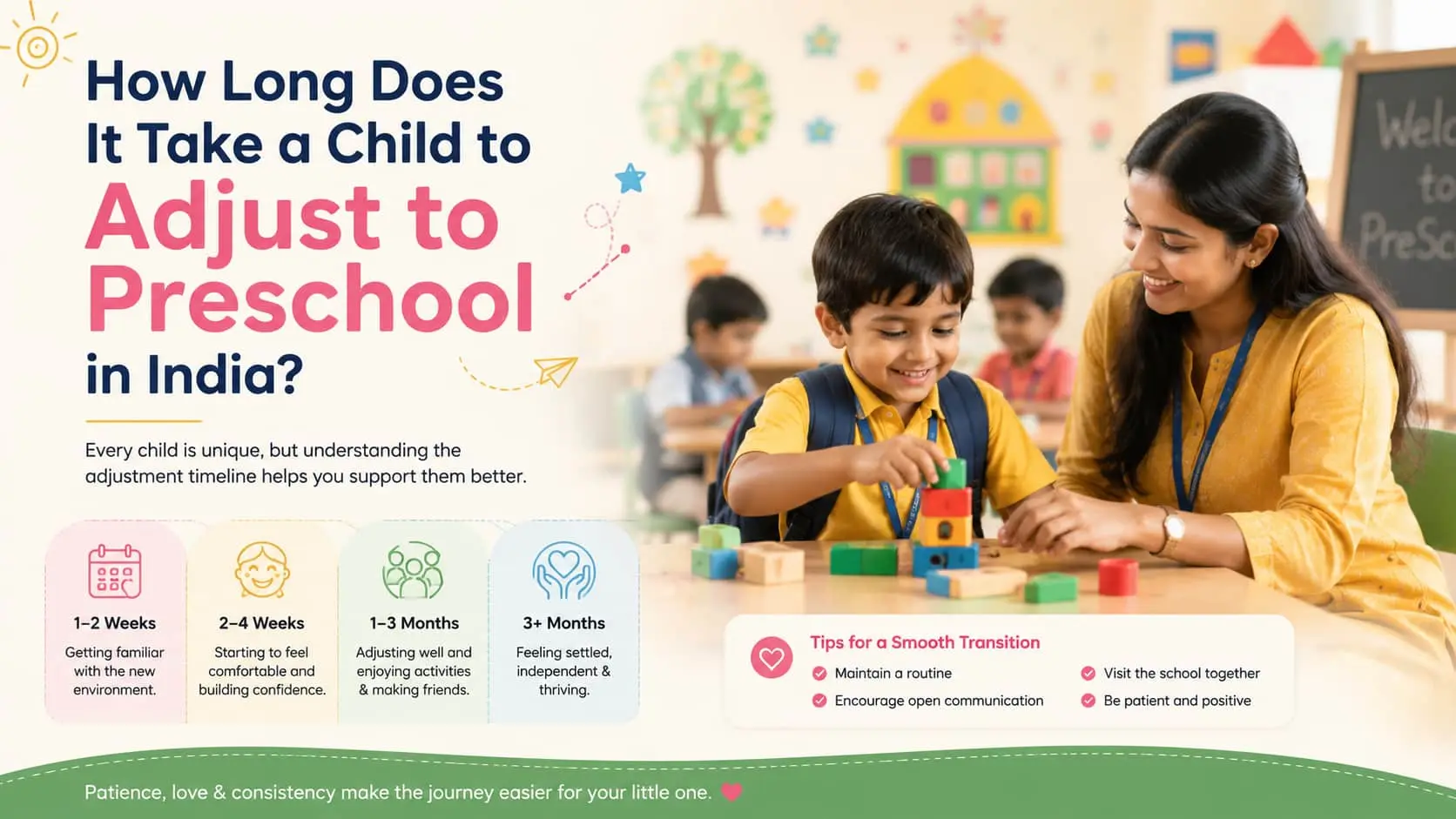
Starting preschool is an exciting milestone, but it can also bring mixed emotions for both children and parents. A common question families ask is, how long does it take a child to adjust to preschool? While many children settle into their new environment within 2 to 6 weeks, others may need a little longer depending on their personality and previous experiences. The first day of preschool marks the beginning of a new journey in preschool education and early childhood education, where children develop confidence, independence, and social skills. This guide explains the preschool settling period, separation anxiety, school readiness, and practical ways parents can support a smooth transition.
What Is the Preschool Settling Period?
The preschool settling period is the time children need to become comfortable with a new environment, caregivers, and daily routines. During this stage of early childhood education, children experience emotional and social changes while preschool teachers help them adapt through structured preschool programmes, engaging activities, and a welcoming preschool classroom. This process is similar in both preschool and day care preschool settings.
How Long Does the Settling Period Usually Last?
Most children adjust to preschool within 2 to 6 weeks, although there is no universal timeline. Toddlers attending preschool for the first time may need extra time, especially if they have never been away from home. Factors such as age, temperament, routine, and previous childcare experience all influence how quickly a child settles.
Every Child Adjusts at Their Own Pace
Every child is unique, and their adjustment journey will be different. Personality, previous daycare experience, family routines, language development, confidence levels, and social exposure all play an important role in determining how easily a child adapts to preschool. Some children embrace change quickly, while others require gentle encouragement and reassurance.
Signs Your Child Is Settling Well
As children become comfortable, parents often notice encouraging signs. They cry less during drop-off, begin making friends, talk positively about school at home, enjoy participating in preschool classroom activities, and become more enthusiastic about daily learning experiences. These milestones indicate growing confidence and emotional security.
When Adjustment Takes Longer
Some children need 6 to 8 weeks or even longer to adjust. Temporary regression, such as increased clinginess, changes in sleep patterns, or emotional outbursts, is common during this period. With consistency, patience, and support from teachers and parents, most children gradually become more confident.
Best Age to Start Preschool
The best age to start preschool depends on your child’s emotional and developmental readiness. If you’re unsure, explore our detailed guide on What Is the Best Age for a Child to Start Preschool? In India, many children begin pre nursery between the ages of two and three, while formal nursery starts around age three. Children who are emotionally prepared, curious, and able to follow simple routines often benefit most from preschool experiences.
Programme | Typical Age |
Day Care | 6 months and above |
Pre Nursery | 2–3 years |
Nursery | 3–4 years |
LKG | 4–5 years |
For parents considering preschool for two year olds, choosing a play-based programme that focuses on exploration and social interaction is often the most suitable option.
Why School Readiness Matters
School readiness goes beyond knowing letters and numbers. Parents can also read our article on 15 Signs Your Child Is Ready for Preschool to better understand whether their child is prepared. It includes emotional regulation, social interaction, communication skills, independence, toilet training, and the ability to follow simple instructions. Children who develop these foundational skills usually find it easier to adapt to preschool routines and classroom expectations.
Understanding Child Separation Anxiety
Separation anxiety is a normal stage of child development where children become upset when separated from their parents or primary caregivers. It commonly becomes more noticeable when children begin preschool because they are entering an unfamiliar environment with new adults and peers.
Common Signs of Separation Anxiety
Children experiencing separation anxiety may cry during drop-off, cling tightly to parents, refuse to enter school, have tantrums, experience trouble sleeping, or temporarily lose their appetite. These reactions are common during the early weeks of preschool and usually improve over time.
When Separation Anxiety Is Normal
Separation anxiety is typically seen between six months and four years of age. Mild anxiety during the preschool transition is expected and usually fades as children develop trust in their teachers and routines. However, persistent or severe anxiety lasting several months may require professional guidance.
Why Some Children Settle Faster Than Others
Several factors influence how quickly children adapt to preschool. Children with flexible temperaments, previous daycare experience, confident parents, consistent preschool routines, and positive interactions with teachers often settle more quickly. Every child’s emotional development progresses at an individual pace.
How Preschool Teachers Help Children Adjust
Experienced preschool teachers create a warm and welcoming environment that helps children feel safe. They establish predictable classroom routines, use play-based learning, offer comfort during difficult moments, maintain regular communication with parents, and encourage children to interact in small groups, gradually building confidence.
Preschool Classroom Activities That Build Confidence
Meaningful preschool classroom activities help children develop social skills while making learning enjoyable. You can also try these preschool activities at home to reinforce learning after school. You can also try these preschool activities at home to reinforce learning after school. . Circle time encourages communication, storytelling improves listening, music and movement build confidence, art promotes creativity, sensory play enhances exploration, outdoor games strengthen motor skills, and free play encourages friendships. These activities support both preschool learning and emotional growth.
First Day of Preschool Activities
The first day of preschool is designed to help children feel welcome rather than overwhelmed. Teachers often organise welcome games, simple name activities, toy exploration, classroom tours, storytelling sessions, and a calm goodbye routine. These first day of preschool activities reduce anxiety and encourage children to become familiar with their surroundings.
What Happens During the First Week of Preschool?
The first week of preschool usually focuses on building comfort instead of academics. Children may attend shorter sessions, meet classmates, explore classroom routines, participate in simple activities, and gradually learn expectations. Regular communication between teachers and parents helps ensure a smooth transition.
Preparing Your Child for Preschool
Preparing your child for preschool before the first day can make the transition much easier.Visit the school together, read books about starting preschool, and choose a learning environment that supports your child’s development. If you’re still exploring schools, read our guide on How to Choose the Right Preschool. practise morning routines, encourage simple independent tasks such as eating or putting away toys, and speak positively about school to build excitement instead of anxiety.
Creating a Consistent Preschool Routine for Toddlers
A predictable preschool routine helps children feel secure. Whether your child attends a preschool or daycare, maintaining consistent routines makes the transition easier. Establish regular wake-up times, healthy meals, bedtime routines, consistent drop-off and pick-up schedules, and enough sleep each night. Familiar daily patterns make adapting to preschool much less stressful.
Preschool Transition Tips for Parents
Successful preschool transition tips for parents include keeping goodbyes short and reassuring, remaining calm during drop-off, avoiding leaving without saying goodbye, building trust in teachers, maintaining consistent attendance, and celebrating every small achievement. Children often mirror their parents’ confidence and emotions.
Managing Preschool Anxiety at Home
Parents can reduce preschool anxiety by providing emotional reassurance, talking positively about the school day before bedtime, encouraging pretend play about school, praising children for being brave, and ensuring healthy sleep habits. Consistency at home supports emotional resilience during the adjustment period.
Helping Children Overcome Separation Anxiety at School
Teachers and parents can work together to reduce separation anxiety through consistent communication, allowing children to bring a comfort object when appropriate, offering positive reinforcement for brave behaviour, and maintaining regular attendance. Predictable routines help children develop trust and confidence over time.
Starting Preschool Is a Family Adjustment
Starting preschool is not only a significant change for children but also for parents. Feelings of worry, guilt, or uncertainty are common. Staying positive, trusting the preschool staff, and celebrating each milestone together helps build confidence for the entire family.
When Should Parents Be Concerned?
Although most children adjust within several weeks, parents should seek professional advice if their child continues to experience extreme distress beyond 8 to 12 weeks, consistently refuses to eat, shows significant developmental regression, or experiences severe emotional difficulties. Consulting a paediatrician or child psychologist can help identify any underlying concerns.
Conclusion
Every child’s preschool journey is unique, and there is no perfect timeline for settling in. With patience, consistency, supportive preschool teachers, and encouragement from family members, most children gradually gain confidence and begin enjoying school. A positive start in preschool education lays a strong foundation for lifelong learning, emotional well-being, and success throughout their early childhood education journey.
Frequently Asked Questions
How long does it take most children to adjust to preschool?
Most children adjust within 2 to 6 weeks, although some may take up to two months depending on their personality, age, and previous childcare experience.
What is the best age to start preschool?
Many children begin preschool between 2 and 3 years of age, but the ideal age depends on emotional readiness, communication skills, and independence rather than age alone.
Is crying on the first day of preschool normal?
Yes. Crying during the first few days or weeks is a common and healthy response to a new environment. Most children gradually become more comfortable with consistent routines.
How can parents reduce separation anxiety?
Parents can prepare children by practising routines, speaking positively about preschool, keeping goodbyes brief, maintaining consistent attendance, and working closely with teachers.
What happens during the first week of preschool?
The first week usually includes shorter sessions, classroom exploration, meeting teachers and classmates, simple play-based activities, and gradually introducing daily routines.
Can a two-year-old attend preschool?
Yes. Many schools offer pre nursery or preschool for two year olds through play-based programmes designed to support early social, emotional, and language development.
How do preschool teachers help children settle?
Preschool teachers provide structured routines, engaging play activities, emotional reassurance, positive encouragement, and regular communication with parents to help children feel secure.
What if my child still cries after one month?
Some children naturally require more time to adjust. If crying gradually decreases and your child participates in classroom activities, progress is being made. However, persistent severe distress lasting beyond two to three months should be discussed with teachers and, if necessary, a healthcare professional.