

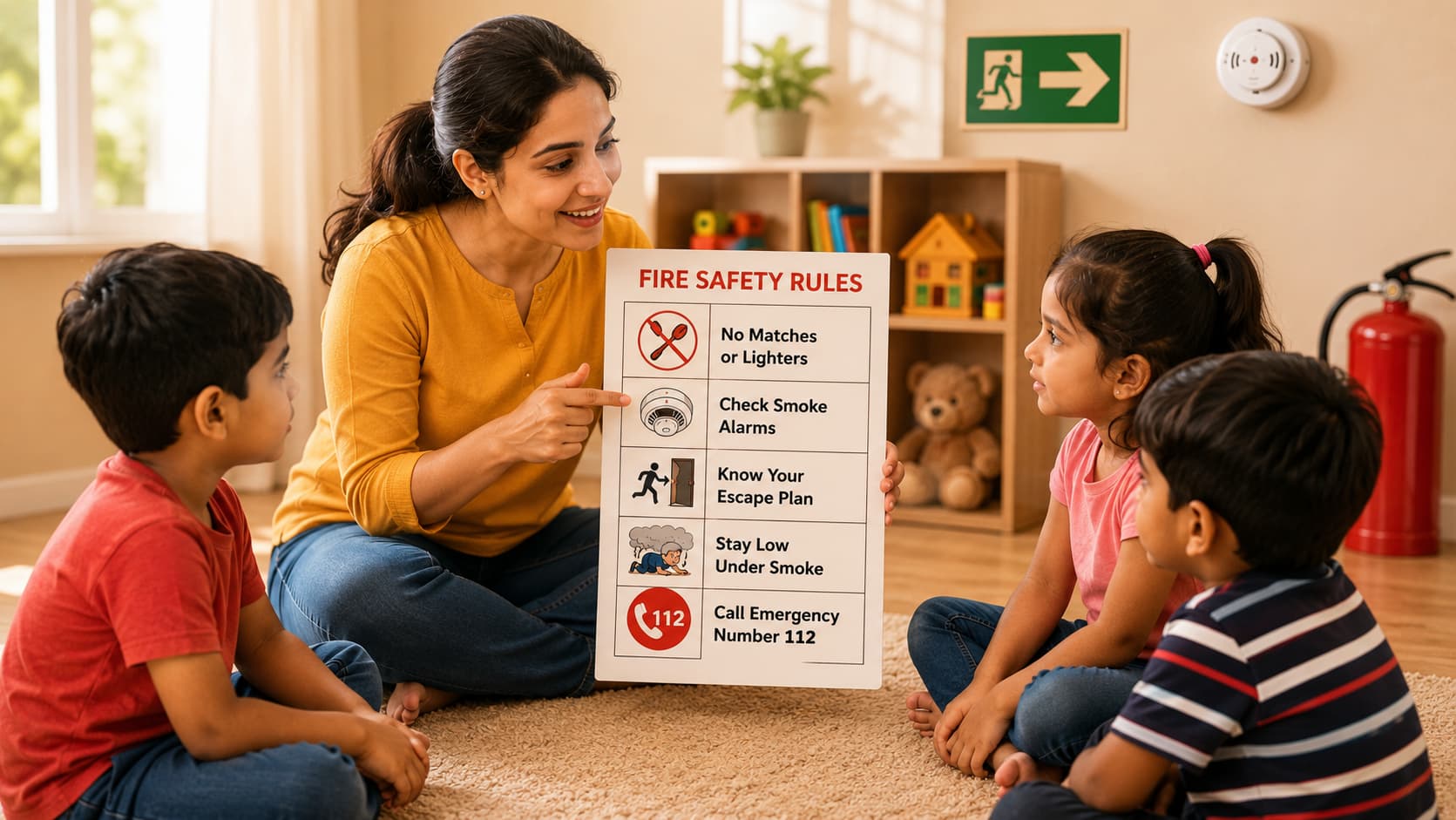
Children are naturally curious, but that curiosity can sometimes lead them toward dangerous situations involving fire. Whether it’s a gas stove, candles, electrical appliances, or fireworks, every parent should teach children how to stay safe around fire. Learning Fire Safety Tips for Kids is not about creating fear—it’s about helping children recognize risks, make smart decisions, and respond calmly during emergencies. In this guide, you’ll discover practical fire safety rules, prevention tips, and simple lessons every family can practice at home.
What Are Fire Safety Tips for Kids?
Fire safety tips for kids are simple rules and habits that teach children how to prevent fires and react safely if one occurs. These lessons help children understand fire hazards, recognize emergency warnings, and follow the safest actions during an emergency.
Children should learn:
- Fire is useful but can be dangerous.
- Never play with matches or lighters.
- Know how to leave the house safely.
- Recognize smoke alarms.
- Stay calm during emergencies.
- Follow instructions from trusted adults.
Teaching these basics at an early age builds confidence, encourages independent thinking, and helps children develop lifelong safety habits. These everyday experiences also support how Montessori builds confidence and independence in children through practical learning.
Why Fire Safety Education Is Important for Children
Fire emergencies can happen unexpectedly, and children may not always know how to react. Teaching fire safety helps them understand the dangers around them and prepares them to make safe decisions instead of panicking.
Benefits of Fire Safety Education
- Reduces the risk of accidents at home.
- Helps children react calmly during emergencies.
- Builds awareness of everyday fire hazards.
- Improves family preparedness through regular practice.
- Encourages responsible behavior around fire.
The earlier children learn these skills, the more confident they become in handling emergency situations.
10 Essential Fire Safety Tips
1. Never Play with Matches or Lighters
Matches and lighters should always be treated as dangerous tools, not toys. Explain to children that even a small flame can quickly spread and cause serious injuries or damage. Store these items in secure places where children cannot reach them.
Key Points
- Keep matches and lighters locked away.
- Explain why fire is dangerous.
- Never allow children to light candles.
- Tell children to inform an adult if they find matches.
2. Learn the Importance of Smoke Alarms
Smoke alarms provide an early warning before a fire spreads. Children should recognize the alarm sound and understand that hearing it means they must leave the house immediately without stopping to collect belongings.
Key Points
- Test smoke alarms every month.
- Let children hear the alarm sound.
- Leave immediately when the alarm rings.
- Meet family members outside.
3. Create and Practice a Fire Escape Plan
Every family should have a fire escape plan that includes at least two ways out of every room. Practicing this plan helps children remember the safest route, reduces panic during emergencies, and turns safety into a fun learning experience. Similar preschool activities at home help children learn important skills through regular practice.
Key Points
- Identify two exits from each room.
- Choose an outdoor meeting point.
- Practice the escape route twice a year.
- Never return inside after leaving.
4. Teach Stop, Drop, and Roll
If clothing catches fire, children should know the “Stop, Drop, and Roll” technique. Practicing this simple action helps them react quickly and safely instead of running, which can make flames spread faster.
Key Points
- Stop moving immediately.
- Drop to the ground.
- Cover the face with your hands.
- Roll until the flames are out.
5. Stay Low When There Is Smoke
Smoke rises and can make breathing difficult. Teach children to crawl close to the floor where the air is cleaner. This simple habit can improve visibility and reduce smoke inhalation during evacuation.
Key Points
- Crawl instead of walking.
- Cover the nose and mouth.
- Move toward the nearest exit.
- Stay low until safely outside.
6. Never Hide During a Fire
Children may instinctively hide when they are scared, but hiding can make it difficult for rescuers to find them. Teach them that leaving the building immediately is always the safest choice.
Key Points
- Never hide under beds.
- Do not lock yourself in rooms.
- Go outside immediately.
- Wait at the family meeting point.
7. Stay Safe in the Kitchen
The kitchen is one of the most common places where household fires begin. Children should understand that cooking areas, hot utensils, and gas stoves are not places for playing or running. Teaching safe behaviour in the kitchen also complements good eating habits for preschoolers, encouraging children to respect food preparation and household routines.
Key Points
- Stay away from hot cooking areas.
- Never touch the gas stove.
- Keep loose clothing away from flames.
- Ask an adult before using kitchen appliances.
8. Learn Emergency Contact Information
Children who are old enough should know important emergency details such as their home address, parents’ phone numbers, and whom to contact for help if they become separated during an emergency.
Key Points
- Memorize parents’ phone numbers.
- Learn the home address.
- Know trusted adults nearby.
- Stay calm while asking for help.
9. Practice Fire Drills Regularly
A fire drill helps children become familiar with emergency procedures before a real emergency happens. Walking, crawling, and following escape routes also improve coordination, making physical movement an important part of learning, much like physical fitness activities for preschoolers. Regular practice builds confidence and makes it easier for children to remember what to do.
Key Points
- Practice twice every year.
- Use different escape routes.
- Include night-time drills.
- Review the meeting point afterward.
10. Never Go Back Inside a Burning Building
Once children have safely left the building, they should never return inside for toys, pets, or personal belongings. Their safety should always come first while trained firefighters handle the emergency.
Key Points
- Stay outside after escaping.
- Leave belongings behind.
- Wait for emergency responders.
- Follow adult instructions.
Fire Safety Tips for Kids in Bangalore Homes
Many families in Bangalore live in apartments, gated communities, and multi-storey buildings where fire safety procedures may differ from independent houses. Parents should teach children about their building’s emergency exits, staircases, and evacuation procedures so they can respond quickly if an emergency occurs.
Teach Kids to Identify Every Exit Gate and Staircase
Children should know more than just the front door of their home. Walk them through every available exit, including emergency staircases, so they understand the safest way to leave the building during a fire without becoming confused.
Key Points
- Show the main and emergency exit gates.
- Explain where each staircase leads.
- Never use lifts during a fire.
- Practice reaching the nearest exit together.
Help Children Recognize Emergency Exit Signs
Emergency exit signs are placed throughout apartments, schools, malls, and office buildings to guide people to safety. Teaching children to recognize these signs helps them locate the safest escape route during an emergency.
Key Points
- Identify green exit signs.
- Explain their purpose.
- Look for signs during outings.
- Follow exit signs immediately.
Show the Building's Safe Assembly Point
Every apartment community should have a designated assembly area where residents gather after evacuation. Children should know exactly where this location is and understand that they should remain there until adults say it is safe.
Key Points
- Visit the assembly point.
- Explain why everyone gathers there.
- Stay with family members.
- Never return inside the building.
Practice the Fire Escape Route as a Family
Knowing the escape plan is important, but practicing it regularly makes it easier for children to remember during stressful situations. Walk through both primary and alternate evacuation routes several times each year.
Key Points
- Use the nearest staircase.
- Learn an alternate escape route.
- Practice during the day and night.
- Keep pathways clear.
Teach Children to Stay Calm During an Evacuation
Fire alarms, smoke, and large crowds can make children anxious. Teaching them how to stay calm and follow instructions builds resilience and strengthens children’s confidence during unfamiliar situations. Encourage them to stay close to a trusted adult, avoid running, and follow instructions from parents, security staff, or emergency responders.
Key Points
- Hold an adult’s hand.
- Walk quickly without pushing.
- Leave belongings behind.
- Listen carefully to instructions.
Explain the Importance of Smoke Alarms
Children should know that a smoke alarm is an early warning system designed to protect everyone in the home. Understanding its purpose helps them react immediately instead of ignoring the sound.
Key Points
- Recognize the alarm sound.
- Leave immediately.
- Never hide.
- Go directly to the meeting point.
Keep Children Away from High-Risk Areas
Certain places in the home, such as kitchens, electrical panels, and areas with candles or incense, present a higher fire risk. Teaching children to avoid these locations helps reduce accidents and injuries.
Key Points
- Stay away from cooking areas.
- Never touch exposed wires.
- Avoid playing near candles.
- Tell adults about damaged appliances.
Teach Children What to Do If They See Smoke
Smoke often spreads faster than flames, making it one of the biggest dangers during a fire. Children should understand that they must leave immediately and never investigate the source of the smoke.
Key Points
- Crawl below the smoke.
- Cover the nose and mouth.
- Exit the building quickly.
- Inform a trusted adult.
Make Fire Safety a Monthly Family Activity
Fire safety should become part of a family’s regular routine rather than a one-time lesson. Regular practice through enjoyable family activities supports the same hands-on learning approach used in fun-based learning for young children. Reviewing emergency plans and practicing drills helps children remember important safety habits throughout the year.
Key Points
- Review safety rules monthly.
- Test smoke alarms together.
- Practice evacuation drills.
- Update the escape plan regularly.
Encourage Children to Report Fire Hazards
Children should feel comfortable telling adults about anything that seems unsafe. Encouraging them to report hazards early can prevent small problems from becoming serious emergencies.
Key Points
- Report burning smells immediately.
- Tell adults about exposed wires.
- Inform parents if alarms beep.
- Never ignore signs of danger.
Common Fire Safety Mistakes Parents Should Avoid
Even well-prepared families can overlook important safety practices. Avoiding these common mistakes can improve your child’s understanding and reduce the risk of fire-related accidents.
- Assuming children already know what to do.
- Never practicing a family fire drill.
- Leaving matches or lighters within reach.
- Ignoring smoke alarm maintenance.
- Blocking emergency exits with furniture.
- Teaching fire safety only once.
Expert Tips for Parents
Creating a safe home requires consistent effort and regular conversations about fire safety. These simple habits can strengthen your family’s emergency preparedness.
- Test smoke alarms every month.
- Replace alarm batteries when needed.
- Practice fire drills twice a year.
- Update escape plans after moving.
- Keep emergency contact numbers visible.
- Encourage children to ask safety questions.
Conclusion
Teaching children about fire safety is one of the most valuable lessons parents can provide. From understanding smoke alarms and practicing escape plans to recognizing emergency exits and avoiding fire hazards, these simple habits can help children respond confidently during an emergency. For families living in Bangalore, especially in apartments and gated communities, regularly practicing evacuation routes and identifying emergency exit gates adds an extra layer of preparedness. By making fire safety a regular family activity, parents can help ensure their children are ready to protect themselves and others if the unexpected happens. Families looking for a preschool that encourages practical life skills, confidence, and hands-on learning can also explore the admission process at Cherubs Montessori to learn more.
FAQs
1. What are the most important fire safety tips for kids?
Children should never play with matches, recognize smoke alarms, practice fire escape plans, stay low during smoke, learn Stop, Drop, and Roll, and never re-enter a burning building.
2. How can I teach fire safety to my child?
Use simple language, role-playing, regular fire drills, and practical demonstrations. Repeating these lessons helps children remember them during emergencies.
3. What should kids do during a fire emergency?
Children should leave the building immediately, crawl under smoke if necessary, go to the family meeting point, and never return inside.
4. How often should families practice a fire drill?
Experts recommend practicing a home fire drill at least twice each year and reviewing the escape plan whenever there are changes to the home.
5. Why is fire safety education important?
Fire safety education helps children recognize hazards, make safe decisions, remain calm during emergencies, and develop lifelong safety habits.