

Some days, preschoolers finish an entire bowl of fruit without a fuss. On other days, they refuse even a single bite of vegetables they happily ate last week. Many parents experience this constant back-and-forth during early childhood, especially between the ages of 2 and 5.
At this stage, food habits are shaped not just by hunger, but also by emotions, routines, curiosity, and independence. The eating patterns children develop now often stay with them for years. That’s why building Good Eating Habits For Preschoolers matters far beyond mealtime struggles.
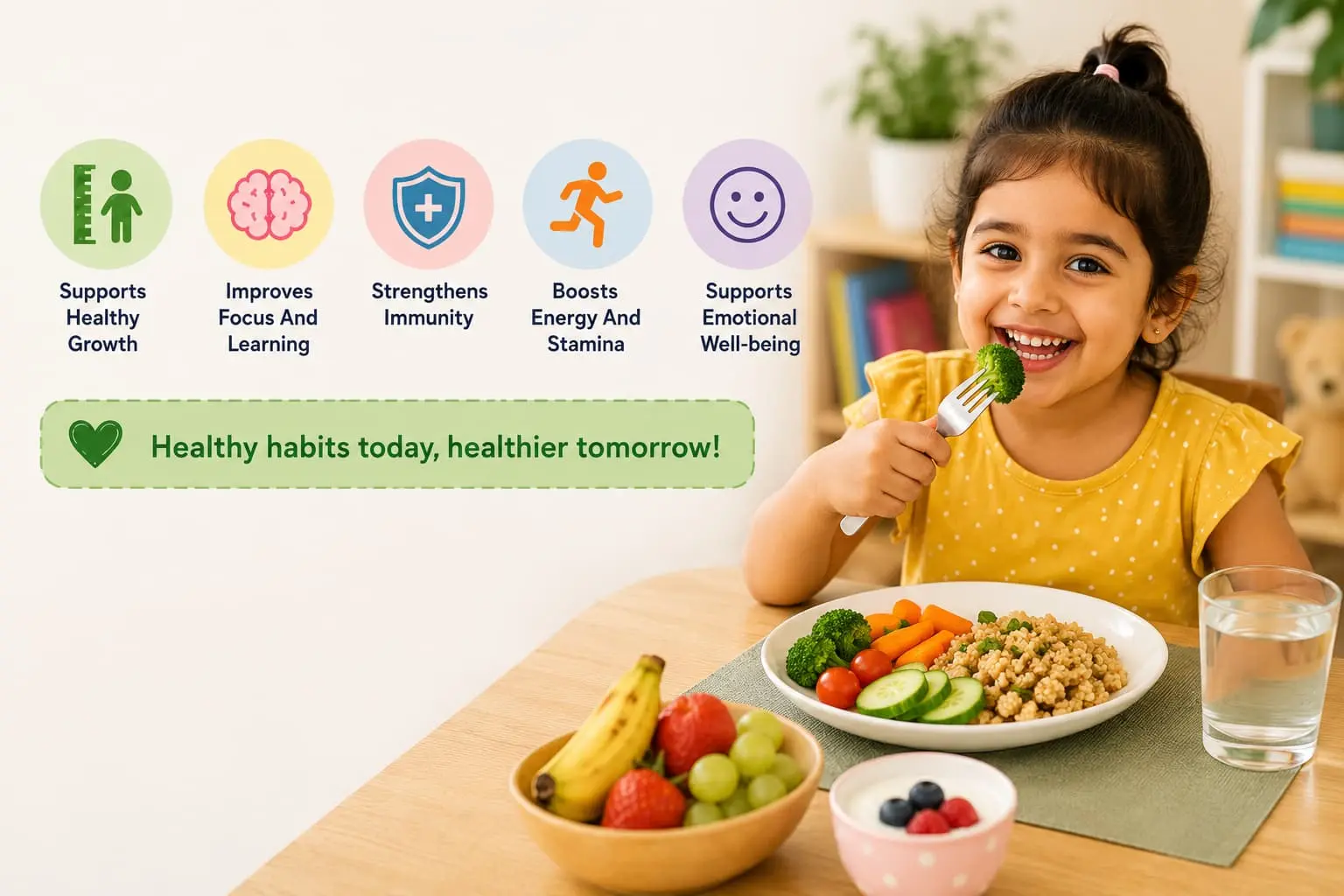
Children who eat balanced meals regularly tend to have better energy levels, improved concentration, stronger immunity, and healthier growth, especially when combined with physical fitness in preschool. Small daily habits like eating breakfast on time or trying different foods can quietly influence their physical and emotional development.
Here, we’ll look at practical ways to encourage healthy eating without turning every meal into a negotiation.
Why Healthy Eating Habits Matter During Preschool Years
Preschoolers grow rapidly, even if it doesn’t always feel obvious day to day. Their brains are developing quickly, their bodies are becoming more active, and their immune systems are still maturing. Proper nutrition for preschoolers supports all of these areas.
Children at this age also begin forming long-term relationships with food. If meals constantly feel stressful or restrictive, children may become picky eaters or resistant to trying new foods. On the other hand, calm and consistent food routines usually help children feel more comfortable around eating.
The importance of healthy eating habits goes beyond physical growth. Good nutrition often affects:
- Attention span during learning activities
- Mood stability
- Sleep quality
- Physical stamina
- Emotional regulation
Many child nutrition specialists often suggest focusing less on “perfect eating” and more on consistent healthy patterns. Preschoolers rarely eat perfectly balanced meals every single day, and that’s completely normal.
What matters more is the overall routine.
For example, a child who regularly eats fruits, simple home-cooked meals, proteins, and whole grains throughout the week is generally developing healthy nutrition habits — even if they occasionally refuse dinner.
Common Food Challenges Parents Face
Most parents of preschoolers encounter at least one frustrating eating phase.
Some common examples include:
Refusing Vegetables
A child may suddenly reject foods they previously enjoyed. This often happens because preschoolers are testing independence and reacting to textures, colors, or smells differently.
Wanting Snacks All Day
Children sometimes prefer snacks over proper meals because packaged snacks are quick, salty, sweet, and easy to eat. Constant snacking can reduce appetite during mealtimes.
Eating Very Slowly
Long meal times are common at this age. Preschoolers are easily distracted and may lose interest halfway through eating.
Copying Adult Habits
Children notice everything. If adults skip meals, avoid vegetables, or frequently eat junk food, preschoolers often imitate those patterns naturally.
This is why many experts recommend family meals whenever possible. Children tend to develop better good food habits when they see healthy eating modeled consistently at home.
Healthy Eating Tips For Preschoolers That Actually Work
Parents often feel pressured to make children eat perfectly healthy meals every day. In reality, small realistic changes usually work better than strict food rules.
Keep Meal Timing Consistent
Regular meal and snack times help children understand hunger cues. Random eating schedules often lead to crankiness and poor appetite.
Simple routines like:
- breakfast after waking up
- lunch at a fixed time
- evening fruit snack
- early dinner
can make a noticeable difference.
Avoid Forcing Food
Pressure usually backfires.
When children are forced to eat, they may develop negative feelings around meals. Professionals typically advise offering healthy options repeatedly without creating stress.
Sometimes preschoolers need multiple exposures before accepting a food.
Make Food Visually Appealing
Young children often respond strongly to colors and presentation.
Simple ideas include:
- fruit cut into fun shapes
- colorful vegetable plates
- yogurt with berries
- small bite-sized portions
These small changes can make healthy foods feel less intimidating.
Involve Children During Food Preparation
One of the most effective healthy food activities for preschoolers is simply letting them participate in the kitchen because hands-on experiences support fun-based learning
Even small tasks help:
- washing fruits
- mixing ingredients
- arranging food on plates
- choosing vegetables at the store
Children are often more willing to try foods they helped prepare themselves, especially when healthy eating is introduced through fun preschool activities
Focus on Balance, Not Perfection
A child eating homemade dal rice for lunch and a cookie later is not a failure.
Healthy eating should feel sustainable and realistic. Obsessing over “perfect” meals can increase stress for both parents and children.
Best Eating Habits For Preschoolers To Encourage Early
Building routines early can make healthy eating easier as children grow older while also supporting important life skills for preschoolers
Eating Breakfast Daily
Breakfast helps preschoolers maintain energy and concentration during learning and playtime.
Simple nutritious breakfasts may include:
- idli with chutney
- oatmeal with fruit
- eggs and toast
- dosa with vegetables
Drinking Enough Water
Children often forget to drink water when busy playing. Encouraging regular water intake supports digestion and energy levels.
Sitting Together During Meals
Screen-free family meals improve communication and mindful eating habits.
Children who eat while watching cartoons may become disconnected from hunger and fullness signals, similar to other screen time effects seen during early childhood.
Trying New Foods Slowly
Not every new food needs to become a favorite immediately.
Offering tiny portions without pressure helps children feel safer experimenting with unfamiliar foods.
These are often considered some of the best eating habits for preschoolers because they create long-term consistency instead of temporary fixes.
Expert Recommendations For Healthy Nutrition Habits For Preschoolers
Many professionals working in early childhood nutrition suggest keeping mealtimes calm and predictable.
A few realistic recommendations include:
Avoid Using Food As Reward Or Punishment
Statements like:
- “Finish vegetables to get dessert”
- “No snacks because you were naughty”
can create unhealthy emotional connections with food.
Limit Sugary Drinks
Frequent sugary drinks may affect appetite, dental health, and energy balance. Water and fresh homemade drinks are usually better daily choices.
Watch Portion Sizes
Preschoolers need smaller portions than adults. Large servings can overwhelm them and create resistance toward eating.
Be Patient With Phases
Children naturally go through appetite changes during growth periods.
Some weeks they eat more. Other weeks less.
This is often completely normal unless there are ongoing growth concerns or nutritional deficiencies.
Conclusion
Building healthy eating habits during the preschool years is rarely about getting every meal perfect. It’s usually the small, repeated routines that make the biggest difference over time — sitting together for meals, offering balanced foods regularly, and creating a calm atmosphere around eating.
Children learn food habits slowly. A preschooler who refuses vegetables today may become more open to them after seeing them on the table consistently without pressure. Patience matters just as much as nutrition itself.
Good food habits also help children feel more energetic, focused, and emotionally balanced throughout the day, especially during the transition into starting preschool When parents focus on steady routines instead of constant mealtime battles, children often develop a healthier and more confident relationship with food naturally.
FAQs
Why are good eating habits important for preschoolers?
Good eating habits support healthy growth, brain development, stronger immunity, better concentration, and stable energy levels during early childhood.
How can parents encourage healthy eating habits for preschoolers?
Parents can encourage healthy eating by maintaining regular meal schedules, offering balanced meals, avoiding pressure during meals, and involving children in food preparation.
What foods are best for preschoolers?
Nutritious foods like fruits, vegetables, whole grains, dairy products, eggs, lentils, nuts, and homemade meals are generally good choices for preschoolers.
How do healthy food activities help preschoolers?
Healthy food activities for preschoolers make children more curious and comfortable around nutritious foods. Cooking, washing fruits, and arranging meals can encourage better eating habits.