

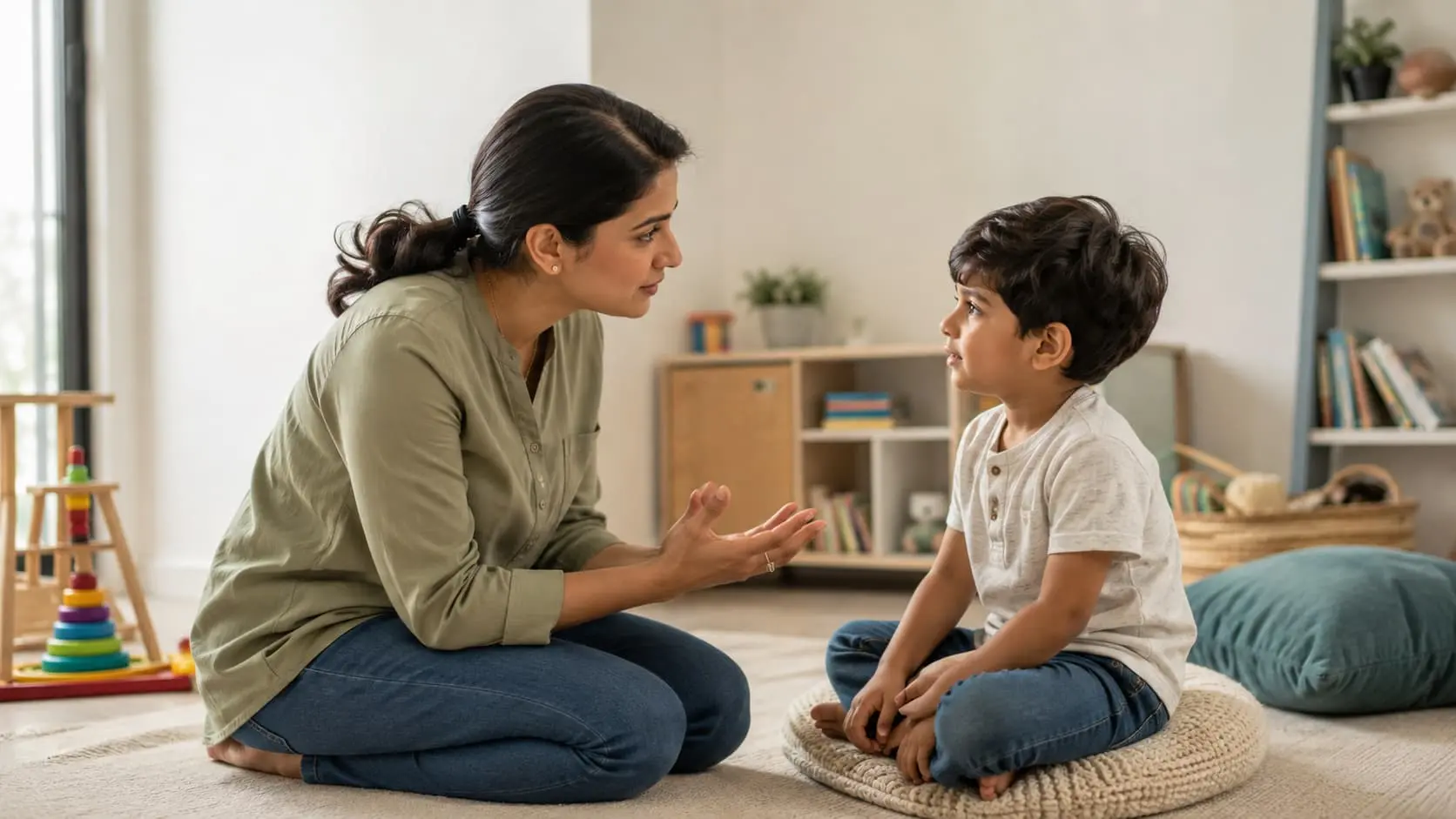
Children experience big emotions every day. They may feel excited when playing with friends, frustrated when they cannot get what they want, nervous about starting school, or sad when something does not go their way. Learning how to understand and manage these feelings is an important part of growing up.
Emotional intelligence in children refers to their ability to recognize emotions, express feelings appropriately, understand how others feel, and respond to emotions in healthy ways. These skills do not develop overnight. Children gradually learn them through relationships, play, everyday experiences, and guidance from parents and teachers.
The good news is that parents can support this development through simple conversations, activities, and everyday routines. Early education also provides children with opportunities to practice emotional and social skills alongside other essential life skills for preschoolers.
What Is Emotional Intelligence in Children?
Emotional intelligence is the ability to understand and respond to emotions—both our own and those of other people. For young children, emotional intelligence is closely connected to their emotional development, social skills, and ability to manage everyday challenges.
Children gradually learn to:
- Recognize different emotions
- Name and express their feelings
- Understand how other people may feel
- Manage strong emotions such as anger and frustration
- Show empathy and concern for others
- Build positive relationships
- Make appropriate choices when dealing with difficult situations
For example, a young child may initially respond to frustration by crying or throwing a toy. With support, the child can learn to say, “I am angry because I can’t do it,” and ask for help instead.
These small steps show how children gradually develop the ability to recognize, express, and manage their emotions.
Why Is Emotional Intelligence Important in Early Childhood?
Emotional intelligence in children plays an important role in relationships, learning, communication, and everyday behavior. When children understand their emotions, they are better prepared to communicate their needs and respond to challenging situations.
Developing emotional intelligence can help children:
- Manage frustration and disappointment
- Communicate their feelings more clearly
- Develop empathy
- Build friendships
- Resolve simple conflicts
- Develop confidence
- Adapt to new situations
- Develop self-regulation
These skills are also connected to children’s experiences in school. A child who can ask for help, wait for a turn, cooperate with classmates, and recover from disappointment may find it easier to participate in classroom activities.
This is one reason early childhood education and emotional intelligence are closely connected. Preschool and other early learning environments give children regular opportunities to practice communication, cooperation, problem-solving, and emotional regulation.
How Early Education Helps Develop Emotional Intelligence
A Montessori environment can give children opportunities to develop independence, make choices, communicate with others, and solve age-appropriate problems. These everyday experiences can support emotional development while helping children become more confident and capable learners.
How Preschool Develops Emotional Intelligence
Preschool teachers can incorporate emotional learning into everyday classroom experiences through:
- Emotion-focused conversations
- Group activities
- Storytelling
- Pretend play
- Cooperative play
- Classroom routines
- Opportunities to solve conflicts
For example, after reading a story, a teacher might ask children how a character felt and why. During group play, children may learn to share, take turns, and communicate when they disagree.
These experiences help children understand that emotions are normal and that there are healthy ways to respond to them.
Role of Teachers in Emotional Development
Teachers have an important role in emotional development because young children learn by observing and interacting with trusted adults.
Teachers can:
- Model healthy emotional expression
- Help children identify and name emotions
- Encourage children to communicate their feelings
- Teach simple calming strategies
- Support positive interactions between children
- Guide children through disagreements
When teachers respond calmly to children’s emotions, they also demonstrate what healthy emotional regulation can look like.
How Parents Can Teach Emotional Intelligence at Home
Parents have countless opportunities to develop emotional intelligence through ordinary daily interactions. You do not need complicated lessons or special equipment. Small moments can become valuable learning opportunities.
Help Your Child Name Their Feelings
One of the first steps in emotional development is helping children identify what they are feeling.
Instead of simply saying, “Don’t be upset,” try putting the emotion into words:
“It looks like you’re frustrated because the toy isn’t working.”
This helps children connect their physical and emotional experience with a specific feeling. Over time, they may become better at saying, “I’m frustrated,” rather than reacting immediately.
Teach Children That All Feelings Are Okay
Children need to understand that experiencing anger, sadness, fear, jealousy, or frustration is normal. However, accepting an emotion does not mean accepting harmful behavior.
You can say:
“It’s okay to feel angry, but it’s not okay to hit.”
This teaches children that they can experience strong emotions while still making safe and respectful choices.
Show Children How to Manage Strong Emotions
Young children need practice before they can manage big emotions independently. Parents can introduce simple strategies such as:
- Taking slow, deep breaths
- Taking a quiet break
- Counting slowly
- Talking about the problem
- Asking a trusted adult for help
The goal is not to make difficult emotions disappear. Instead, children learn ways to respond to those emotions safely.
Encourage Children to Express Their Feelings
Give children opportunities to talk about how they feel. Ask open-ended questions such as:
- “How did that make you feel?”
- “What happened?”
- “What could we do next?”
- “Do you want help?”
Strong communication skills also help children express their needs, listen to others, and work through disagreements more effectively.
Model Emotional Intelligence
Children learn a great deal by watching adults. If parents calmly explain their own emotions and demonstrate healthy coping strategies, children have an example to follow.
For example:
“I’m feeling frustrated right now, so I’m going to take a few deep breaths and try again.”
Showing emotional intelligence in everyday situations can be more powerful than simply telling children how they should behave.
How to Teach Empathy to Children
Empathy means understanding or responding to another person’s feelings. It develops gradually as children become better at recognizing that other people can have feelings and perspectives that are different from their own.
Parents can teach empathy to children through everyday conversations.
Try asking:
- “How do you think your friend feels?”
- “What do you think made her sad?”
- “What could we do to help?”
- “How would you feel if that happened to you?”
Books are also useful. When reading a story, pause and talk about the characters’ emotions. Ask children what the character might be feeling and what could make the situation better.
Parents can also encourage caring behavior by noticing it:
“You saw that your brother was sad and gave him your toy. That was very kind.”
These conversations help children connect emotions with caring actions.
Emotional Intelligence Activities for Kids and Preschoolers
Children learn best when emotional learning is active and enjoyable. Parents can also combine emotional learning with simple preschool activities that encourage creativity, communication, movement, and problem-solving.
1. Feelings Faces
Draw or print different facial expressions and ask children to identify the emotions. You can also make the expressions yourself and ask your child to guess what you are feeling.
2. Emotion Charades
Act out emotions such as happiness, sadness, anger, fear, or surprise without saying the emotion. Let your child guess what you are acting out.
This is a simple game that helps children notice emotional cues.
3. Feelings Drawing
Ask children to draw what happiness, sadness, anger, or fear looks like to them. There is no right or wrong drawing. The goal is to encourage children to think and talk about emotions.
4. Story and Emotion Questions
After reading a children’s story, ask:
- “How does the character feel?”
- “Why do they feel that way?”
- “What could they do?”
This turns storytime into an opportunity to practice emotional understanding.
5. Calm Down Corner
Create a comfortable space where children can take a break when they feel overwhelmed. Include simple items such as books, soft toys, or emotion cards.
Teach children that the space is a place to calm down not a punishment area.
6. Emotion Matching Game
Create cards showing different facial expressions and cards with emotion words. Ask children to match each face with the appropriate emotion.
7. Role Play
Use pretend situations to practice emotional and social skills. For example, act out sharing a toy, apologizing, asking for help, losing a game, or dealing with disappointment.
These emotional intelligence activities for preschoolers make emotional learning practical and enjoyable.
How Play Supports Emotional Intelligence
Play provides children with natural opportunities to practice emotional and social skills. During pretend play, children can explore different roles and emotions. Cooperative games teach them to share, communicate, wait for their turn, and work with others while developing problem-solving skills.
Role-playing can also help children practice situations they may find difficult in real life. For example, children can pretend that one person wants a toy another child is using and practice saying, “Can I have a turn when you’re finished?”
Through play, children develop opportunities to practice emotional regulation, empathy, communication, and problem-solving in a low-pressure environment.
Signs Your Child Is Developing Emotional Intelligence
Every child develops emotional intelligence at their own pace, and progress may look different from one child to another.
Some positive signs may include a child increasingly being able to:
- Identify basic emotions
- Tell an adult how they feel
- Recognize when someone else is upset
- Ask for help when overwhelmed
- Calm down with adult support
- Show concern for other people
- Take turns and cooperate
- Begin resolving small conflicts
Development is not always consistent. A child may manage emotions well one day and struggle the next, especially when tired, hungry, overwhelmed, or facing a new situation.
When Should Parents Seek Additional Support?
Children develop emotional and social skills at different rates, so occasional tantrums, frustration, or difficulty managing emotions are normal parts of childhood.
However, if you have ongoing concerns about your child’s emotional or social development, consider speaking with your child’s teacher, pediatrician, or another qualified child-development professional. They can help you understand your child’s individual needs and determine whether additional support may be useful.
The goal is not to compare your child with other children but to understand their development and provide appropriate support.
Conclusion
Developing emotional intelligence in children is a gradual process. Children need repeated opportunities to understand their feelings, express emotions, manage frustration, show empathy, and build positive relationships.
Parents and teachers both play an important role. Simple conversations, stories, play, routines, and everyday experiences can become opportunities for emotional learning.
Remember that the goal is not to prevent children from experiencing difficult emotions. Instead, it is to help them understand those emotions and learn healthy ways to respond. With patience, consistent guidance, and supportive relationships, children can gradually develop the emotional skills they need to navigate childhood and beyond.
Frequently Asked Questions
At what age does emotional intelligence develop?
Emotional intelligence develops throughout childhood. Young children begin recognizing and expressing basic emotions early in life, while skills such as emotional regulation, empathy, and perspective-taking continue developing as they grow.
How can I improve my child's emotional intelligence?
Talk about emotions, help your child name feelings, model healthy emotional behavior, encourage empathy, and give your child opportunities to practice emotional skills through play and everyday situations.
How do I teach my child to control their emotions?
Rather than expecting children to immediately control strong emotions, teach them how to recognize what they are feeling and use strategies such as deep breathing, taking a break, talking about the problem, or asking for help.
What activities improve emotional intelligence in children?
Emotion charades, feelings drawings, storytelling, emotion matching games, role-play, and cooperative games can help children practice recognizing, expressing, and responding to emotions.
How can preschool help with emotional development?
Preschool gives children opportunities to practice emotional and social skills through group activities, play, classroom routines, storytelling, teacher guidance, and interactions with other children.