

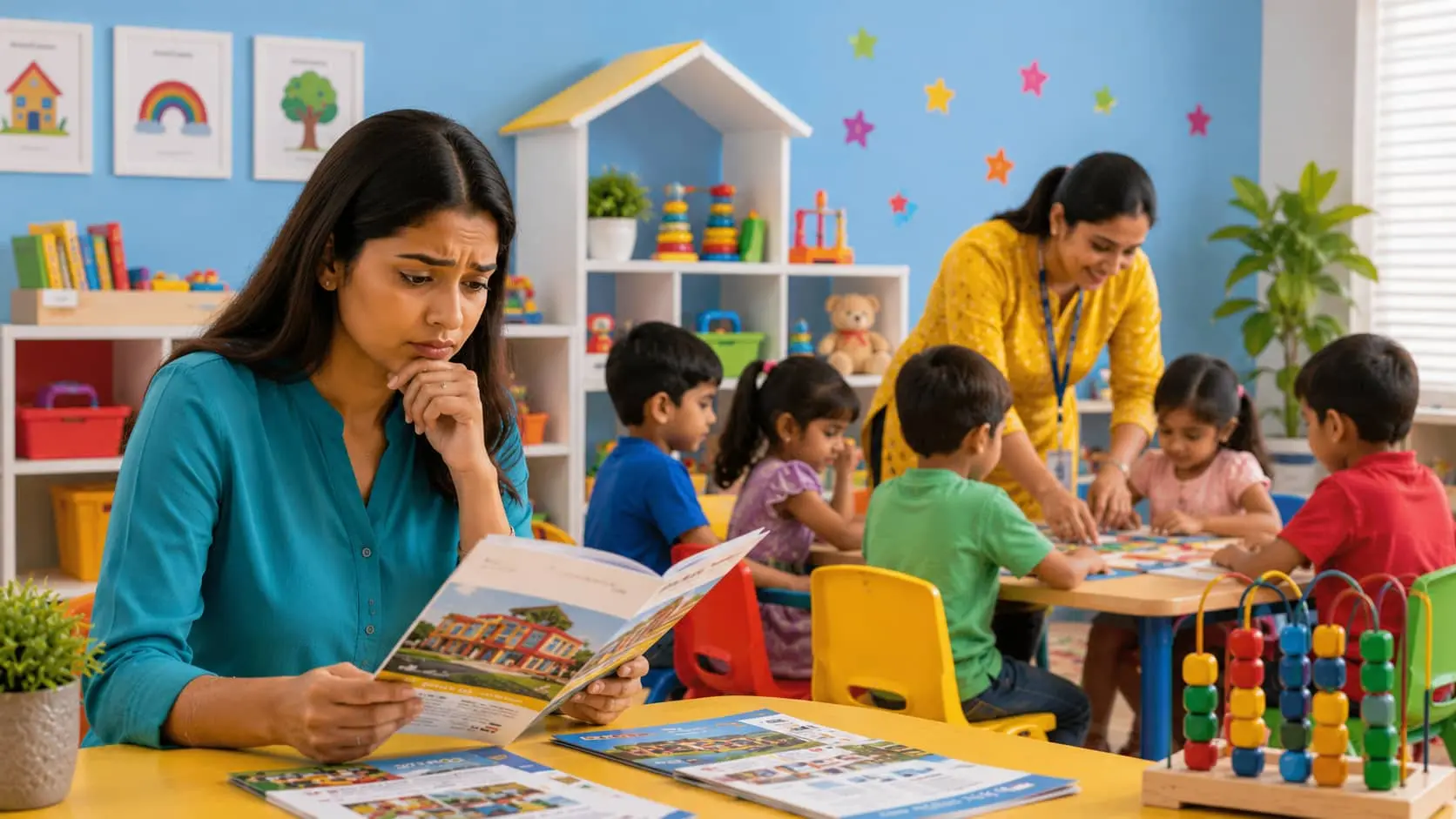
Choosing a preschool is one of the first major educational decisions parents make. The right environment can shape a child’s confidence, curiosity, social skills, and love for learning. However, many parents rush through the process without knowing what to look for in a preschool.
After years of observing early childhood education choices, one thing is clear: parents often focus on visible factors like buildings, advertisements, or proximity while overlooking deeper aspects such as teaching methods, child development practices, and emotional support.
This guide explains the most common mistakes parents make during preschool admission and shares practical preschool admission tips to help families make a better decision.
Understanding What Makes a Preschool the Right Choice
A good preschool is not simply a place where children spend a few hours learning letters and numbers. It should provide a safe, nurturing space where children develop independence, communication skills, creativity, and emotional confidence.
Before choosing a preschool, parents should evaluate the overall learning approach, teachers, safety standards, and daily experiences offered to children.
Mistake 1: Choosing a Preschool Based Only on Location
Location is convenient, but it should not be the only deciding factor. A nearby preschool may save travel time, but the learning environment and teaching quality have a greater impact on your child’s early years.
When comparing options, consider whether the preschool balances convenience with quality care and meaningful learning experiences.
What to Look for Beyond Distance
Parents should evaluate:
- Teacher-child interaction
- Classroom environment
- Safety measures
- Learning activities
- Communication with parents
- Outdoor and play-based learning opportunities
A preschool that is slightly farther away but provides better emotional support and learning experiences may be a stronger choice.
Mistake 2: Ignoring the Preschool Curriculum
Many parents ask about fees and timings but forget to understand the preschool curriculum. A curriculum should support a child’s overall growth instead of focusing only on academic skills.
Early childhood education is about developing curiosity, problem-solving abilities, language skills, and social confidence through age-appropriate activities.
Questions to Ask About the Curriculum
During a preschool visit, parents can ask:
- How does the preschool support child development?
- Are activities based on play and exploration?
- How are creativity and communication encouraged?
- What learning milestones are expected at each age?
A strong curriculum should allow children to learn naturally while enjoying the process through a child-centred learning approach.
Mistake 3: Not Researching Teacher Qualifications
Teachers play the biggest role in shaping a child’s preschool experience. A well-designed classroom means little without caring and trained educators who understand children’s emotional and developmental needs.
When learning how to choose a preschool, teacher experience and the quality of early childhood education should be some of the first things parents evaluate.
Why Teachers Matter in Early Learning
Look for:
- Qualified early childhood educators
- Teachers who communicate warmly with children
- Low teacher-to-child ratio
- Regular teacher training
- Patient and positive classroom management
Children learn best when they feel secure, respected, and encouraged.
Mistake 4: Not Visiting the Preschool Before Admission
Photos, websites, and online reviews can give parents an initial impression, but they cannot replace an actual preschool visit. A campus tour helps parents understand the atmosphere, teaching style, cleanliness, and overall environment.
A proper visit is one of the most valuable steps in a preschool checklist because it reveals details that online information may not show.
What Parents Should Observe During a Preschool Visit
During the visit, pay attention to:
- How teachers interact with children
- Whether children appear comfortable and engaged
- Classroom cleanliness and organisation
- Availability of learning materials
- Safety arrangements
- Hygiene practices
- Outdoor and indoor activity spaces
A good preschool should feel welcoming, calm, and child-friendly rather than overly formal or restrictive.
Mistake 5: Focusing Only on Academics
Many parents believe a preschool is successful if children learn alphabets, numbers, and writing early. While these skills matter, preschool years are mainly about building confidence, independence, communication, and social abilities.
A quality program balances academics with emotional growth, creativity, and confidence building activities for children.
Why Play-Based Learning Matters
Young children learn through experiences.Activities like storytelling, group games, art, music, and preschool learning activities at home help children develop naturally.
A balanced preschool approach supports:
- Problem-solving skills
- Communication abilities
- Social interaction
- Creativity
- Emotional regulation
- Confidence
The best preschool environments encourage children to enjoy learning instead of feeling pressured.
Mistake 6: Ignoring Preschool Safety Standards
Parents often check classrooms and facilities but forget to ask detailed questions about preschool safety. Safety should include physical security, hygiene, emergency planning, and child supervision.
A safe environment allows children to explore confidently while giving parents peace of mind.
Preschool Safety Checklist for Parents
| Safety Area | What Parents Should Check |
|---|---|
| Campus Security | Controlled entry and visitor management |
| Classroom Safety | Child-friendly furniture and safe learning materials |
| Hygiene | Clean toilets, classrooms, and regular sanitisation |
| Emergency Preparedness | Fire safety and emergency response plans |
| Supervision | Adequate staff presence during activities |
| Health Support | First-aid availability and illness policies |
Safety is not just about preventing accidents; it is about creating an environment where children feel protected and comfortable.
Mistake 7: Not Asking the Right Questions Before Admission
Many parents complete admission quickly because they focus on availability, fees, or location. However, asking the right questions can help families understand whether the preschool truly matches their child’s needs.
Knowing the right questions to ask before preschool admission makes the decision process easier.
Important Questions Parents Should Ask
Before finalising admission, ask:
- What teaching approach does the preschool follow?
- How experienced are the teachers?
- What does a typical day look like?
- How does the preschool handle separation anxiety?
- How are parents updated about their child’s progress?
- What safety measures are followed?
- How are children supported if they need extra attention?
Clear answers show transparency and help parents build trust with the school.
Preschool Selection Checklist for Parents
Use this checklist before making a final decision.
| Factor | Questions to Consider |
|---|---|
| Curriculum | Does the program support creativity and overall development? |
| Teachers | Are educators trained and experienced? |
| Safety | Is the campus secure and child-friendly? |
| Environment | Do children appear happy and engaged? |
| Communication | Does the school regularly update parents? |
| Activities | Are play, arts, and social learning included? |
| Location | Is travel time practical for your family? |
| Fees | Are costs clear and transparent? |
This simple checklist helps parents compare schools objectively instead of making a decision based only on first impressions.
How to Choose a Preschool That Matches Your Child
Every child is different. Some children adjust quickly to new environments, while others need more time, patience, and emotional support.
When choosing a preschool, consider your child’s personality, interests, comfort level, learning style, and readiness to begin early education.
Look for a preschool where:
- Teachers understand individual children
- Learning happens at a comfortable pace
- Children are encouraged to ask questions
- Mistakes are treated as learning opportunities
- Parents and teachers work together
The right preschool should support your child’s current needs while preparing them for future learning experiences.
Common Preschool Comparison Factors
Lorem ipsum dolor sit amet, consectetur adipiscing elit. Ut elit tellus, luctus nec ullamcorper mattis, pulvinar dapibus leo.
| Factor | What Parents Often Choose Wrong | Better Approach |
|---|---|---|
| Brand Name | Selecting only because the school is popular | Evaluate actual teaching quality |
| Facilities | Choosing based on attractive buildings | Check learning experience and safety |
| Academics | Preferring heavy worksheets | Look for balanced development |
| Fees | Selecting the cheapest option | Compare value and quality |
| Distance | Choosing only the closest school | Balance convenience with quality |
Key Takeaways
- Choosing a preschool requires more than checking location and fees.
- Teachers, curriculum, and safety standards strongly influence a child’s experience.
- A preschool visit helps parents understand the real learning environment.
- Play-based learning supports confidence, creativity, and social development.
- Asking the right questions helps parents make informed admission decisions.
- The best preschool is one that matches the child’s needs and learning style.
Conclusion
Choosing a preschool is the beginning of your child’s educational journey, not just an admission decision. Parents who take time to understand teaching methods, safety practices, teachers, and learning environments are more likely to find a place where their child feels happy and supported.
The goal of choosing a preschool should not be finding the most expensive or most advertised option. It should be finding a caring environment where children can explore, learn, and show positive signs of happiness at preschool.
Frequently Asked Questions
How do I choose a preschool for my child?
Choosing a preschool starts with understanding your child’s personality, learning needs, comfort level, and readiness. Parents should compare important factors such as the preschool curriculum, teacher qualifications, safety standards, classroom environment, learning activities, and communication with parents. Visiting the preschool before admission can help you understand whether the environment feels safe, welcoming, and suitable for your child’s early learning journey.
What should I look for when choosing a preschool?
When choosing a preschool, parents should look for experienced early childhood educators, a child-friendly learning environment, a balanced preschool curriculum, proper safety measures, and positive teacher-child interactions. A good preschool should support not only academic development but also creativity, communication skills, confidence, independence, and social development through age-appropriate activities.
What are the common mistakes parents make when choosing a preschool?
Some common preschool selection mistakes include choosing only based on location, focusing only on fees, ignoring teacher qualifications, not checking the preschool curriculum, skipping a campus visit, and prioritising academics over overall child development. Parents should evaluate the complete learning environment instead of making a decision based on one factor.
What questions should I ask a preschool before admission?
Before completing preschool admission, parents should ask questions about the teaching approach, curriculum structure, teacher experience, classroom activities, safety procedures, daily routine, parent communication process, and how the school supports children who need extra attention. These questions help parents understand whether the preschool matches their child’s needs.
Why is preschool safety important?
Preschool safety is one of the most important factors parents should consider because young children need a secure environment where they can explore and learn confidently. Parents should check campus security, hygiene practices, emergency procedures, child supervision, safe learning materials, and health support policies before selecting a preschool.
What makes a good preschool curriculum?
A good preschool curriculum focuses on complete child development rather than only early academics. It should include play-based learning, storytelling, art, music, problem-solving activities, communication practice, social interaction, and creative exploration. A quality preschool curriculum helps children develop confidence, curiosity, independence, and a positive attitude toward learning.
What age is best to start preschool?
The best age to start preschool depends on the child’s emotional readiness, social skills, independence level, and family circumstances. Many children begin preschool between two and four years old, but readiness is more important than age alone. Parents should choose a preschool environment where their child feels comfortable, supported, and encouraged to learn.
Why is a preschool visit important before admission?
A preschool visit allows parents to observe the actual learning environment, teacher-child interaction, classroom organisation, hygiene standards, safety arrangements, and daily activities. Photos and online information can provide an overview, but visiting the preschool helps parents understand whether it offers a positive and supportive environment for children.
How does play-based learning help preschool children?
Play-based learning helps children develop problem-solving skills, creativity, communication abilities, emotional control, and social confidence. Through activities such as games, storytelling, art, music, and exploration, children learn naturally while enjoying the process. A good preschool balances learning goals with meaningful play experiences.
How can parents prepare for preschool admission?
Parents can prepare for preschool admission by researching schools early, creating a preschool checklist, visiting shortlisted schools, comparing teaching methods, reviewing safety standards, and asking detailed questions before making a final decision. Preparing in advance helps parents choose a preschool that supports their child’s growth and learning needs.
What is the difference between a good preschool and an average preschool?
A good preschool focuses on the overall development of children through quality teaching, caring educators, safe facilities, creative activities, and strong parent communication. An average preschool may focus mainly on academics or facilities without giving enough attention to emotional development, social skills, and individual learning needs.
How do I know if a preschool is right for my child?
A preschool is the right choice when your child feels comfortable, teachers understand individual needs, learning happens at a suitable pace, and parents feel confident about the school’s approach. The best preschool is not always the most expensive or popular one; it is the one that provides a safe, supportive, and engaging learning environment.