

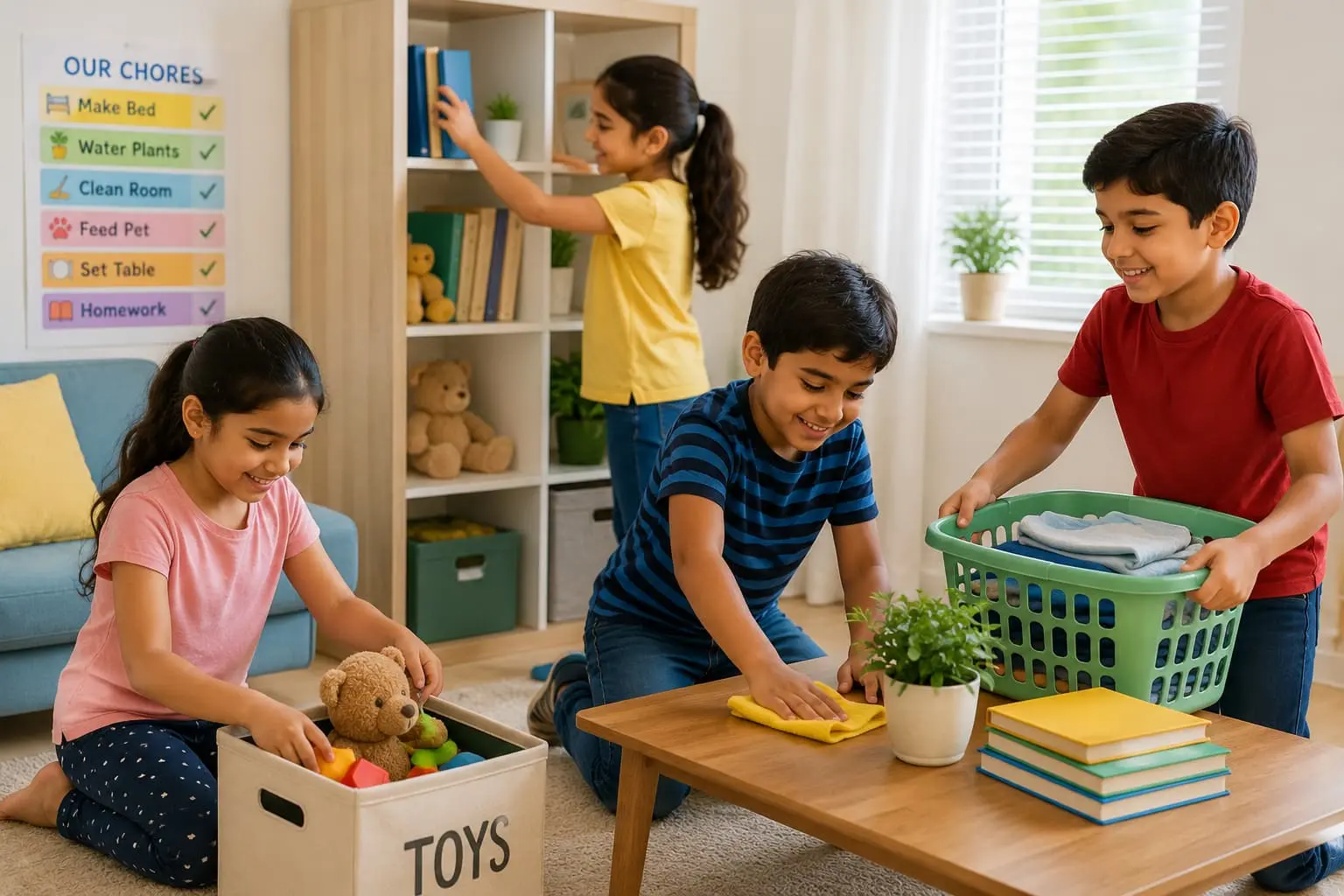
One evening, your child promises to put their toys away “in five minutes.” An hour later, the toys are still scattered across the floor, and somehow you’re the one cleaning them up again. Most parents have moments like this. Teaching children responsibility sounds simple in theory, but in real life, it often takes patience, repetition, and a lot of reminders.
The truth is, children are not born understanding accountability. They learn it slowly through routines, small expectations, and everyday experiences that help build confidence and independence in children. That’s why Teaching Responsibility to Kids starts long before they fully understand chores, homework, or commitments.
In this guide, you’ll discover realistic and practical ways to help children become more dependable without turning your home into a constant battle zone.
Why Teaching Responsibility Matters Early
Children who grow up with small responsibilities often become more confident and independent over time. Responsibility is not only about completing chores. It also helps children understand commitment, empathy, self-discipline, and decision-making.
Many experts recommend introducing simple responsibilities early because children naturally learn through repetition and observation.
A child who remembers to:
- place dirty clothes in the laundry basket,
- feed a pet,
- or pack their school bag,
is slowly building habits that support long-term independence.
The importance of responsibility for children goes beyond household tasks. responsible children usually develop important life skills for preschoolers that support long-term development, including:
- better time management,
- stronger problem-solving skills,
- emotional accountability,
- and healthier routines.
How to Teach Responsibility to Kids: 17 Simple and Effective Ways
1. Start With Small Daily Tasks
Children respond better to manageable expectations.
Simple responsibilities like:
- making the bed,
- watering plants,
- or putting shoes away
help kids feel capable instead of overwhelmed.
For younger children, consistency matters more than perfection.
2. Create Predictable Routines
Children thrive when they know what’s expected.
Daily routines and fun preschool activities at home reduce arguments because responsibilities become part of normal life rather than sudden demands. Simple routines like homework after snacks or cleaning toys before bedtime work surprisingly well over time.
These kinds of daily responsibilities for kids at home often feel more natural than strict chore systems.
3. Stop Doing Everything for Them
Parents sometimes help too quickly because it feels faster.
But constantly stepping in can unintentionally teach dependence. Allow children to struggle a little with age-appropriate tasks. Learning responsibility often comes from trial and error.
4. Use Real-Life Situations as Lessons
One of the easiest ways to teach responsibility is through ordinary moments.
If a child forgets their lunchbox repeatedly, involve them in packing it the night before. Real experiences tend to leave stronger impressions than lectures.
5. Assign Age-Appropriate Responsibilities
A preschooler and a teenager should not have the same expectations.
Young children can:
- arrange books,
- put toys away,
- or carry napkins to the table.
Older children may help with:
- laundry,
- meal preparation,
- or organising school schedules.
Understanding age appropriate responsibilities for children prevents frustration for both parents and kids. Many parents also consider the best age to start preschool while introducing responsibilities. and the best age to start preschool while introducing responsibilities for both parents and kids.
6. Let Children Experience Consequences
Natural consequences often teach responsibility better than punishment.
If homework is forgotten, children may need to explain it to the teacher themselves. Professionals typically advise avoiding rescue mode every single time.
Children learn accountability when they connect actions with outcomes.
7. Be a Good Example
Children notice more than parents realize.
If adults constantly delay tasks, ignore responsibilities, or avoid commitments, kids usually copy those habits. Modeling calm and responsible behaviour matters far more than long speeches.
8. Teach Responsibility Through Teamwork
Children are more cooperative when responsibilities feel shared rather than forced.
Simple family tasks like:
- cleaning together,
- setting the dining table,
- or organising shelves
can build teamwork naturally.
These are also effective responsibility activities for kids because they naturally encourage early leadership skills in children while keeping tasks interactive instead of disciplinary.
9. Avoid Constant Nagging
Repeated reminders often create resistance.
Instead of saying:
“Did you clean your room?”
five times a day, try using visual reminders or simple checklists.
Children respond better when responsibility feels self-managed.
10. Appreciate Effort, Not Just Results
A child may fold clothes badly or spill water while helping.
That’s normal.
Encouraging effort builds confidence and willingness to participate again. Criticising every mistake usually discourages responsibility rather than improving it.
11. Give Choices Whenever Possible
Children cooperate more when they feel involved.
For example:
- “Would you like to feed the dog before dinner or after?”
- “Do you want to clean your desk now or after playtime?”
Small choices help children feel ownership over their responsibilities.
12. Keep Expectations Realistic
Many parents accidentally overload children with too many tasks at once. Responsibility should grow gradually. A child balancing school, activities, and emotional development may not handle adult-level expectations consistently. Patience matters.
13. Use Fun Responsibility Challenges
Not every lesson has to feel serious.
Some fun ways to teach responsibility to kids include:
- timer cleaning games,
- sticker reward charts,
- responsibility bingo,
- or “helper of the day” activities.
Children often engage better when tasks feel playful.
14. Teach Financial Responsibility Early
Simple money lessons help children understand accountability.
Giving small allowances and encouraging saving habits can teach:
- delayed gratification,
- budgeting,
- and decision-making.
Even basic conversations around spending can shape healthier habits later.
15. Encourage Problem-Solving
Instead of solving every issue yourself, ask:
“What do you think you can do?”
This helps children think independently and take ownership of situations rather than waiting for adults to fix everything.
16. Talk About Responsibilities Beyond Home
Children should also understand social responsibility.
Simple lessons about:
- respecting others,
- helping classmates,
- or caring for shared spaces
help children become more thoughtful individuals.
These are important duties and responsibilities of children both at home and in school
17. Stay Consistent Even When It’s Tiring
This is usually the hardest part.
Children rarely learn responsibility after one conversation. Habits develop slowly through repetition, reminders, and consistency.
Some days your child will cooperate beautifully. Other days they may argue over putting a plate in the sink.
That inconsistency is completely normal.
Common Mistakes Parents Make
Sometimes parents unintentionally make responsibility harder to learn.
A few common examples include:
- expecting perfection immediately,
- turning every task into punishment,
- comparing siblings,
- or giving responsibilities inconsistently.
Specialists often suggest focusing more on steady habits than strict discipline.
Children learn responsibility better in calm environments than stressful ones.
Practical Tips From Parenting Experts
Many professionals who focus on child development recommend:
- keeping responsibilities simple,
- maintaining predictable routines,
- praising consistency,
- and avoiding shame-based parenting.
Parents asking how to raise responsible children often see better results when they focus on gradual progress instead of control.
Responsibility is usually built through everyday habits, not one big lesson.
Conclusion
Teaching children responsibility is rarely a smooth, perfect process. Some lessons take months to stick. Others happen quietly through everyday routines children barely notice at first.
What matters most is consistency, patience, and realistic expectations.
A child who learns to manage small responsibilities early often grows into a more confident and dependable adult later.This is one reason many parents explore Montessori education for early learning environments that encourage independence from a young age. Whether it’s packing a school bag, helping at home, or learning accountability after mistakes, these small moments shape important life skills over time.
And honestly, children don’t need perfect parents to learn responsibility. They just need steady guidance, reasonable boundaries, and opportunities to practice being capable.
FAQs
Why is teaching responsibility important for children?
Teaching responsibility helps children develop independence, accountability, confidence, and problem-solving skills that support both school and everyday life.
What are some simple responsibilities for kids at home?
Simple responsibilities include making the bed, putting toys away, feeding pets, organising school bags, and helping set the table.
How can parents teach responsibility without yelling?
Parents can use routines, visual reminders, natural consequences, and calm communication instead of repeated nagging or punishment.
At what age should children start learning responsibility?
Children can start learning simple responsibilities as early as preschool age through small daily tasks and consistent routines.