

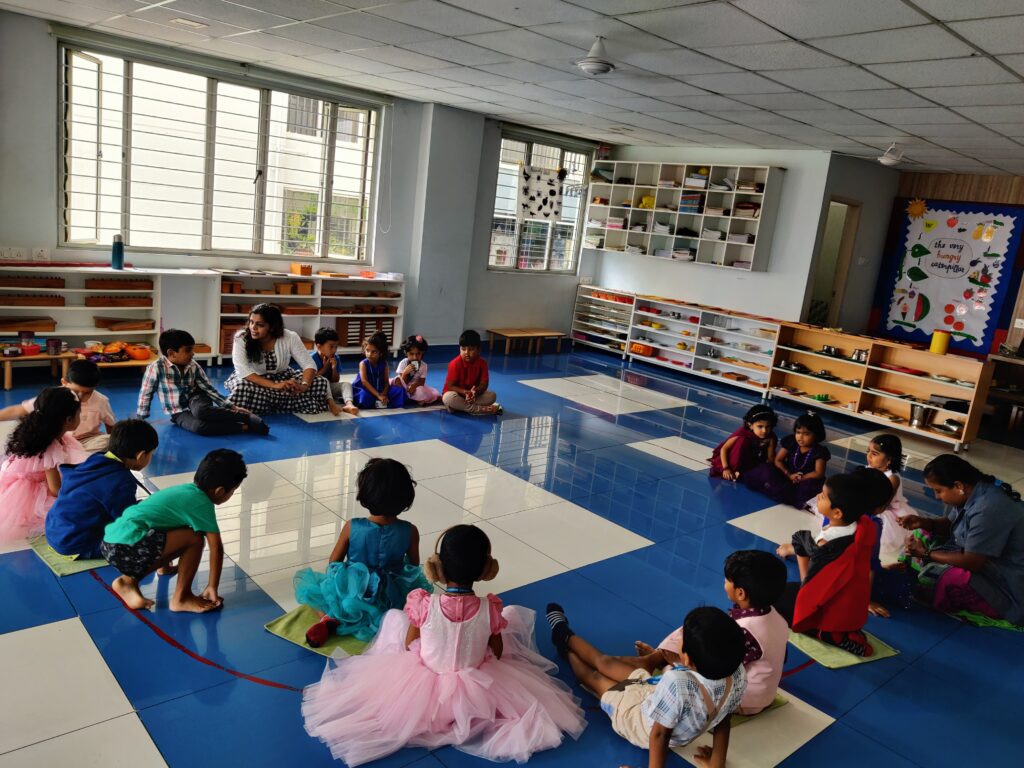
Montessori education is gaining popularity for its child-centered, hands-on approach to learning. However, it is also surrounded by several myths and misunderstandings that often confuse parents. Questions about discipline, academic rigor, creativity, and affordability can create doubts when choosing a preschool. In this article, we break down the most common Montessori myths and reveal the reality behind the method—highlighting its structured learning environment, holistic child development, inclusivity, and purposeful child-led education.
Myth 1: Montessori Is Unstructured and Lacks Discipline
Many parents believe that Montessori classrooms lack discipline because children are given freedom of choice. In reality, Montessori environments are carefully structured with clear routines, rules, and expectations. Children experience freedom within boundaries, which helps them develop responsibility, focus, and respect for others.
Rather than enforcing discipline through rewards or punishment, Montessori nurtures self-discipline. Children learn to manage their behavior, make thoughtful choices, and take ownership of their actions. This creates a calm, respectful classroom culture where discipline comes from within, not from control.
Myth 2: Montessori Is Only for Gifted or Special-Needs Children
Another common misconception is that Montessori is suitable only for gifted children or those with special needs. In truth, Montessori education is designed for all children. Its adaptable, child-centered approach allows each child to learn at their own pace and according to their individual strengths.
Montessori classrooms support diverse learners by recognizing that every child develops differently. With a strong emphasis on emotional, social, and academic growth, Montessori promotes inclusive education and meaningful engagement for children from all backgrounds.
Myth 3: Montessori Is Not Academically Rigorous
Some parents worry that Montessori does not offer enough academic challenge. In fact, Montessori education is academically strong, but it approaches learning differently. Concepts in math, language, and science are introduced through hands-on materials that promote real understanding rather than rote memorization.
The Montessori curriculum builds critical thinking, problem-solving, and concentration. Children often develop a deeper understanding of academic concepts and show strong curiosity and motivation key indicators of true academic success.
Myth 4: Montessori Classrooms Are Noisy and Chaotic
Because children are free to move and choose activities, Montessori classrooms are often misunderstood as chaotic. In reality, these environments are intentionally designed to be calm, organized, and purposeful.
Children engage in focused work, either independently or in small groups, within a peaceful atmosphere. Montessori promotes self-control and respect rather than enforced silence. Compared to traditional classrooms, Montessori environments often feel more balanced, calm, and productive.
Myth 5: Montessori Stifles Creativity and Imagination
Some believe that Montessori education is rigid and limits creativity. The opposite is true. Montessori encourages creativity by allowing children to explore, experiment, and think independently.
Through open-ended activities, practical life exercises, and hands-on learning, children develop imagination and creative thinking naturally. Montessori supports creativity not through fantasy alone, but by empowering children to explore ideas deeply and confidently.
Myth 6: Montessori Is Too Expensive and Exclusive
Montessori is often viewed as an elite or expensive option, but this perception is changing. Many Montessori schools now offer affordable and accessible programs for families from different backgrounds.
When comparing costs, it’s important to consider the long-term value of Montessori education. Beyond academics, it builds life skills such as independence, focus, and emotional intelligence—making it a meaningful investment rather than an exclusive luxury.
Myth 7: Montessori Doesn’t Prepare Children for Traditional Schools
Parents often worry whether Montessori children can adapt to traditional school systems. In reality, Montessori students typically transition very well. They bring strong independence, confidence, emotional resilience, and problem-solving skills into new learning environments.
Many Montessori children adjust quickly to structured classrooms because they understand routines, manage responsibilities, and approach learning with confidence.
Conclusion
Montessori education is not about a lack of structure or exclusivity—it is about nurturing each child’s potential through respect, independence, and meaningful learning experiences. By addressing these common myths, parents can better understand the true value of the Montessori method. When implemented thoughtfully, Montessori education helps shape confident, capable, and curious learners who are well-prepared for both academic success and life beyond the classroom.