

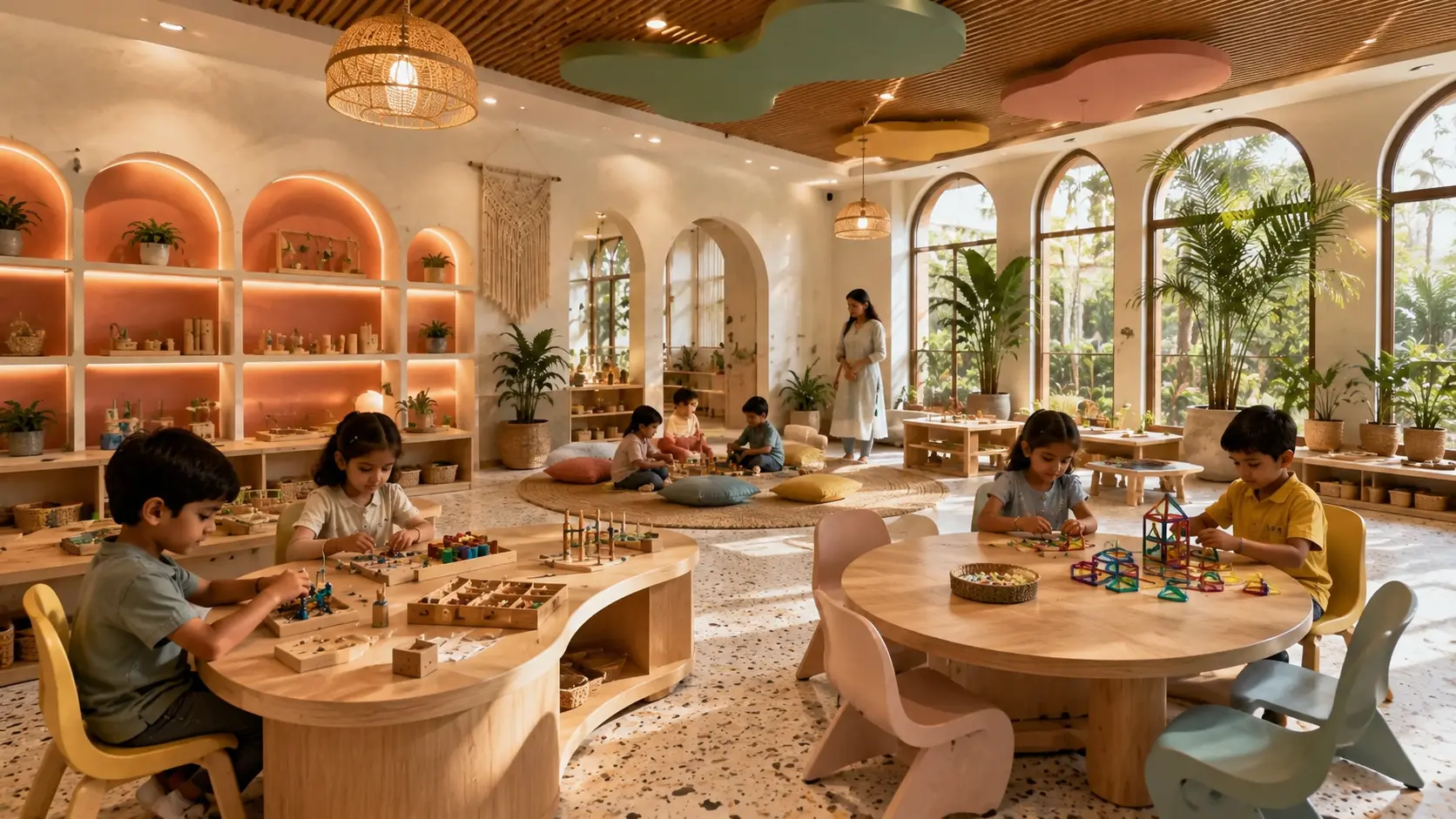
Have you ever watched your child struggle to fit a puzzle piece or build a block tower, only to hear, “Can you help me?” It’s tempting to jump in. I still remember a preschool classroom where one little boy looked at me every time his tower fell. Instead of fixing it, I smiled and asked, “What do you think you could try next?” He paused, rebuilt it differently, and smiled when it finally worked. That moment reminded me that children often need time more than answers. Montessori problem solving activities are designed to help children think, experiment, and build confidence. In this guide, you’ll discover why problem-solving matters, how Montessori develops independent thinkers, age-appropriate activities, practical Montessori activities at home, and simple ways to support your child’s learning journey.
Why Problem-Solving Skills Matter for Kids
Problem-solving helps children think independently, make decisions, and stay calm when things don’t go as planned. Instead of depending on adults for every solution, children learn to observe, test ideas, and keep trying until something works.
Many parents focus on whether their child gets the correct answer, but the real learning often happens during the process. When children work through challenges, they practice patience, creativity, reasoning, and confidence.
A child who tries different ways to complete a puzzle is learning more than where each piece belongs. They are learning how to approach a challenge, adjust their strategy, and trust their own thinking.
How Montessori Builds Problem-Solving Skills
Montessori education focuses on helping children understand the world through experience. Through Montessori learning activities, children explore, experiment, and develop confidence by solving challenges independently. Instead of simply telling children what to do, Montessori environments encourage them to explore, make choices, and discover solutions independently.
One thing I appreciate about Montessori is that it doesn’t rush children toward the “correct” answer. It gives them room to figure things out, and that’s where real confidence starts.
Learning Through Experience
Children learn best when they actively participate. Pouring water, arranging objects, building structures, and solving puzzles are not just activities—they are opportunities to develop concentration and reasoning.
Many Montessori learning activities are designed around real experiences. Children interact with materials, notice patterns, and adjust their actions when something doesn’t work.
For example, if a child builds a tower that keeps falling, they begin exploring questions naturally:
- Is the base strong enough?
- Should I use bigger blocks?
- Does changing the position help?
This type of thinking builds skills that worksheets often cannot provide.
Mistakes Are Part of the Lesson
A mistake is not a failure in Montessori learning. It is feedback.
When a child spills water while pouring, they learn control. When a puzzle piece doesn’t fit, they learn observation. When a structure collapses, they learn problem-solving.
Children become stronger thinkers when they understand that mistakes are part of learning, not something to fear.
Independence Comes Before Perfection
The goal of Montessori is not to create children who never struggle. The goal is to help children feel capable when they struggle.
Simple tasks like preparing food, organizing materials, or choosing an activity encourage independence. These Montessori practical life activities help preschoolers develop responsibility, decision-making skills, and confidence in everyday situations. These experiences are some of the biggest Montessori education benefits because children learn responsibility through action.
Parents can support this by creating independent learning activities where children have enough freedom to explore and solve problems at their own pace.
Montessori Problem Solving Activities by Age
Every child develops differently, so parents should choose Montessori activities for preschoolers based on their child’s abilities, interests, and readiness rather than focusing only on age. The best activity is one that challenges your child slightly while still allowing them to experience success.
Montessori Games for Toddlers (2–3 Years)
Toddlers learn through movement, repetition, and exploration. Simple activities can build early problem-solving skills.
Shape Sorting
Children match different shapes with the correct spaces. This develops observation, matching, and logical thinking.
Easy home variation: Use containers and everyday objects with different shapes for sorting.
Stacking Cups
Building towers with cups teaches balance, size comparison, and cause-and-effect.
Easy home variation: Use plastic containers or safe kitchen bowls.
Matching Household Objects
Children can match socks, lids with containers, or spoons with cups.
This improves memory and classification skills.
Posting Activities
Putting objects through holes or slots strengthens focus and hand-eye coordination.
These are excellent Montessori games for toddlers, especially as problem solving activities for toddlers and Montessori activities for 3 year olds.
Montessori Activities for Preschoolers (3–4 Years)
Preschool children are ready for activities that involve more planning, decision-making, and independent exploration. At this age, children enjoy challenges that allow them to test ideas, solve small problems, and learn through hands-on experiences.
Simple Puzzles
Puzzles help children develop observation, patience, and logical thinking. As they search for matching pieces, they learn to compare shapes, recognize patterns, and think about where each piece might fit.
Easy home idea: Start with simple wooden puzzles and gradually introduce puzzles with more pieces as your child gains confidence.
Pattern Making
Pattern activities help children understand sequences and early reasoning skills. Using blocks, beads, buttons, or colored objects, children learn to notice what comes next and create their own designs.
Easy home idea: Ask your child to continue a simple pattern, such as red-blue-red-blue, and then create their own pattern.
Water Pouring
Water pouring is a classic Montessori practical activity that strengthens concentration, coordination, and control. Children learn to carefully manage movements while solving the problem of transferring water without spilling.
Easy home idea: Provide two small cups and a tray so your child can practice pouring independently.
Story Sequencing
Story sequencing activities encourage children to organize thoughts and understand order. By arranging picture cards or story events, children practice memory, communication, and logical thinking.
Easy home idea: Use pictures from a familiar story and ask your child what happened first, next, and last.
Nature Sorting
Nature sorting encourages children to observe differences in the world around them. Collecting leaves, rocks, flowers, or sticks helps children compare size, color, texture, and shape.
Easy home idea: During outdoor walks, let your child collect safe natural items and create their own sorting categories.
These Montessori activities for preschoolers make learning active, meaningful, and connected to real-life experiences. They help children develop curiosity, independence, and strong problem-solving habits through everyday exploration.
Montessori Activities for 4-Year-Olds
Four-year-olds can handle more complex challenges that require planning and creativity.
Ideas include:
- Building bridges with blocks
- Creating treasure hunts with clues
- Measuring ingredients during cooking
- Designing obstacle courses
- Trying simple STEM challenges
These activities encourage children to test ideas, solve problems, and think creatively.
15 Montessori Problem Solving Activities for Kids
These fun problem solving activities for kids are simple, affordable, and easy to introduce at home. They work as hands-on learning activities because children learn by touching, testing, building, and exploring. Each activity gives children a chance to think, experiment, make decisions, and learn through real experiences.
1. Shape Sorting Challenge
Shape sorting helps children compare objects, notice differences, and improve logical thinking. Children learn to group items based on size, shape, color, or other features.
Easy home idea: Use buttons, blocks, bottle caps, or kitchen items and ask your child to sort them into different groups.
2. Mystery Bag Game
This activity encourages children to use their senses and reasoning skills. By feeling an object without looking, children practice observation, memory, and problem-solving.
Easy home idea: Place familiar objects inside a bag and let your child guess each item by touch.
3. Homemade Puzzle Hunt
A puzzle hunt adds excitement to traditional puzzles while encouraging children to think strategically. Finding and matching pieces helps develop focus and planning skills.
Easy home idea: Hide puzzle pieces around a room and let your child collect and complete the puzzle independently.
4. Nature Treasure Hunt
Nature activities help children explore the world while practicing classification skills. Collecting leaves, stones, flowers, or sticks encourages observation and curiosity.
Easy home idea: Ask your child to find items with different textures, sizes, or colors and organize them.
5. Building Block Bridge
Building challenges allow children to test ideas and understand basic concepts like balance and structure. When a bridge falls, children naturally look for ways to improve their design.
Easy home idea: Use blocks, cardboard pieces, or recycled materials to create a bridge for small toys.
6. Water Transfer Race
Water transfer activities improve concentration, coordination, and problem-solving. Children learn how much water a container can hold and how to move it carefully without spilling.
Easy home idea: Provide cups, spoons, and a small bowl of water for a safe pouring activity.
7. Snack Preparation
Preparing simple snacks teaches children how to follow steps, make choices, and solve small challenges. It also builds independence through everyday tasks.
Easy home idea: Let your child spread ingredients, arrange fruit, or prepare a simple snack with supervision.
8. Laundry Sorting
Sorting laundry turns a daily chore into a learning opportunity. Children practice grouping, matching, and decision-making while helping around the home.
Easy home idea: Ask your child to separate clothes by color, size, or type.
9. Story Card Sequencing
Story sequencing helps children understand order, cause, and effect. Arranging pictures from a story strengthens memory, communication, and logical thinking.
Easy home idea: Create simple picture cards and ask your child what happened first, next, and last.
10. Measuring While Baking
Cooking introduces children to numbers, measurement, and planning. Following a recipe helps them understand that each step has a purpose.
Easy home idea: Let your child measure ingredients, count items, or compare amounts while preparing food.
11. Gardening Tasks
Gardening teaches children patience, observation, and responsibility. Caring for plants helps them understand how actions create results over time.
Easy home idea: Allow your child to water plants, plant seeds, or observe changes in the garden.
12. Matching Lids and Containers
This simple activity strengthens visual thinking and problem-solving. Children compare shapes and sizes while figuring out which lid belongs to each container.
Easy home idea: Mix different containers and lids together and let your child find the correct matches.
13. Pattern Copy Challenge
Pattern activities build early math skills and encourage children to recognize relationships between objects. They learn to observe carefully and predict what comes next.
Easy home idea: Create patterns using blocks, beads, or colored paper and ask your child to continue them.
14. DIY Marble Maze
Creating a marble maze encourages creativity, planning, and experimentation. Children think about pathways, obstacles, and how changes affect movement.
Easy home idea: Use cardboard, paper rolls, or building blocks to create a simple maze.
15. Cardboard Box Construction
Cardboard boxes are excellent open-ended materials for creative problem-solving. Children can transform them into houses, vehicles, tunnels, or anything they imagine.
Easy home idea: Provide boxes, tape, and safe craft materials and let your child design their own creation.
These hands-on learning activities encourage exploration and independence while also working as effective critical thinking activities for kids. The goal is not just to complete the activity—it’s to help children learn how to think, adapt, and find solutions on their own.
Montessori Practical Life Activities
The best problem-solving activities don’t always look like lessons. Everyday routines often give children more opportunities to think independently than worksheets ever could.
Simple Montessori practical life activities include:
- Folding clothes
- Watering plants
- Setting the table
- Organizing toys
- Preparing snacks
These everyday tasks teach planning, coordination, and responsibility.
How to Teach Problem Solving Skills
Children often look to adults for quick solutions, but giving them a little space can help develop stronger thinking skills.
Instead of immediately solving the problem, encourage reflection with questions like:
- “What have you tried so far?”
- “What do you notice?”
- “What else could work?”
- “What might happen if you try another way?”
The goal is not to leave children alone with frustration. It is to support them while helping them build problem solving skills for kids through patience, observation, and independent thinking.
Learning how to teach problem solving skills means becoming a guide rather than always becoming the solution. These strategies work naturally with everyday Montessori activities at home.
Open-Ended Play Activities for Kids
Honestly, I’ve seen children spend twenty minutes solving problems with cardboard boxes and wooden blocks, while some expensive electronic toys lose their attention quickly. Open-ended materials give children room to imagine, create, and experiment. These open-ended play activities encourage creativity and stronger critical thinking skills for kids because there is no single correct way to complete them.
Great options include:
- Blocks
- Loose parts
- Clay
- Cardboard
- Pretend play materials
These open-ended play activities encourage creativity and deeper hands-on learning activities.
Conclusion
You don’t need a perfect Montessori classroom to help your child become an independent thinker. A puzzle on the floor, a snack to prepare, or a tower that falls over can all become valuable learning experiences. When children are trusted to explore, make mistakes, and try again, they develop skills that reach far beyond childhood. Simple Montessori problem solving activities, everyday problem solving activities for kids, and thoughtful Montessori activities at home can help children grow into confident learners who believe they can figure things out.
Frequently Asked Questions
What are Montessori problem solving activities?
Montessori problem-solving activities are hands-on experiences that help children explore, make decisions, and discover solutions independently. They include puzzles, sorting activities, practical tasks, building challenges, and everyday learning experiences.
At what age should children start Montessori activities?
Children can begin Montessori-inspired activities during toddler years. Simple activities like matching, sorting, and practical tasks are suitable for young children.
Can Montessori improve critical thinking?
Yes. Montessori activities encourage observation, experimentation, decision-making, and problem-solving, which are important parts of critical thinking.
Do I need expensive Montessori materials?
No. Many effective Montessori activities use everyday household items like containers, blocks, kitchen tools, and natural materials.
How do these activities support cognitive development?
Activities involving sorting, building, sequencing, and exploring help strengthen memory, reasoning, focus, and problem-solving abilities. These are valuable cognitive development activities for preschoolers.