

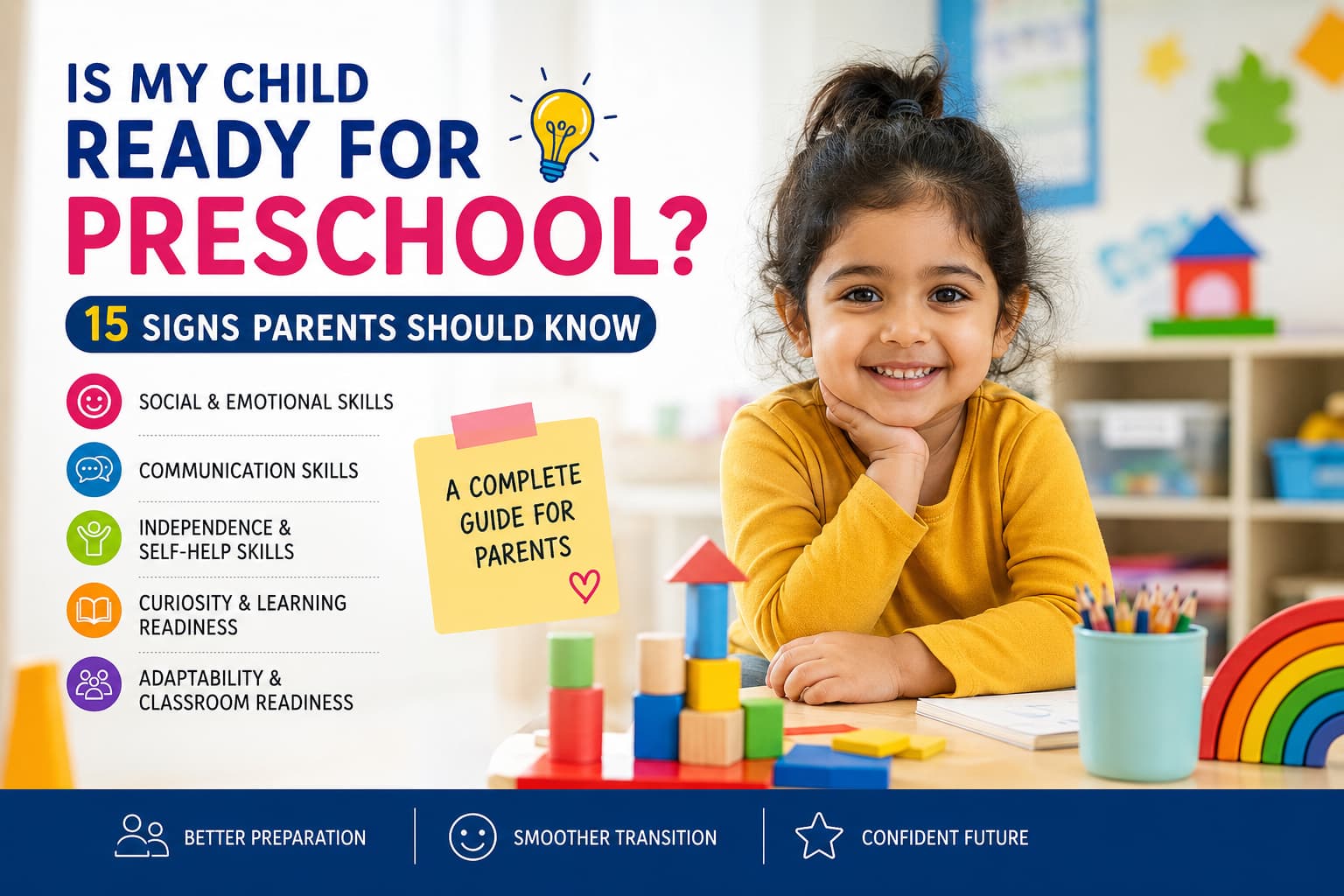
Starting preschool is a major milestone for both children and parents. Many families wonder whether their child is truly ready for this next step. The good news is that preschool readiness isn’t about knowing the alphabet, counting perfectly, or writing neatly. Instead, it involves emotional, social, communication, and self-help skills that help children adjust to a classroom environment.
This guide covers the key signs of preschool readiness, what to expect at different ages, and practical ways to prepare your child for a smooth transition.
Parents who are unsure about the right starting age can also read our guide on the best age to start preschool.
What Does Preschool Readiness Mean?
Preschool readiness refers to a child’s ability to participate comfortably in a preschool setting. While every child develops at their own pace, most preschool-ready children can communicate basic needs, interact with others, follow simple instructions, and handle basic routines with growing independence.
Teachers often value social and emotional skills more than academic knowledge. A child who can separate from parents, follow directions, and express feelings is often better prepared than a child who knows letters and numbers but struggles with daily routines.
Quick Preschool Readiness Checklist
Most children are ready for preschool when they can:
- Separate from parents for short periods
- Follow simple instructions
- Communicate basic needs
- Participate in group activities
- Show curiosity and interest in learning
- Manage simple routines
- Interact with other children
- Demonstrate basic independence
A child does not need to master every skill perfectly. The goal is readiness, not perfection.
15 Signs Your Child Is Ready for Preschool
1. Can Stay Away From Parents for Short Periods
One of the strongest signs of readiness is the ability to separate from parents without prolonged distress. Your child may still feel upset initially but should gradually settle after you leave.
2. Shows Interest in Other Children
Children who are ready for preschool often begin noticing, watching, and interacting with peers. They don’t need close friendships yet, but curiosity about other children is a positive sign.
3. Can Follow Simple Instructions
Preschool classrooms depend on children understanding basic directions such as:
- Put your toys away
- Wash your hands
- Sit on the mat
- Bring your water bottle
Following one- or two-step instructions helps children participate confidently in classroom routines.
4. Communicates Basic Needs
A preschool-ready child can usually express needs such as hunger, thirst, discomfort, or needing help. Communication does not have to be perfect; simple words, short sentences, or gestures are often enough.
5. Handles Basic Self-Care Tasks
Some independence makes the preschool experience easier. Helpful skills include:
- Washing hands
- Eating with minimal assistance
- Drinking independently
- Putting away belongings
- Attempting to dress themselves
6. Is Curious and Eager to Learn
Children naturally ready for preschool often ask questions, explore new objects, and enjoy discovering how things work. Curiosity is one of the most important foundations for learning.Activities that encourage exploration and play can further strengthen this curiosity. Here are some fun-based learning activities for young children.
7. Can Focus on Activities Briefly
Young children are not expected to sit still for long periods. However, being able to engage with a story, puzzle, or activity for 5–10 minutes shows developing attention skills.
8. Understands Simple Routines
Preschool follows predictable routines such as snack time, story time, outdoor play, and clean-up. Children who understand these patterns often adapt more easily.
9. Expresses Emotions
Emotional readiness includes beginning to recognise and communicate feelings. A child who can say “I’m sad” or “I don’t like that” is developing important self-awareness and communication skills.
10. Can Transition Between Activities
Moving from one activity to another is a regular part of preschool. Children who can shift from playtime to snack time or from outdoor play to classroom activities with some support are showing readiness.
11. Shows Basic Problem-Solving Skills
Simple problem-solving appears in everyday situations, such as completing a puzzle, figuring out a toy, finding a dropped item, or asking for help when needed.
12. Demonstrates Independence
Many preschool-ready children enjoy doing things on their own. If your child frequently says, “I can do it myself,” they are developing confidence and independence.
13. Understands Sharing and Taking Turns
Sharing can be difficult for young children, but understanding the concept is important. Children who can occasionally wait their turn or participate in simple group activities are developing key social skills.
14. Enjoys Books and Stories
Interest in books does not mean reading ability. Children who enjoy listening to stories, looking at pictures, and discussing characters often adapt well to classroom learning experiences.
15. Participates in Group Activities
Preschool involves music, movement, outdoor play, and group learning. Children who enjoy participating alongside others often feel more comfortable in a classroom setting.
Preschool Readiness by Age
Ages 2–3 Years
Children in this age range often begin attending playgroups or nursery programmes. Common signs include:
- Following simple instructions
- Using basic words and phrases
- Showing curiosity
- Beginning to play near other children
Some separation anxiety is still normal at this stage.
Ages 3–4 Years
This is the most common preschool entry age. Many children can:
- Participate in group activities
- Follow classroom routines
- Express basic emotions
- Interact with peers
- Show increasing independence
Ages 4–5 Years
Children entering preschool later often demonstrate:
- Longer attention spans
- Stronger communication skills
- Better emotional regulation
- Greater independence
- Increased confidence in groups
Signs Your Child May Need More Time
Not every child is ready at the same age, and needing extra time is completely normal.
Significant Separation Anxiety
If your child remains extremely distressed for long periods after separation despite repeated practice opportunities, they may benefit from additional preparation.
Difficulty Communicating Needs
Children who struggle to express basic needs can become frustrated in group settings. Extra support for communication skills may help build confidence.
Challenges With Everyday Routines
Difficulty following simple routines such as mealtimes, dressing, or clean-up activities may indicate a need for more practice before starting preschool.
How to Prepare Your Child for Preschool
Establish Predictable Routines
Consistent wake-up times, meals, playtime, and bedtime help children become comfortable with structure and routine.
Practice Short Separations
Allow your child to spend time with trusted relatives, caregivers, or friends. Gradually increasing separation time can help reduce anxiety when preschool begins.
Encourage Independence
Give your child opportunities to:
- Put away toys
- Carry their belongings
- Wash hands independently
- Put on shoes
Small responsibilities help build confidence and self-reliance.
Teaching everyday responsibilities early can help children adapt more easily. Here are some essential life skills for preschoolers.
Create Social Opportunities
Regular visits to parks, playgroups, family gatherings, and community activities help children become more comfortable interacting with others.
Parents can also try these preschool activities at home to support social and cognitive development.
Common Mistakes Parents Make
Focusing Only on Academics
Many parents prioritise letters, numbers, and writing. While these skills are helpful, emotional regulation, communication, and social development are often more important for preschool success.
Comparing Children
Every child develops differently. Comparing your child with siblings, neighbours, or friends can create unnecessary stress and unrealistic expectations.
Expecting Perfection
Children do not need to be fully independent or academically advanced before starting preschool. Preschool itself is designed to help children develop these skills.
Preschool Readiness in India
Most Indian preschools accept children between 2 and 4 years of age, depending on programme requirements. Rather than expecting advanced academic abilities, many schools focus on:
- Ability to separate from caregivers
- Basic communication skills
- Emerging independence
- Participation in group activities
- Interest in play-based learning
Many modern Indian preschools use activity-based and play-based learning approaches, reducing pressure on children to demonstrate formal academic skills before admission.
Conclusion
If you’re wondering whether your child is ready for preschool, remember that readiness goes far beyond academics. Communication, emotional regulation, social interaction, and independence are often the strongest indicators of success.
Every child develops at their own pace. Rather than aiming for perfection, focus on building confidence, routines, and basic life skills. With patience and preparation, most children can make a successful transition to preschool and begin their learning journey with enthusiasm and confidence.
Frequently Asked Questions
What should a child know before preschool?
Children should be able to communicate basic needs, follow simple instructions, participate in routines, and manage short separations from parents. Social and emotional skills are generally more important than academic knowledge.
Is my 3-year-old ready for preschool?
Many three-year-olds are ready if they can communicate, follow directions, interact with peers, and adapt to short periods away from caregivers. Developmental readiness matters more than age alone.
Does my child need to be potty trained?
Requirements vary by preschool. Some schools require toilet training, while others support children who are still learning. Check the school’s policies before enrolment.
How can I reduce separation anxiety?
Practice short separations, maintain consistent routines, create positive school experiences, and establish predictable goodbye rituals.