

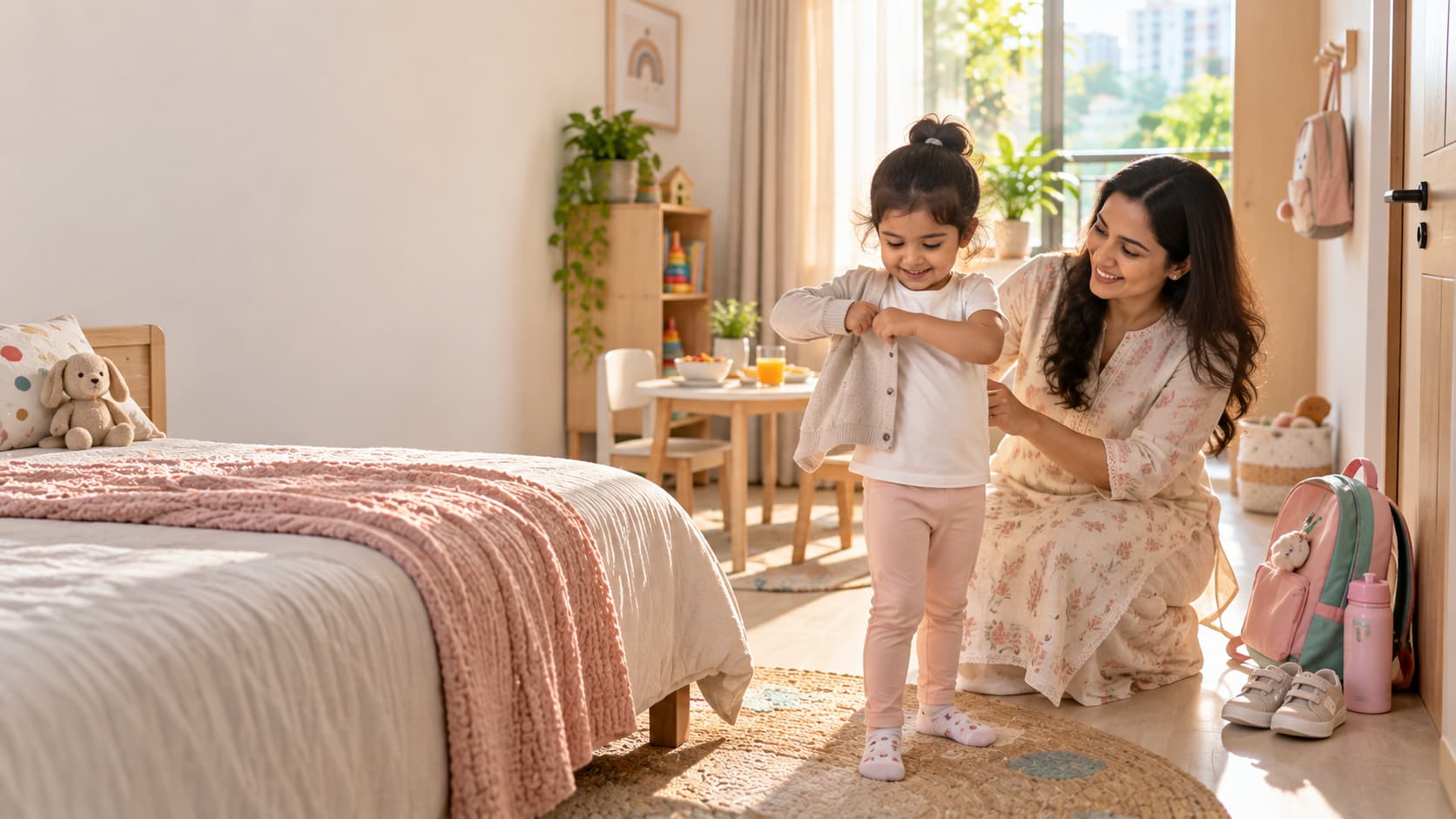
Mornings with preschoolers can sometimes feel rushed. Getting your child out of bed, dressed, fed, and ready for school may turn into a daily struggle. A simple and consistent morning routine for preschoolers can make these moments calmer and more predictable.
Children between 2 and 5 years old are still developing independence and learning how to manage everyday tasks. With the right routine, parents can help children understand what comes next while giving them opportunities to do things on their own.
Here is a simple morning routine for preschoolers that can help your family start the day on a positive note.
Why a Morning Routine Helps Preschoolers
Young children often feel more comfortable when they know what to expect. A predictable morning routine gives them a clear sequence of activities instead of several instructions at once.
A consistent routine can help children:
- Understand what happens next
- Develop independence
- Practise self-care skills
- Reduce unnecessary morning conflicts
- Become more prepared for preschool
- Develop a sense of responsibility
The goal isn’t to create a perfect morning. It is to create a routine that works realistically for your child and family.
What Time Should a Preschooler Wake Up?
The right wake-up time depends on your child’s bedtime, sleep needs, and preschool schedule. Instead of focusing on one specific wake-up time, make sure your child gets enough sleep and follows healthy sleep habits for preschool children so they have sufficient time to get ready without rushing.
Try to allow some extra time in the morning. Preschoolers may take longer than adults to complete simple tasks such as brushing their teeth, putting on clothes, or eating breakfast.
A relaxed morning gives children time to transition from sleep to their school-day activities.
A Simple Morning Routine for Preschoolers
A good routine does not need to be complicated. Keep the order of activities consistent so your child gradually becomes familiar with it.
1. Wake Up and Start the Day
Greet your child calmly and give them a few minutes to wake up fully. Open the curtains, let in some natural light, and encourage gentle movement.
Avoid immediately giving several instructions. Starting the morning calmly can make the rest of the routine easier.
2. Use the Bathroom and Brush Teeth
Encourage your child to use the bathroom and brush their teeth. Younger children may need help, while older preschoolers can gradually take more responsibility.
You can make this part of the routine by keeping toiletries in an easy-to-reach place.
3. Get Dressed
Allow your child to participate in getting dressed. Children can choose between two suitable outfits rather than being given unlimited choices.
For example, ask:
“Would you like the blue shirt or the yellow shirt?”
Simple choices give children a feeling of independence while keeping the routine moving.
4. Eat Breakfast
A nutritious breakfast can help children begin their school day comfortably and support good eating habits for preschoolers. Keep breakfast simple and avoid turning mealtimes into a lengthy negotiation.
Prepare some breakfast items the night before if mornings are particularly busy.
5. Check the School Bag
Make checking the school bag part of the routine. Depending on their age, children can help make sure they have everything they need.
Older preschoolers can gradually learn to take responsibility for simple items such as their water bottle, lunch box, or school bag.
6. Put on Shoes and Get Ready to Leave
Give your child a short warning before it is time to leave.
For example:
“Five more minutes, and then we are putting on our shoes.”
This can make transitions easier because the child has time to finish what they are doing.
Sample 60-Minute Morning Routine for Preschoolers
| Time | Activity |
|---|---|
| 7:00 AM | Wake up |
| 7:05 AM | Bathroom and brush teeth |
| 7:15 AM | Get dressed |
| 7:25 AM | Breakfast |
| 7:45 AM | Check school bag |
| 7:50 AM | Shoes and final preparation |
| 8:00 AM | Leave for preschool |
Adjust the timing according to your child’s needs and your preschool’s schedule.
Morning Routine for Different Preschool Ages
Children develop independence at different rates, so the routine should match their age and abilities.
Morning Routine for 2-Year-Olds
Two-year-olds usually need considerable support from parents. Keep instructions simple and give them plenty of time to complete each task.
Parents can encourage small responsibilities, such as choosing clothes or putting toys away.
Morning Routine for 3-Year-Olds
Three-year-olds can start participating more actively in everyday routines. Encourage them to brush their teeth with supervision, put on simple clothing, and carry their own small belongings.
Morning Routine for 4-Year-Olds
Four-year-olds can often manage more parts of the routine independently. Parents can encourage them to get dressed, organise simple school items, and follow a visual morning routine chart.
Morning Routine for 5-Year-Olds
Five-year-olds can gradually take greater responsibility for getting ready. Parents should still provide reminders and support when needed, but children can begin completing familiar tasks with less assistance.
How to Make the Morning Routine Easier
A few small changes can make a significant difference.
Prepare the Night Before
Choose clothes, organise the school bag, and prepare breakfast items before bedtime. This reduces the number of decisions that need to be made in the morning.
Use a Visual Routine Chart
A picture-based routine chart can be particularly helpful for younger children, especially when combined with simple preschool activities at home that encourage children to follow routines independently.
For example:
Wake Up → Bathroom → Brush Teeth → Get Dressed → Breakfast → School Bag → Shoes → School
Children can look at the chart instead of repeatedly asking what they need to do next.
Give Simple Choices
Offering limited choices helps children feel involved without making the routine longer.
Instead of asking, “What do you want to wear?” give two appropriate options.
Keep Instructions Short
Preschoolers may struggle to remember several instructions at once. Give one or two simple instructions and allow your child time to respond.
Build in Extra Time
If your child normally takes 10 minutes to get dressed, don’t plan the morning around exactly 10 minutes. A little extra time can prevent unnecessary stress.
What If Your Preschooler Refuses to Follow the Routine?
Morning resistance is common at this age. Children may refuse to get dressed, brush their teeth, eat breakfast, or leave the house.
Try to remain calm and avoid turning every task into a confrontation.
You can:
- Give your child simple choices
- Use a visual routine chart
- Give warnings before transitions
- Keep the order of activities consistent
- Praise cooperation
- Allow reasonable independence
Most importantly, don’t expect perfection every morning. Some days will naturally be more challenging than others.
Should Preschoolers Have Screen Time in the Morning?
For some families, screens can make mornings more difficult because children may become reluctant to stop watching when it is time to get ready. Understanding the effects of screen time on preschoolers can help parents decide what boundaries work best for their family.
Consider keeping the first part of the morning focused on getting ready, eating breakfast, and connecting with family.
If your family uses screens, establish clear and consistent boundaries so your child knows when screen time begins and ends.
How Preschool Supports Children's Daily Routines
A good preschool environment can reinforce many of the skills children practise at home.
Through age-appropriate activities and consistent classroom routines, children can gradually develop independence, communication, social skills, and confidence. Montessori practical life activities can also give children opportunities to practise everyday skills in a structured environment.
At preschool, children also learn to transition between activities, follow simple instructions, care for their belongings, and participate in group activities.
When home and preschool routines support similar skills, children can have more opportunities to practise independence throughout the day.
Morning Routine Checklist for Preschoolers
Parents can use this simple checklist at home:
- Wake up
- Use the bathroom
- Brush teeth
- Wash face
- Get dressed
- Eat breakfast
- Pack school bag
- Fill water bottle
- Put on shoes
- Leave for school
You can turn this list into a visual chart using pictures for younger children.
Conclusion
A successful morning routine for preschoolers doesn’t have to be complicated. The most useful routine is one that is predictable, flexible, and suited to your child’s age.
Start with a few simple steps and gradually encourage your child to take more responsibility. With consistency at home and supportive routines at preschool, children can develop valuable habits that build independence and confidence for everyday life.
Frequently Asked Questions
What is a good morning routine for a preschooler?
A simple routine can include waking up, using the bathroom, brushing teeth, getting dressed, eating breakfast, preparing the school bag, putting on shoes, and leaving for school.
How can I get my preschooler ready faster in the morning?
Prepare clothes and school items the night before, use a visual routine chart, give short instructions, and allow enough time for transitions.
How do I handle morning tantrums before preschool?
Stay calm, acknowledge your child’s feelings, offer simple choices, and keep the routine predictable. Avoid turning every task into a lengthy argument.
Should I use a morning routine chart?
Yes. A visual chart can help preschoolers understand the order of activities and gradually become more independent.