

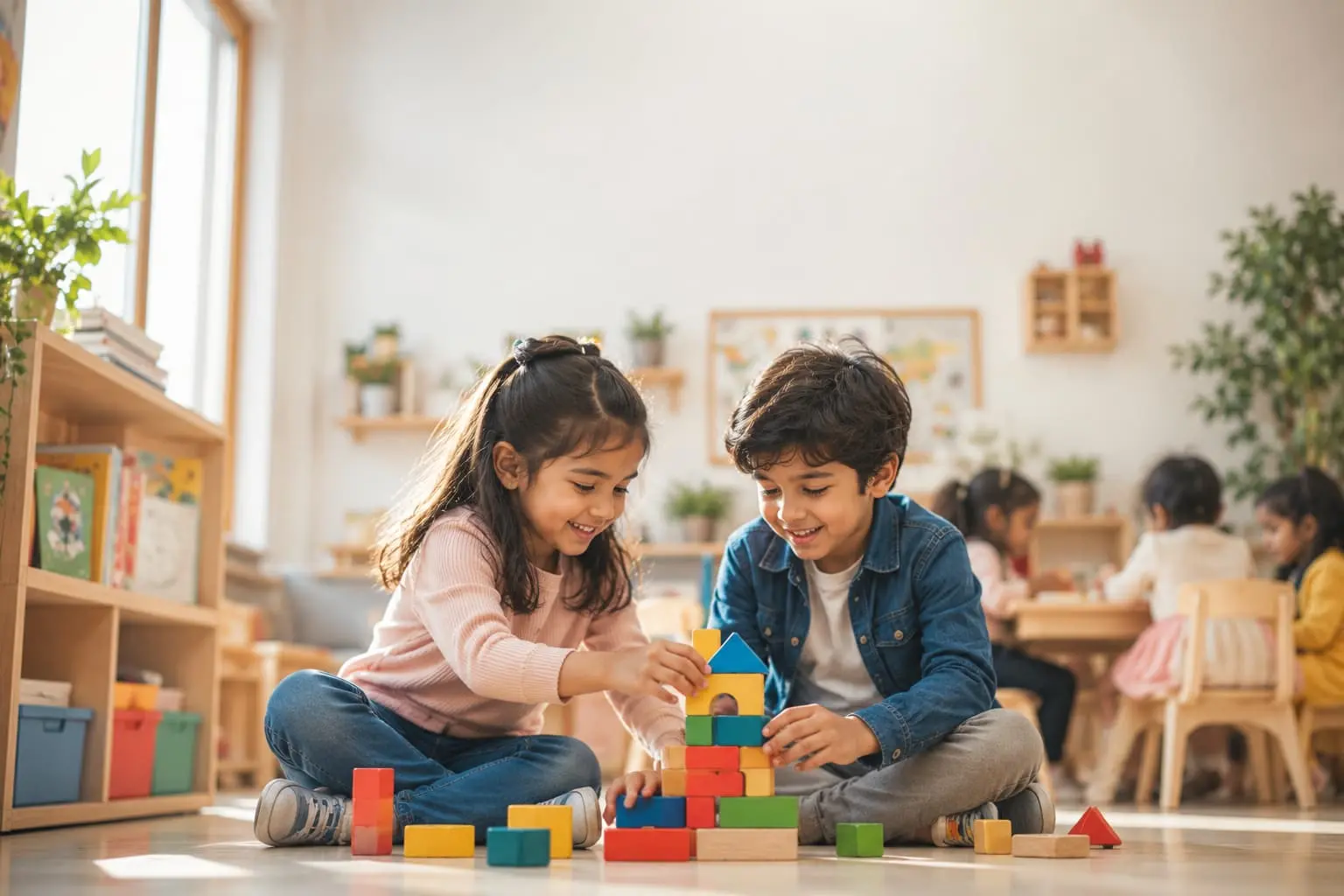
Many parents believe that teaching children to read and write as early as possible gives them a head start in school. While literacy is important, research in early childhood education consistently shows that the years before age six are better spent building the foundational skills that make learning easier throughout life.
These Essential Skills Before Age 6 include communication, emotional regulation, social interaction, problem-solving, creativity, and physical coordination. When these abilities develop naturally, children become confident learners who are ready to succeed both inside and outside the classroom.
In this guide, you’ll discover which skills matter most, why they are more valuable than rushing academics, and how parents can support healthy early childhood development skills every day.
Why Are the Early Years So Important?
The first six years are a period of extraordinary brain development. During this time, children absorb information rapidly through exploration, movement, conversations, and play. Rather than memorizing letters or numbers, they learn how to think, communicate, cooperate, and understand the world around them.
Strong early childhood skills help children adapt to new environments, build healthy relationships, and approach learning with confidence. These abilities also make it easier for children to acquire academic knowledge once they begin formal schooling.
Essential Skills Every Child Should Develop Before Age 6
Children develop at different speeds, but certain foundational skills support success across every stage of learning. Instead of focusing only on reading and writing, parents should encourage balanced growth across multiple developmental areas.
Communication Skills
Strong communication skills in early childhood help children express feelings, ask questions, follow directions, and build meaningful relationships. Language develops naturally through daily conversations, storytelling, songs, and interactive play.
Children who communicate confidently often participate more actively in classroom discussions and develop stronger literacy skills later because they already understand vocabulary, sentence structure, and listening.
Simple activities include:
- Reading picture books together
- Asking open-ended questions
- Singing nursery rhymes
- Encouraging storytelling
- Playing pretend games
Social and Emotional Skills
Children who understand emotions learn how to cooperate, share, wait patiently, and resolve small conflicts independently.
Social development is equally important because learning happens within relationships. A child who feels emotionally secure adapts more comfortably to preschool and enjoys learning alongside peers.
Parents can nurture these childhood skills by encouraging empathy, praising effort, discussing feelings openly, and providing opportunities to interact with other children. These everyday interactions also play an important role in child confidence development, helping children become more secure and independent.
Fine Motor Skills
Developing fine motor skills for preschoolers strengthens the small muscles in the hands and fingers needed later for writing, drawing, cutting, and self-care tasks.
Before expecting neat handwriting, children should first enjoy activities that naturally improve hand strength and coordination.
Some excellent fine motor activities for preschoolers include:
- Building with blocks
- Threading beads
- Clay and play dough
- Paper tearing and pasting
- Finger painting
- Buttoning clothes
- Using child-safe scissors
These enjoyable small motor activities for preschoolers prepare children for writing without making it feel like work.
Cognitive Skills
Strong cognitive skills for preschoolers involve thinking, remembering, observing, comparing, and solving problems. These abilities help children make sense of new experiences and become independent learners.
Instead of worksheets, encourage activities that stimulate curiosity.
Examples include:
- Sorting objects by colour or size
- Simple puzzles
- Memory games
- Nature walks
- Counting everyday objects
- Asking “Why do you think that happened?”
Children learn best when they discover answers through exploration rather than memorisation.
Creativity and Imagination
Creative thinking is one of the most valuable creative skills in early childhood because it encourages innovation, confidence, and flexible problem-solving.
Art, music, pretend play, storytelling, dancing, and building imaginary worlds allow children to experiment without fear of making mistakes.
Creative play also improves language development, emotional expression, and collaboration with others.
Independence and Life Skills
Simple daily routines help children become responsible and self-confident.
Children can learn to:
- Put away toys
- Wash hands independently
- Wear shoes
- Pack a school bag
- Pour water carefully
- Help set the dining table
These practical life activities build responsibility while strengthening concentration and decision-making. Parents can also explore our guide on essential life skills for preschoolers to discover more age-appropriate activities that encourage independence from an early age.
Pre-Reading and Pre-Writing Skills Matter More Than Early Reading
Many parents feel pressure when other children begin reading at a young age. However, experts recommend focusing first on pre reading skills and pre writing skills, which create the foundation for successful literacy.
Pre-reading includes:
- Listening carefully
- Recognising sounds
- Understanding stories
- Vocabulary development
- Identifying pictures
Pre-writing includes:
- Hand strength
- Pencil grip
- Eye-hand coordination
- Drawing shapes
- Tracing patterns
Children who master these developmental milestones often learn reading and writing more confidently once formal instruction begins.
Fun Activities That Build Developmental Skills
Learning during preschool should feel joyful rather than pressured. If you’re looking for more ideas, these preschool activities at home can help children continue developing important skills through everyday play. Everyday play offers countless opportunities to strengthen developmental skills for preschoolers.
Learning during preschool should feel joyful rather than pressured. If you’re looking for more ideas, these preschool activities at home can help children continue developing important skills through everyday play. Everyday play offers countless opportunities to strengthen developmental skills for preschoolers.
| Activity | Skills Developed |
|---|---|
| Building Blocks | Creativity, motor skills, problem-solving |
| Story Time | Communication, vocabulary, imagination |
| Outdoor Play | Gross motor skills, confidence |
| Clay Modelling | Fine motor control, creativity |
| Puzzles | Logical thinking, concentration |
| Pretend Play | Social and communication skills |
| Drawing | Pre-writing and fine motor development |
Consistent play-based learning supports healthy early childhood development skills while keeping children engaged and motivated. Discover more ideas about fun-based learning for young children to make everyday learning enjoyable.
Common Mistakes Parents Should Avoid
Parents naturally want the best for their children, but focusing too heavily on academics too early can sometimes create unnecessary pressure.
Common mistakes include:
- Comparing children with others
- Prioritising worksheets over play
- Expecting early reading before developmental readiness
- Limiting outdoor activities
- Excessive screen time
- Solving every problem instead of encouraging independence
Every child develops at a unique pace, and balanced development is more important than reaching academic milestones early.
Expert Tips for Parents
Supporting your child’s development doesn’t require expensive educational tools. Small, consistent interactions throughout the day often have the greatest impact.
Consider these expert recommendations:
- Read together every day.
- Encourage curiosity by answering questions patiently.
- Limit passive screen time.
- Allow children to solve simple problems independently.
- Include creative play daily.
- Celebrate effort rather than perfection.
- Spend time outdoors whenever possible.
- Maintain predictable routines that help children feel secure.
Children learn most effectively when they feel safe, loved, and encouraged to explore.
How Montessori Education Supports These Skills
Montessori education focuses on developing the whole child rather than emphasising early academics alone. Through carefully prepared environments, children naturally strengthen communication, concentration, independence, creativity, practical life skills, and fine motor coordination.
Instead of memorising information, children learn through hands-on experiences that match their developmental stage. This approach encourages confidence, self-motivation, and a genuine love for learning—qualities that continue to benefit them throughout school and beyond.
Conclusion
The Essential Skills Before Age 6 go far beyond learning the alphabet or writing simple words. Communication, emotional intelligence, creativity, independence, problem-solving, and motor development form the foundation for lifelong learning. When children develop these abilities through meaningful play, supportive relationships, and everyday experiences, they become confident learners who are ready to thrive in school and beyond. If you’re wondering about the best age to start preschool, understanding developmental readiness can help you make the right decision for your child.
Rather than rushing academics, focus on helping your child become curious, resilient, and independent. Those are the skills that truly last a lifetime.
Frequently Asked Questions
What are the essential skills every child should develop before age 6?
The most important essential skills before age 6 include communication, social and emotional skills, cognitive development, fine and gross motor skills, creativity, independence, and problem-solving. These foundational abilities prepare children for lifelong learning and school readiness.
Which skills are more important than reading and writing before age 6?
Before focusing on reading and writing, children should develop communication skills, emotional regulation, curiosity, fine motor skills, and problem-solving abilities. These early childhood skills create a strong foundation for future academic success.
How can parents improve communication skills in early childhood?
Parents can build communication skills in early childhood by talking with their child daily, reading books together, asking open-ended questions, encouraging storytelling, singing songs, and engaging in pretend play.
What are the best fine motor activities for preschoolers?
Some of the best fine motor activities for preschoolers include building with blocks, threading beads, playing with clay, finger painting, cutting with child-safe scissors, drawing, and buttoning clothes. These activities strengthen hand muscles needed for writing and everyday tasks.
How can I improve my child's cognitive skills before starting school?
Parents can improve cognitive skills for preschoolers through puzzles, memory games, sorting activities, counting everyday objects, nature walks, and encouraging children to ask questions and solve simple problems independently.
Are pre-reading skills more important than teaching a child to read early?
Yes. Developing pre-reading skills such as listening, vocabulary, recognising sounds, and understanding stories helps children become confident readers when formal reading instruction begins.
How can parents help children develop social and emotional skills at home?
Parents can encourage social and emotional development by teaching children to express their feelings, share with others, take turns, solve simple conflicts, and participate in group play. Praising effort and modelling positive behaviour also supports healthy emotional growth.
Why is play important for early childhood development?
Play is one of the most effective ways to support early childhood development. Through play, children improve communication, creativity, motor skills, problem-solving, confidence, and social interaction while enjoying the learning process.
What are the signs that my child is ready for preschool?
A child is generally ready for preschool when they can communicate basic needs, follow simple instructions, interact with other children, show curiosity, and perform basic self-help tasks such as eating, washing hands, or managing simple routines.
How much screen time is recommended for children under 6 years old?
Young children benefit most from interactive, real-world experiences such as conversations, outdoor play, creative activities, and reading. Limiting recreational screen time allows more opportunities to develop communication, social, cognitive, and physical skills.