

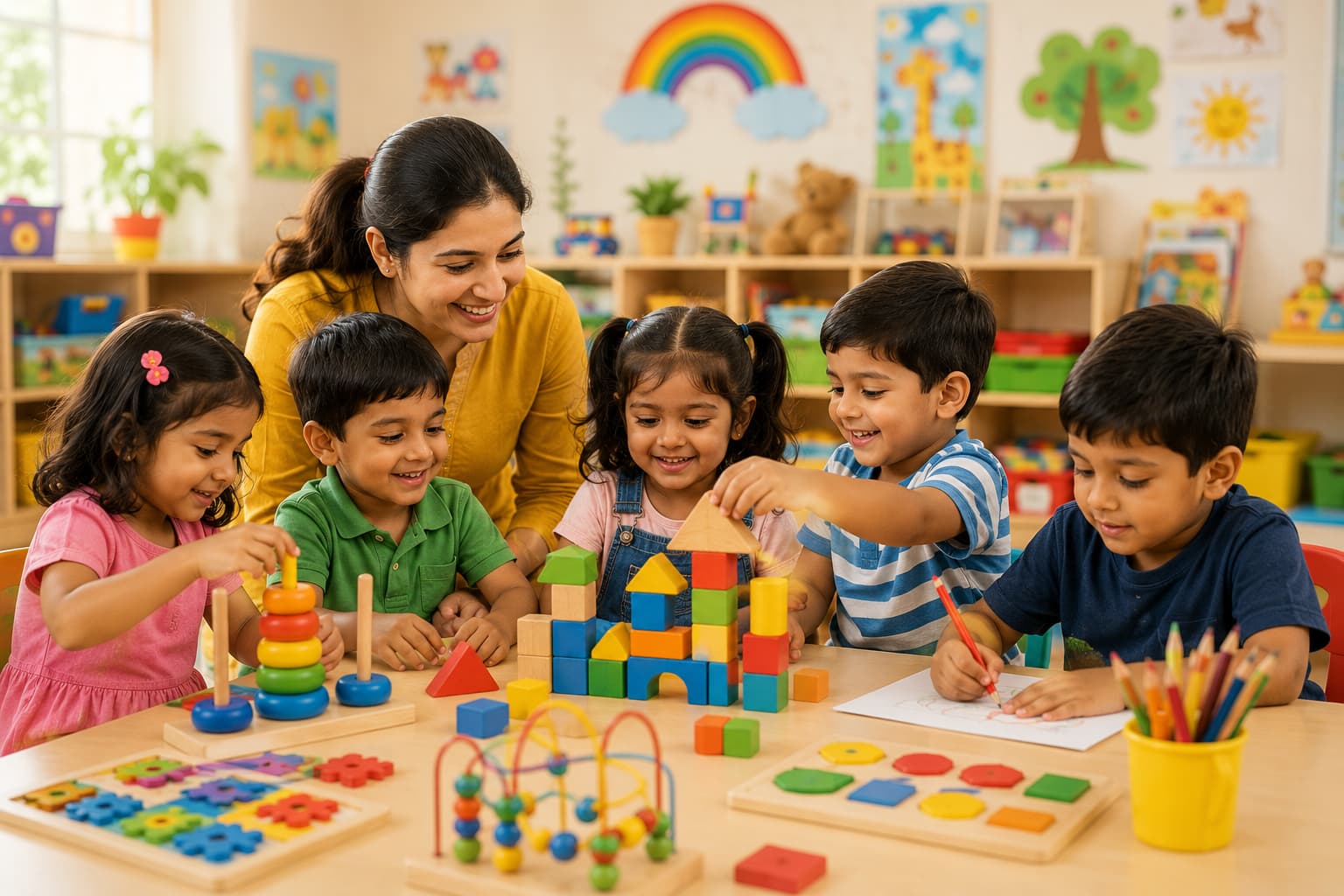
Kids don’t really learn by sitting still all day; they learn by playing, talking, and exploring. That’s how their mind works.
But many parents still feel confused.
“Should I send my child to a playschool or keep them at home?”
It’s a common question, especially for first-time parents.
So, are playschools good for children?
In this blog, you’ll get a clear answer along with real benefits, examples, and when it actually makes sense to choose a playschool.
What is a Playschool?
A playschool is an early learning space for young children, usually between 2 to 4 years old. It’s not about strict academics, it’s more about learning through play, activities, and interaction.
Think of it like this:
A child’s first day at playschool might include simple things like playing with toys, singing rhymes, drawing, or sitting in a small group. It feels more like fun than “school.”
That’s the whole idea of learning without pressure.
Why Playschools Are Important for Kids
Young children are naturally curious. They like to explore, touch things, and interact with others. Playschools give them the right environment to do that, which clearly shows the importance of preschool education in early childhood.
This also shows the early childhood education benefits children gain during these early years.
Here’s what makes them important:
- Learning happens naturally through play
- Children follow a basic routine
- They get to interact with other kids
For example, in a playschool, a child might learn sharing just by playing with a group. That’s something hard to teach at home in the same way.
Key Benefits of Playschool
Understanding the benefits of playschool for children helps parents make better decisions.It also explains clearly how playschool helps child development in a structured way.
a) Social Skills Development
Children learn how to share, take turns, and communicate with others, which supports social skills development in preschool.
b) Language & Communication
Being around other kids and teachers improves speaking and listening skills.
c) Emotional Confidence
Children slowly become comfortable away from parents and build confidence.This supports the emotional development in preschoolers.
d) Independence
Simple things like eating on their own or following instructions help build independence.These are important skills children learn in playschool.
Playschool vs Staying at Home
This is where most parents get stuck.
At Home
- Comfortable and safe
- More attention from parents
- But limited social interaction
At Playschool
- Structured routine
- Interaction with other children
- Exposure to new activities
For example, a child at home may learn things from parents, but in playschool, they learn from other children too and that makes a big difference.
Best Age to Start Playschool
Most children start playschool between 2 to 3 years, which is often considered the best age for playschool.
Some parents feel it’s too early. Others feel they should start sooner.
A simple way to decide:
- If your child is curious and active → good time to start
- If they show interest in playing with others → even better
There’s no “perfect age” but this range works well for most kids.
Real-Life Example
Many parents worry because children cry during the first few days.
For example, a child might cry during the first week when separated from parents. But slowly, they start adjusting. Within a few weeks, the same child begins to enjoy playing, making friends, and going to school.
This transition is normal and actually helps build emotional strength.
When Playschool Might NOT Be Needed
This is important playschool is helpful, but not always necessary.
You might not need it if:
- Your child already interacts with other kids regularly
- You provide a structured and engaging environment at home
- There are enough learning activities happening daily
In such cases, children can still develop well without playschool.
Conclusion
Overall, this clearly shows how playschool helps child development through real-life learning experiences.
Playschool plays an important role in building a strong foundation in social skills, early learning, and everyday life habits. It supports a child’s emotional and personal growth while giving them the freedom to learn through activities they actually enjoy.
Over time, this creates curiosity and a positive attitude towards learning, especially when it happens through fun and guided play.
For parents who want a balanced and engaging environment, choosing the right playschool matters. Institutions like Cherubs Montessori focus on creating a space where children learn, explore, and grow with confidence.
Simple takeaway: The right playschool doesn’t just teach — it helps children enjoy learning from the very beginning.