

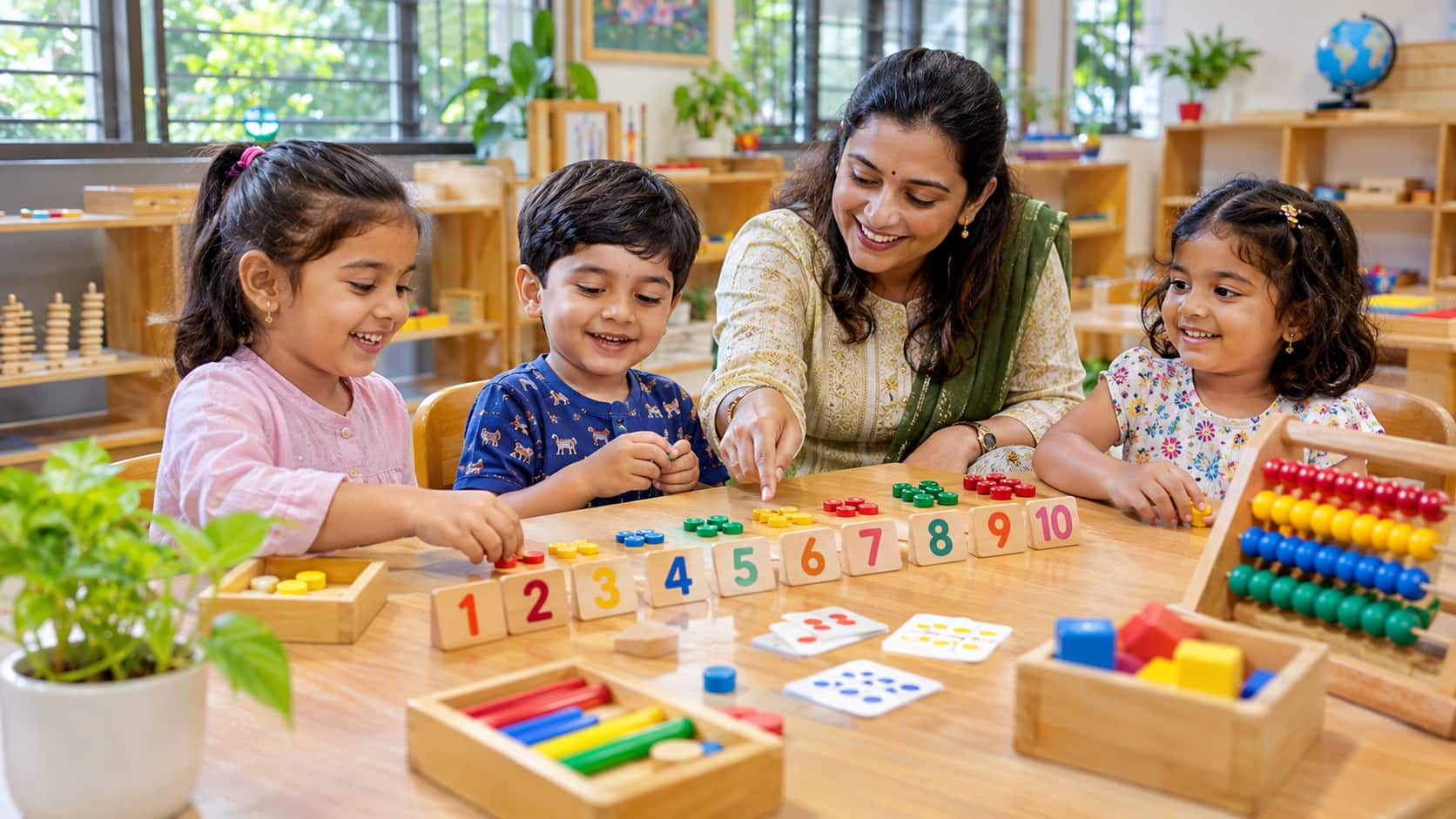
Teaching numbers to kids is an important part of early childhood education. During the preschool years, children begin developing basic mathematical skills that help them understand numbers, quantities and everyday situations. However, preschool number learning is about much more than memorising numbers from 1 to 10. It involves recognising number symbols, counting objects and understanding how numbers work through practical experiences. With simple games, songs and hands-on activities, parents and teachers can make learning numbers enjoyable while helping children build confidence in mathematics.
1. Why Is Learning Numbers Important in Preschool?
Learning numbers during preschool helps children develop a strong foundation for future mathematics. When children explore numbers through everyday experiences, they begin understanding quantities, patterns and simple mathematical relationships. When children learn through games, creative tasks and hands-on experiences, they become more interested in exploring new concepts. Introducing fun-based learning for young children can make mathematical concepts easier to understand while encouraging active participation.
Develops Early Childhood Math Skills
Early number learning introduces children to basic mathematical concepts such as counting, comparing quantities and identifying patterns. For example, when children compare two groups of toys, they begin understanding which group has more or fewer objects. These experiences build essential early childhood math skills.
Improves Number Recognition and Memory
Number recognition for kids develops through repeated exposure to written numerals and spoken number names. Identifying numbers on flashcards, charts and everyday objects helps children remember number symbols and connect them with their meanings.
Builds Counting and Logical Thinking Skills
Counting activities help children understand number sequences and quantities. They gradually learn concepts such as more, less and equal. Counting, comparing quantities and identifying number patterns encourage children to think independently and find simple solutions. Parents and teachers can also introduce Montessori problem-solving activities to strengthen reasoning and decision-making skills through practical experiences.
2. When Should Kids Start Learning Numbers?
Children can begin developing number awareness during toddlerhood through simple conversations, songs and everyday activities. However, every child learns at a different pace. Some may show an interest in counting early, while others may need more time and practice.
Number Learning for Toddlers (1–2 Years)
At this age, introduce number words through nursery rhymes, finger games and familiar objects. Parents can count toys, clap their hands or say numbers while playing. The focus should be on listening and becoming familiar with number words rather than memorising sequences.
Learning Numbers at Ages 2–3
Children can gradually explore small groups of objects and practise counting familiar items. Introduce simple number cards and encourage them to recognise a few written numbers through playful activities.
Preschool Number Learning at Ages 3–5
During these years, children can explore more structured preschool number learning. They can practise counting objects, recognising familiar numerals, matching numbers with quantities and understanding simple comparisons. Activities involving blocks, puzzles and counting games make these concepts easier to understand.
3. What Numbers Should Preschoolers Learn First?
Preschoolers can start by learning numbers 1 to 5 before gradually exploring numbers up to 10. Introducing a small number range helps children understand each number instead of simply memorising its name.
Start With Numbers 1 to 5
Introduce one number at a time using fingers, toys, blocks and picture cards. For example, show your child the number 3 and place three apples in front of them. Explain that the written number 3 represents three actual objects.
Gradually Introduce Numbers 6 to 10
Once children become comfortable recognising and counting numbers 1 to 5, introduce numbers 6 to 10. Encourage them to arrange number cards in order and count small groups of objects.
Introduce Zero and Basic Number Concepts
Explain zero as meaning nothing or none. For example, if a plate has no biscuits left, it contains zero biscuits. You can also introduce concepts such as more, less and equal using toys and snacks.
4. How to Teach Numbers to Kids in Preschool: 7 Effective Methods
Young children understand new concepts more effectively when they can explore, experiment and participate in activities rather than simply memorising information. Play-based experiences also support cognitive development in preschoolers by encouraging observation, thinking and problem-solving. Instead of relying only on textbooks, parents and preschool teachers can introduce different teaching methods that encourage active participation.
1. Start With Everyday Counting
Use everyday situations to introduce counting. Ask children to count their fingers, toys, steps, fruits or building blocks. For example, count five steps while walking or three apples while arranging fruits. Regular practice helps develop preschool counting skills naturally.
2. Use Number Flashcards and Charts
Number flashcards and colourful charts help children recognise written numbers. Show one number at a time, say its name aloud and ask children to repeat it. Place number charts where children can see them regularly.
3. Connect Numbers With Real Objects
Children understand numbers better when they connect symbols with actual quantities. Show the number 4 and ask them to collect four blocks, four pencils or four toy cars. This approach makes basic mathematical concepts easier to understand.
4. Teach Through Songs and Rhymes
Counting songs and nursery rhymes make number learning entertaining. Encourage children to clap, jump or move their fingers while singing. Repetition helps them become familiar with number sequences.
5. Encourage Number Tracing
Let children practise writing numbers using sand trays, playdough or finger painting. These activities strengthen hand coordination and help children become familiar with number shapes.
6. Use Storytelling and Pretend Play
Introduce numbers through simple stories and pretend-play situations. For example, create a toy shop where children count fruits or pretend to cook a meal using three vegetables and two plates.
7. Practise Number Matching and Sequencing
Give children number cards and ask them to match each card with the correct number of objects. You can also arrange number cards from 1 to 10 and ask children to identify missing numbers.
10 Fun Preschool Math Activities to Teach Numbers
Preschool math activities give children opportunities to explore numbers through play. Here are ten simple counting activities for kids that parents and teachers can try at home or in the classroom.
1. Number and Object Matching Game
- Materials required: Number cards, buttons, blocks or small toys.
- How to play: Place number cards on a table and ask children to place the correct number of objects beside each card.
- What children learn: Number recognition, counting and connecting numbers with quantities.
2. Count and Sort Colourful Blocks
- Materials required: Colourful building blocks and small containers.
- How to play: Ask children to sort blocks by colour and count how many blocks belong to each group.
- What children learn: Counting, sorting, colour recognition and comparing quantities.
3. Number Hopscotch
- Materials required: Chalk or numbered floor mats.
- How to play: Draw numbered squares from 1 to 10. Ask children to jump on each square while saying the number aloud.
- What children learn: Number sequencing, recognition and coordination.
4. Playdough Number Making
- Materials required: Colourful playdough and number cards.
- How to play: Show children a number card and encourage them to shape the same number using playdough.
- What children learn: Number formation, visual recognition and fine motor skills.
5. Counting Finger Games
- Materials required: No special materials required.
- How to play: Ask children to show one, two, three or five fingers. Count together and create simple finger movements for each number.
- What children learn: Counting, number understanding and hand coordination.
6. Number Scavenger Hunt
- Materials required: Number cards and familiar household or classroom objects.
- How to play: Hide number cards around the room. Ask children to find them and collect the corresponding number of objects.
- What children learn: Number recognition, counting and observation skills.
7. Counting Beads and Buttons
- Materials required: Large beads or buttons and number cards.
- How to play: Place a number card in front of children and ask them to arrange the same number of beads beside it. Use large, age-appropriate materials under adult supervision.
- What children learn: Counting accuracy, quantity recognition and concentration.
8. Missing Number Game
- Materials required: Number cards from 1 to 10.
- How to play: Arrange number cards in order but remove one card. Ask children to identify which number is missing.
- What children learn: Number sequences, memory and logical thinking.
9. Number Puzzle Activities
- Materials required: Wooden number puzzles or number-matching boards.
- How to play: Encourage children to match number pieces, identify missing numbers and connect each numeral with its corresponding quantity. These activities can also introduce children to the benefits of puzzle activities for preschool children by supporting concentration, visual recognition and early problem-solving.
- What children learn: Number recognition, problem-solving and visual coordination.
10. Snack-Time Counting
- Materials required: Fruits, biscuits or other suitable snack items.
- How to play: Before serving snacks, ask children to count how many pieces are on their plates. Encourage them to compare quantities with their friends.
- What children learn: Everyday counting, quantity comparison and practical number understanding.
Why Do Preschoolers Struggle With Number Recognition?
Some preschoolers need additional time and practice to recognise numbers. This is a normal part of the learning process, as understanding written symbols and connecting them with quantities can take time.
Confusing Similar-Looking Numbers
Children may sometimes confuse numbers such as 6 and 9 or reverse numerals while learning to write. Repeated visual exposure and tracing activities can help.
Memorising Numbers Without Understanding Quantities
A child might recite numbers from 1 to 10 but struggle to count ten actual objects. Practising with toys and blocks helps connect number names with real quantities.
Difficulty Remembering Number Sequences
Some children may forget numbers or skip a number while counting. Short and enjoyable repetition can help children remember number sequences and recognise familiar symbols. Activities such as number matching, picture identification and memory activities for preschoolers can provide additional opportunities to practise remembering and identifying numbers.
Lack of Hands-On Learning Opportunities
Learning only through worksheets may not give children enough practical experience. Introduce hands-on number learning activities, use fewer numbers at a time and practise regularly without putting pressure on children.
How Parents and Preschool Teachers Can Support Number Learning
Parents and preschool teachers both play an important role in developing children’s early mathematical understanding. A supportive learning environment encourages children to explore numbers with confidence.
How Parents Can Teach Numbers at Home
Parents can make number learning part of everyday life by encouraging children to count toys, arrange objects, identify numbers and participate in simple household games. Try these preschool activities at home to make early learning more enjoyable and interactive. Include number words in daily conversations and encourage children to practise through play rather than making learning feel like homework.
How Preschool Teachers Can Make Number Learning Interactive
Preschool teachers can organise group counting games, introduce colourful number charts and provide hands-on learning materials such as blocks, puzzles and flashcards. Activity-based learning allows children to participate, interact with classmates and develop early childhood math skills at their own pace.
Simple Daily Routine to Improve Preschool Counting Skills
A short daily routine can help children become familiar with numbers through regular practice. Parents and teachers can divide number learning into enjoyable five-minute sessions.
| Time | Learning Activity |
|---|---|
| 5 minutes | Number songs and rhymes |
| 5 minutes | Number recognition |
| 5 minutes | Hands-on counting games |
| 5 minutes | Number matching and revision |
These short sessions provide regular exposure without overwhelming children. Keep activities enjoyable, encourage participation and repeat familiar concepts whenever needed.
Conclusion
Learning numbers is a gradual process that requires patience, practice and encouragement. Children understand mathematical concepts better when they can explore numbers through games, songs and everyday experiences. Parents and teachers can make a big difference by creating enjoyable opportunities for counting and number recognition. At Harvest Cherubs Montessori Preschool, children are encouraged to explore early learning concepts through interactive experiences and age-appropriate activities. Parents interested in our learning environment can explore our Montessori preschool admission process to understand the next steps.
Frequently Asked Questions
What numbers should preschoolers learn first?
Preschoolers can start with numbers 1 to 5 and gradually learn numbers 6 to 10. Use fingers, toys and everyday objects to demonstrate quantities. Once children become comfortable, introduce number sequences and simple comparisons.
What is the easiest way to teach numbers?
The easiest way to teach numbers is through everyday objects, finger games, counting songs and hands-on activities. Ask children to count toys, fruits or blocks so they can connect number symbols with actual quantities.
Why is number learning important in preschool?
Number learning develops early childhood math skills, logical thinking and problem-solving abilities. It helps children understand quantities, recognise number symbols and build the number sense needed for future mathematical learning.
Why do preschoolers struggle with number recognition?
Preschoolers may struggle because number symbols are abstract and take time to understand. Limited exposure, memory difficulties and confusion between similar-looking numbers can also affect number recognition. Regular practice through games can help.
How to teach numbers to kids in preschool?
Start by introducing numbers 1 to 5. Show children how to count real objects, use colourful flashcards, practise number tracing and introduce counting games. Gradually increase the number range as their understanding develops.
When should kids start learning numbers?
Children can start developing number awareness during toddlerhood through songs, finger games and everyday conversations. More structured number learning usually develops during the preschool years, depending on each child’s interest and readiness.
Which number activities are best for preschoolers?
Number matching games, colourful block counting, hopscotch, playdough number making, number puzzles and scavenger hunts are useful activities. They help children recognise numbers, practise counting and understand quantities through play.
Who should teach numbers to preschool children?
Both parents and preschool teachers play important roles in teaching numbers. Parents can introduce counting at home, while teachers provide structured, interactive activities that help children develop number recognition and early mathematical skills.