

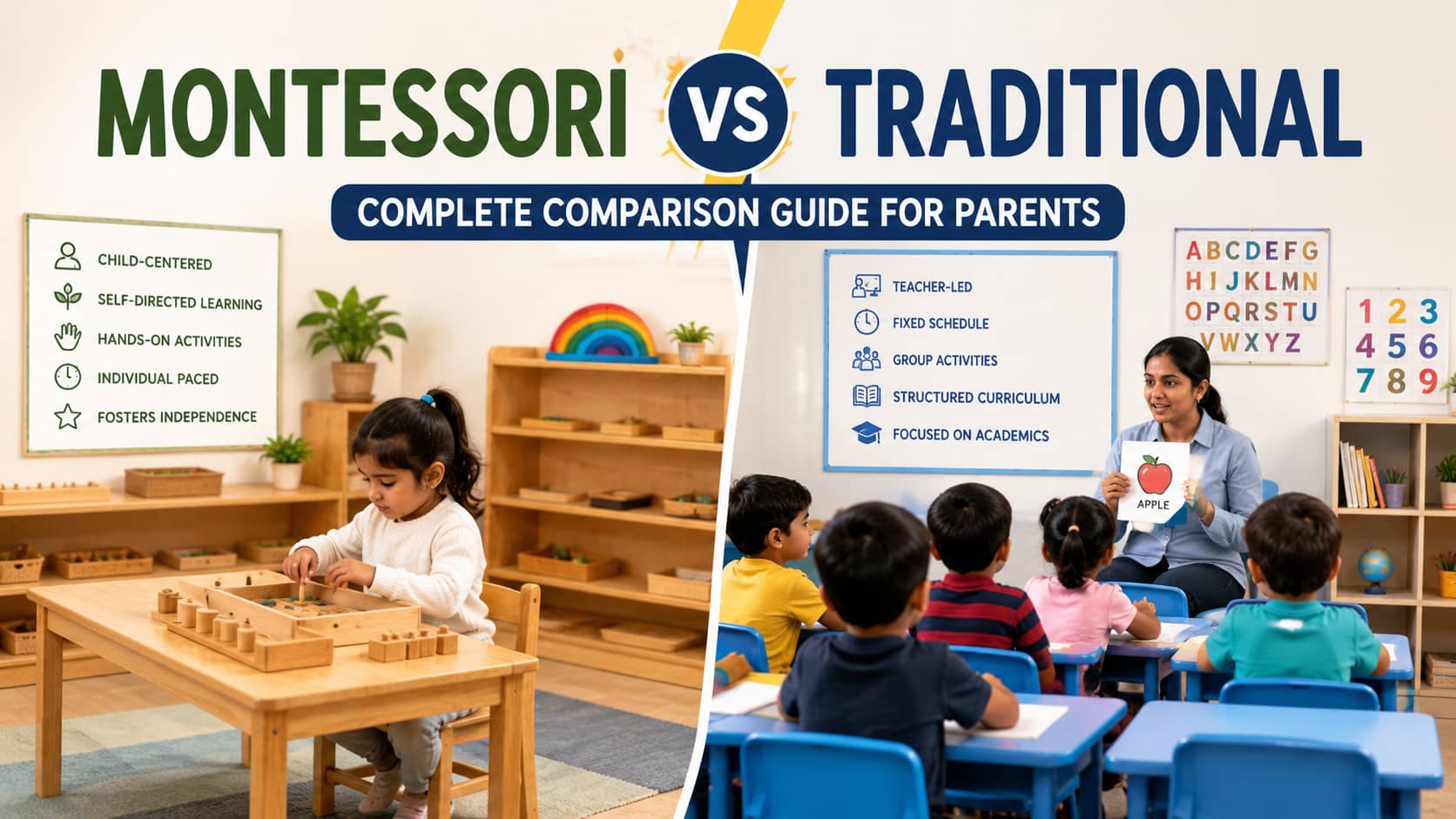
Choosing between Montessori and traditional preschool is one of the most important early decisions parents make because it shapes how a child develops independence, social skills, and early learning habits. Both systems aim to support early childhood education, but they follow very different philosophies and classroom approaches. Montessori focuses on child-led learning and independence, while traditional preschool emphasizes structured, teacher-led instruction. Understanding these differences helps parents choose an environment that matches their child’s personality, learning style, and emotional needs, especially during the crucial ages of 2 to 6 years when foundational development happens rapidly.
Choosing the right preschool also depends on your child’s age and developmental readiness. If you’re unsure when to begin, our guide on What is the Best Age for a Child to Start Preschool? can help parents make an informed decision.
What is Montessori Education?
Montessori education is an early childhood learning approach developed by Dr. Maria Montessori that emphasizes independence, self-directed learning, and hands-on exploration. It is designed to allow children to learn at their own pace using specially prepared materials in a structured yet flexible environment.
Montessori classrooms are built around the idea that children naturally learn best when they are given freedom within limits. Teachers observe rather than instruct constantly, guiding children when needed. This creates an environment where learning becomes self-driven rather than imposed, helping children build confidence and curiosity from an early age.
Every child has a unique learning style, which is why understanding what type of kids benefit from Montessori helps parents decide whether this educational approach is the right fit for their child.
Montessori Curriculum
The Montessori curriculum includes practical life activities, language development, sensorial learning, mathematics, and cultural studies. Each area is designed to develop independence, coordination, and logical thinking.
Children engage in activities like pouring, sorting, counting beads, and sensory matching, which strengthen both cognitive and motor development while encouraging focus and discipline.
What is Traditional Preschool?
Traditional preschool follows a structured, teacher-led approach where learning is organized through scheduled lessons and group activities. Teachers plan daily routines that include academic introduction, creative play, storytelling, and group interaction.
This system prepares children for formal schooling by introducing early academic concepts in a structured environment. It emphasizes social interaction, routine-building, and foundational literacy and numeracy skills.
Traditional Preschool Learning Approach
In traditional preschools, teachers lead lessons while children participate as a group. Activities are designed to ensure all children learn the same concepts at the same time, creating consistency in early education.
For example, all children may participate in alphabet learning together through songs, worksheets, or group repetition exercises, reinforcing collective learning.
Traditional Preschool Curriculum
The curriculum focuses on early literacy, numeracy, communication skills, art, music, and physical development. It is structured to align with age-based milestones and prepare children for kindergarten and primary school environments.
Key Differences Between Montessori and Traditional Preschool
The main difference between Montessori and traditional preschool lies in how learning is delivered. Montessori encourages independent exploration, while traditional preschool relies on structured teaching and group learning.
In Montessori classrooms, children choose their activities and learn at their own pace, which builds independence and concentration. In contrast, traditional classrooms follow a fixed schedule where all children learn the same topic together under teacher guidance.
Teaching Style and Learning Approach
Montessori teaching is based on observation and guidance, allowing children to discover concepts through hands-on experience. Traditional preschool teaching is directive, with teachers leading lessons and guiding children through structured activities.
This difference significantly impacts how children develop problem-solving skills, independence, and confidence in their early years.
Classroom Environment
Montessori classrooms are calm, organized, and designed for independence. Materials are placed at child height, allowing easy access and self-selection. Traditional classrooms are more structured, with designated learning zones and teacher-directed areas.
The Montessori environment encourages movement and choice, while traditional classrooms emphasize order and group participation.
The Montessori environment also nurtures decision-making and responsibility from an early age. Learn more about how Montessori classrooms support early leadership skills in young children.
Learning Materials
Montessori uses specialized sensory materials designed to teach specific concepts through hands-on interaction. Traditional preschools use a mix of books, toys, worksheets, and creative tools to support guided learning activities.
These differences affect how children engage with concepts and retain information over time.
Benefits of Montessori Preschool
Montessori education builds independence by allowing children to make decisions and take responsibility for their learning. This helps develop confidence and self-discipline at an early age.
It also strengthens concentration because children work on activities for extended periods without interruption. Hands-on materials make abstract concepts easier to understand and remember.
Another major benefit is practical life development, where children learn everyday skills such as organizing, cleaning, and self-care, which contribute to emotional maturity and independence.
These experiences help children develop strong self-esteem over time. Read how children grow in confidence at Harvest Cherubs Montessori through hands-on learning and supportive guidance.
Benefits of Traditional Preschool
Traditional preschool provides structure and routine, which helps children feel secure and understand expectations. This is especially helpful for children who thrive in predictable environments.
It also promotes social interaction through group activities, helping children develop communication skills and teamwork abilities. The structured curriculum ensures children are exposed to foundational academic concepts needed for school readiness.
Additionally, traditional preschool prepares children for formal schooling environments, making the transition to primary school smoother.
Montessori vs Traditional Preschool: Which Is Better for Your Child?
The better choice depends on your child’s personality and learning style. Children who are independent, curious, and self-motivated often thrive in Montessori environments because they enjoy exploring at their own pace.
Children who prefer structure, guidance, and group interaction may feel more comfortable in traditional preschools where routines and teacher-led instruction provide stability.
A practical way to decide is to observe your child’s behavior at home. If they enjoy independent play and exploration, Montessori may be a better fit. If they seek guidance and enjoy group activities, traditional preschool may suit them better.
If you’re still unsure, checking is my child ready for preschool can help you understand whether your child is emotionally, socially, and developmentally prepared to begin preschool.
Montessori vs Traditional Preschool in Bangalore
In Bangalore, parents have access to a wide range of Montessori and traditional preschool options. The city’s early education landscape includes both authentic Montessori institutions and modern preschools blending multiple teaching methods.
When choosing a preschool in Bangalore, parents should evaluate teacher qualifications, classroom environment, safety standards, and how well the school communicates with families. Visiting classrooms during active learning hours provides valuable insight into whether the teaching style matches your expectations.
For families seeking a Montessori-based environment focused on independence and holistic development, Cherubs Montessori offers early learning programs designed to support children during their foundational years.
Common Mistakes Parents Make
One common mistake parents make is choosing a preschool based solely on popularity or branding without observing the classroom environment. Another mistake is overlooking the importance of child personality fit, which is crucial for long-term learning success.
Parents also sometimes assume all Montessori schools follow authentic Montessori principles, but implementation quality can vary significantly.
Conclusion
Montessori and traditional preschool both offer valuable learning experiences, but they serve different developmental needs. Montessori focuses on independence, exploration, and hands-on learning, while traditional preschool emphasizes structure, routine, and guided instruction.
The best choice is not universal but depends on the child’s personality, emotional needs, and learning preferences. A well-informed decision based on observation and understanding will ensure a positive early education experience.
Frequently Asked Questions
What is the difference between Montessori and traditional preschool?
Montessori focuses on child-led, hands-on learning, while traditional preschool follows structured, teacher-led instruction with group-based activities.
Which is better for a 3-year-old?
Montessori suits independent learners, while traditional preschool suits children who prefer structured guidance and group learning.
Is Montessori good for early childhood development?
Yes, Montessori supports independence, concentration, and practical life skills through experiential learning.
Is Montessori better than traditional preschool?
Neither is universally better; the right choice depends on the child’s learning style and personality.
Does Montessori prepare children for school?
Yes, Montessori builds strong foundational skills, independence, and problem-solving abilities.
Is traditional preschool good for social development?
Yes, it encourages teamwork, communication, and group participation.
Can children switch from Montessori to traditional school?
Yes, most children adapt easily with proper support.